Product Overview
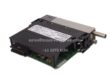
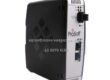
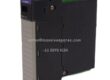
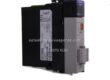
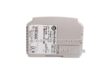
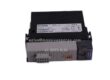
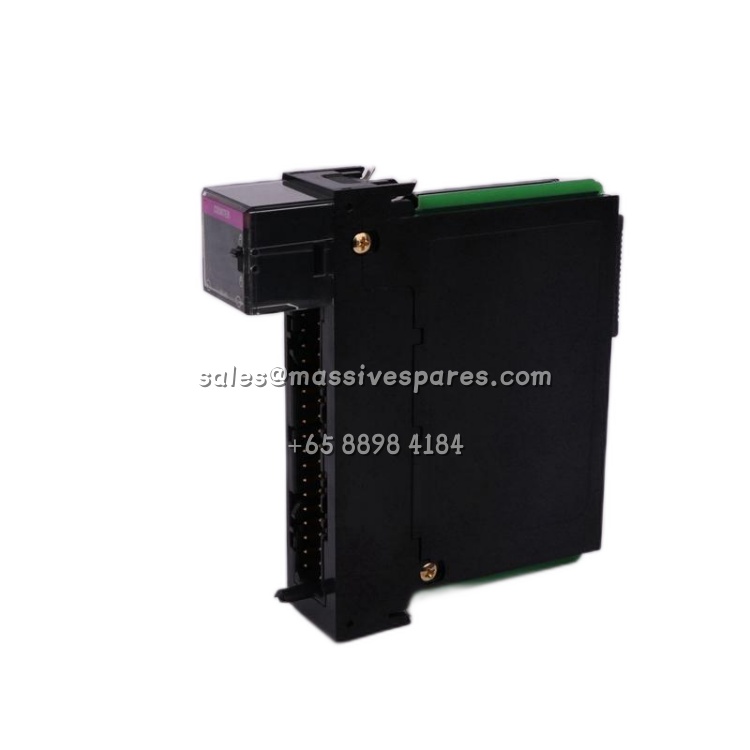
The Allen-Bradley 2711P-RP8D is the processing and communications engine of the PanelView Plus 6 modular HMI platform, manufactured by Rockwell Automation. It is not a stand-alone operator panel: the module is the rear-mounted logic assembly that mates with a separately ordered display module to form a complete 700-, 1000-, 1250-, or 1500-size terminal. Inside the molded housing sits an ARM-class processor running Windows CE 6.0, backed by 512 MB of RAM and 512 MB of nonvolatile flash, with roughly 79 MB of that flash exposed to the HMI project for screens, alarms, trends, recipes, and data logs. The 2711P-RP8D is the standard-feature, closed-image variant of the RP8 family—catalog numbers ending in 8 deliberately omit the web browser, media player, Office viewers, and remote-desktop extras found on the 9-series extended-feature logic modules. For machine builders and sustenance teams, that is an advantage rather than a limitation: a smaller OS surface means fewer attack vectors, fewer accidental desktop excursions, and a terminal that always comes back to the FactoryTalk View ME Station runtime on a cold start.
Connectivity is where the Allen-Bradley 2711P-RP8D earns its keep on the plant floor. A 10/100 Mbps Ethernet port with Auto-MDI/MDI-X handles EtherNet/IP tag communication to ControlLogix, CompactLogix, and SoftLogix controllers, while the 9-pin RS-232 port supports DF1 point-to-point links, printer or barcode-reader output, and file-transfer duties. Two USB 2.0 Type-A host ports and a hot-swappable SD slot give maintenance staff a friction-free path for loading a patched .MER runtime, pulling a CSV alarm extract, or archiving recipe sets without a laptop on the platform. A dedicated expansion interface accepts the optional 2711P-RNxx communication modules, so a single 2711P-RP8D can be adapted with DH+, DH-485, ControlNet, or a second Ethernet network long after the original panel design was frozen.
The module’s real commercial value is modularity. When a cracked touchscreen, failed backlight, or shattered keypad overlay takes a line down, the display assembly is replaced while the 2711P-RP8D stays put—no application reload, no controller tag remapping, no recertification of the enclosure cutout. Conversely, when a logic board fault or obsolete firmware revision is the culprit, the reverse is true: swap the logic module, retain the expensive display and gasket, and torque the four captive screws to 0.58 N·m. That split-part strategy is why the module remains a staple of lifecycle-extension programs even though Rockwell discontinued the PanelView Plus 6 platform on 30 September 2023. The engineering-replacement path points to the PanelView Plus 7 platform, but for fleets already standardized on CE 6.0 and ME Station 6.x–12.x applications, the 2711P-RP8D remains the lowest-risk, lowest-downtime fix.
Technical Specifications
| Parameter | Value |
|---|---|
| Product Model | 2711P-RP8D |
| Manufacturer | Allen-Bradley / Rockwell Automation |
| Product Type | PanelView Plus 6 Logic Module (Standard Features, Closed Image) |
| Compatible Terminal Range | PanelView Plus 6 700, 1000, 1250, 1500 series display assemblies |
| Operating System | Windows CE 6.0 (closed desktop; no extended features or file viewers) |
| HMI Runtime | FactoryTalk View Machine Edition Station, version 6.0 and later; preactivated, no product key required |
| RAM | 512 MB |
| Nonvolatile Memory | 512 MB flash (approx. 79 MB free user/project memory) |
| Input Power | 24 V DC nominal, isolated; operating range 18–32 V DC |
| Power Consumption | 39 W typical (1.6 A @ 24 V DC); 70 W maximum (2.9 A @ 24 V DC, including USB/accessories) |
| Ethernet Interface | 1 × 10/100Base-T RJ45, Auto-MDI/MDI-X, EtherNet/IP |
| Serial Interface | 1 × RS-232, 9-pin D-sub (DF1, printing, file transfer) |
| USB Interfaces | 2 × USB 2.0 Type-A host ports (hot-swappable); 1 × USB device port on select assemblies |
| Expansion / Storage | SD card slot (1784-SDx / 1784-SDHCx); internal expansion bay for 2711P-RNxx communication module |
| Real-Time Clock | Battery-backed RTC; CR2032 / 2711P-RY2032 replacement cell |
| Status Indicators | Communication and fault LEDs; reset switch and default/restore switch |
| Mounting Interface | Rear PCI-style board-to-board connectors; four captive mounting screws, 0.58 N·m (5–7 lb·in) |
| Operating Environment | 0 to 55 °C (32 to 131 °F); 5–95 % RH, non-condensing; storage –25 to 70 °C |
| Mechanical / Physical | Approx. 160 × 130 × 85 mm; mass typically 0.38–0.57 kg depending on series and fitted options |
| Shock / Vibration | 15 G @ 11 ms; 2 G peak across 57–500 Hz |
| Approvals / Certification | UL, CE, RoHS; marine certified |
| Lifecycle Status | Discontinued by manufacturer (30-Sep-2023); engineering replacement on PanelView Plus 7 platform |
Main Features and Advantages
A closed image that behaves like an appliance. The 2711P-RP8D ships as a closed-system logic module, which means the Windows CE 6.0 desktop is hidden and the FactoryTalk View ME Station runtime owns the boot sequence. On a three-shift packaging line, that matters: nobody can tap a stray corner of the screen and end up in a file explorer or a PDF viewer while the machine is running. Desktop access can still be enabled through the Configuration mode for commissioning and then locked off again, but the terminal’s feature set does not change when you do—unlocking the desktop on an 8-series module will not conjure a web browser or an Excel viewer. The result is a predictable, auditable HMI that behaves the same way on every power cycle.
Native EtherNet/IP without a translator. The onboard Ethernet port is not a generic TCP socket that needs an OPC bridge; it speaks EtherNet/IP directly to Logix-family controllers and consumes controller tags. A screen object bound to a tag stays synchronized with the PLC program as logic evolves, and a single terminal can host the alarm summary, trend pens, and recipe tables that used to require a separate SCADA node. The RS-232 port keeps the door open to older assets—MicroLogix and SLC point-to-point DF1 links, serial barcode scanners, and thermal printers all hang off the same 9-pin connector, which is why the 2711P-RP8D is so common on mixed-vintage lines that cannot justify a gateway appliance.
Modular repair changes the downtime math. A complete PanelView Plus 6 terminal is two field-replaceable halves: the display/front-panel assembly and the logic module. Fit a new 2711P-RP8D behind an existing 2711P-RDT10C or 2711P-RDT12C, and the bezel, gasket, cutout, and 24 V DC wiring are untouched. The four captive screws seat the board, the SD card carries the runtime, and the line is running again inside the changeover window. That part-level spares philosophy cuts inventory cost too: carry one logic module and one display assembly instead of three complete terminals across 700/1000/1250 sizes.
Memory that actually holds an application. At 512 MB RAM and 512 MB flash, the module sits comfortably above the original PanelView Plus RP1/RP2 generation (32–64 MB) and matches the CE 6.0-era RP7/RP8 tier. The practical difference shows up in project load time, trend-buffer depth, and alarm-history retention between archives. USB and SD hot-swap mean a technician can pull a log file to a FAT-formatted stick without stopping the runtime, then push a signed replacement runtime from the same stick—no FieldPC, no crossover cable, no panel door left open for an hour.
Expansion without a forklift upgrade. The internal communication-module bay lets a 2711P-RP8D acquire DH+, DH-485, or ControlNet connectivity through the appropriate 2711P-RNxx card. Plants migrating from a PLC-5 DH+ network to a ControlLogix EtherNet/IP backbone have used this bay to stage the transition one terminal at a time, running old and new networks in parallel until the controller swap is complete. It is the kind of headroom that turns a 15-year-old panel into a bridge asset rather than a brick wall.
Application Field
The most common use of the 2711P-RP8D is not a new installation but a repair that cannot afford to become a redesign. On bottling, cartoning, and case-packing lines, a 10.4-inch or 12.1-inch PanelView Plus 6 terminal sits within arm’s reach of the operator, running the recipe selector, alarm acknowledger, and manual-jog screen for a servo-driven machine. When the original logic board develops a fault—typically a failed DC input stage, a corrupted flash image after a brownout, or a dead RTC battery that drifts the alarm timestamps—the 2711P-RP8D drops in behind the existing display. The application is already on the SD card or can be reloaded from the controls engineer’s laptop over Ethernet, and the machine resumes before the next scheduled stop.
Food, beverage, and pharmaceutical lines value the module for the same reason they value the platform: the display half is sealed and cleanable, while the compute half lives behind the panel where it stays dry. A washdown cycle that destroys a touch overlay does not touch the logic board, and when the inevitable chemical attack on the front panel finally forces a display swap, the 2711P-RP8D crosses over unchanged. In batch and skid-mounted process equipment, the RS-232 port is often the unsung hero—it carries weight-filler serial strings, barcode reads from a handheld gun, or a label printer feed, while Ethernet carries the vessel-status and valve-interlock graphics to the Logix controller.
Water and wastewater, mining conveyors, and oil-and-gas wellpad skids lean on the module’s marine and industrial environmental ratings. The 0–55 °C operating range, non-condensing humidity tolerance, and 15 G shock rating let it live in a coastal pump station or a vibrating screening house without a climate-controlled enclosure. Utilities with long asset lives also use the 2711P-RP8D as a strategic spare: because the same logic module fits 700-, 1000-, 1250-, and 1500-size display assemblies, one binned part covers four different panel footprints across the site.
For OEMs and system integrators still supporting installed fleets, the module solves the “identical spare” problem. A machine shipped in 2012 with a 2711P-T10C4D8 (the 2711P-RDT10C display paired with the 2711P-RP8D logic module) can be serviced anywhere in the world with a single catalog number, without explaining to a maintenance planner that a newer terminal needs a cutout adapter, a firmware migration, and a recompile. That predictability is the product’s real value proposition.