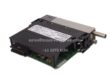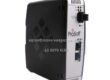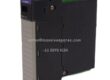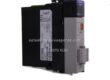
Application Scenarios
A mid-size bottler runs a 10.4-inch PanelView Plus 1000 on every filler and capper cell. The screens are fine, the application is stable, and the maintenance team has the .MER on a shared drive — but the CCFL in terminal number four has been dim since the last summer shutdown, and the plant network is being re-ringed for EtherNet/IP redundancy. Replacing the whole cell HMI with a widescreen panel means a new cutout, a screen rescale and a validation cycle nobody wants to pay for.
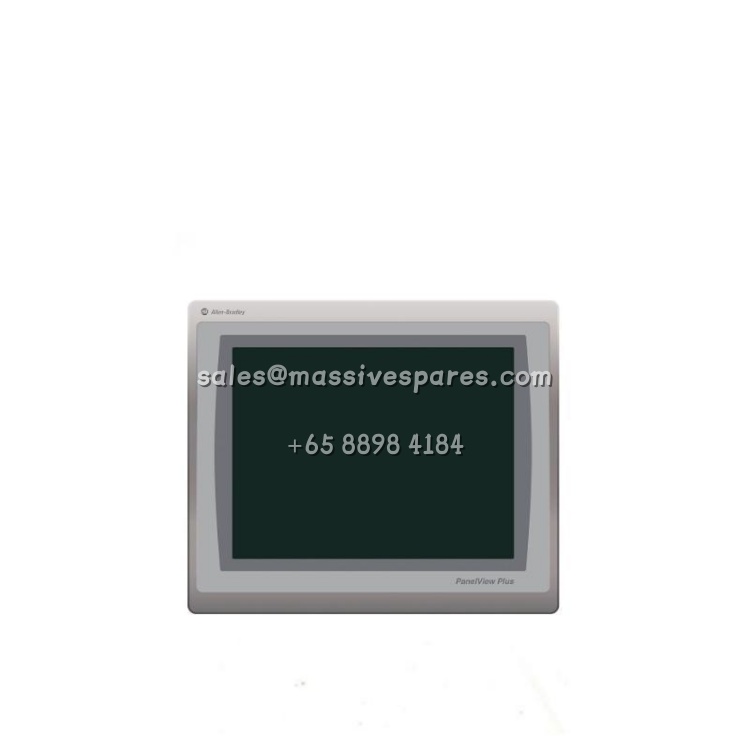
The 2711P-T10C22A9P is the quiet answer. It lands in the same 224 × 269 mm opening, accepts the re-targeted ME project, and brings two Ethernet ports to the door so the panel can sit on the new Device Level Ring instead of dangling off a star leg. The operator sees the same 4:3 button grid, the controls engineer re-compiles once, and the network tech gets a ring node that does not need an external switch. In a food or beverage line, that is the difference between a scheduled Saturday swap and a multi-week panel-rebuild order.
Parameter
| Main Parameters | Value / Description |
|---|---|
| Product Model | 2711P-T10C22A9P (Series A at launch; the “-B” suffix is the same terminal without the Allen-Bradley logo plate) |
| Manufacturer | Allen-Bradley, Rockwell Automation |
| Product Category | Graphic terminal, PanelView Plus 7 Performance series, touch-only input |
| Display | 10.4 in. color active-matrix TFT, 800 × 600 SVGA, 4:3, 211 × 158 mm viewable — the classic 4:3 project grid, no letterboxing |
| Color Depth | Series A: 18-bit color (262,144 colors); Series B steps to 24-bit — state the series before you quote a replacement |
| Touch Technology | 8-wire analog resistive, 100 g typical actuation, 1 million press rating — works with a bare finger, a nitrile glove or a stylus |
| Backlight | White LED, solid-state, 300 cd/m² typical, 50,000 h minimum to half-brightness at 40 °C — and not field-replaceable, so a dim panel usually means a terminal swap |
| Ethernet | 2 × 10/100Base-T, Auto MDI/MDIX, embedded switch supporting Device Level Ring (DLR), linear or star topologies — this is the “22” in the catalog number |
| Serial / USB / Storage | 1 × RS-232 (DB9); Series A: 2 × USB 2.0 host (Type A) + 1 × USB 2.0 device (Type B); 1 × SD card slot for the runtime and alarm history |
| Memory (Series A) | 512 MB RAM / 512 MB system storage, approx. 80 MB nonvolatile user space for the .MER — enough for a single-machine project; log heavily and you will want the SD card |
| Operating System (Series A) | Windows CE 6.0 with Extended Features — FTP, VNC client/server, ActiveX, PDF reader, Office viewers; hosts FactoryTalk View ME runtimes from v8 through the v11 era |
| Power Input | 100–240 VAC, 47–63 Hz, 105 VA max, approx. 50 W (2.1 A @ 24 VDC equivalent) — the “A” means AC; there is no 24 VDC version of this exact number |
| Real-Time Clock | CR2032 lithium cell, ±2 min/month, ≥4 yr life at 25 °C, user-replaceable from the rear — alarm timestamps survive a power outage |
| Mechanical | 252 × 297 × 69.6 mm (H × W × D), 2.28 kg; panel cutout 224 × 269 mm; door thickness 1.5–4.8 mm, flat and free of burrs to hold the NEMA rating |
| Protection | Front: NEMA/UL Type 12, 13, 4X and IP66 (indoor classified); rear of open unit is IP20/IP54 — the gasket, not the plastic, is what earns the rating |
| Environment | 0 to 55 °C operating, −25 to 70 °C storage, 5–95 % RH non-condensing, 2000 m max altitude; T4 temperature code at 55 °C ambient |
| Lifecycle | Discontinued as an active catalog item; Rockwell’s own replacement path lists the 2711P-T10C22D9P (24 VDC, Series B) as the successor route — AC survivors now come from tested/engineering-replacement stock |
Technical Principles and Innovative Values
Innovation Point 1 — Two ports, one panel, one ring. The “22” is not decoration. With two 10/100 ports and an embedded switch, the 2711P-T10C22A9P joins a Device Level Ring as a ring node, so a broken cable or a powered-off switch no longer isolates the operator view from the controller. The ring supervisor still sits on the PLC or a managed switch, but the HMI stops being the weak leg of the topology .
Innovation Point 2 — Solid-state light, no lamp change. Earlier 10.4-inch Plus terminals lived and died by a CCFL inverter you could at least swap. The 2711P-T10C22A9P uses a white LED backlight rated to 50,000 hours at 40 °C, which removes a recurring PM task — until it ages, at which point the whole unit is the consumable. That is a different spare-parts strategy, and it rewards keeping one terminal, not one lamp, on the shelf.
Innovation Point 3 — Resistive touch in a capacitive world. A million-press, 100-gram film is unglamorous next to a smartphone screen, but it is exactly what a chemical plant or a meat room needs: no calibration drift from a wet finger, no rejection of a gloved tap, no exotic overlay to source. The 2711P-T10C22A9P treats the operator’s hand as a tool, not a nuisance.
Innovation Point 4 — A migration landing pad, not a cliff. Rockwell positioned this terminal as the engineering replacement for the 2711P-T10C4A9 and, by extension, the PanelView Plus 1000 display modules . Same 4:3 SVGA canvas, same FactoryTalk View ME story, AC wiring already in the panel. You trade a modular terminal for an integrated one and gain Ethernet redundancy without redrawing a single screen.
Innovation Point 5 — Remote eyes without a remote desktop. With the VNC server and FTP built into the CE Extended image, the 2711P-T10C22A9P can be shadowed from a maintenance laptop or a control-room PC on the same subnet. That is how a lead technician reads an alarm banner from the coffee station instead of suiting up for a catwalk walk — useful, and entirely dependent on keeping the firmware and ME version aligned.
Application Cases and Industry Value
Case 1 — Brew line, ring migration without a panel rebuild. A regional brewery was moving its packaging hall from a star topology to a DLR ring as part of a network-hardening project. Three 10.4-inch HMIs were single-port PanelView Plus 1000s hanging off an aging unmanaged switch; losing that switch meant losing the filler, the labeller and the palletizer views at once. Rather than buy three new switches and widescreen panels, the plant fitted 2711P- terminals through the existing cutouts. The existing ME project was opened in View Studio, re-targeted for Plus 7, and the .MER reloaded from a FAT32 USB stick — no screen rescale, no new enclosure work. Each terminal now bridges the ring directly, and a controlled cable break test during a planned stop showed the operator view recover before the filler’s handshake timed out. The project’s network contractor billed for one site visit instead of a panel-fabrication cycle.
Case 2 — Pharmaceutical granulator, audit-ready paperlessness. A solid-dose manufacturer needed its granulator HMI to display batch records and SOPs at the machine, not in a binder by the door. The Allen-Bradley 2711P-T10C22A9P was chosen because the CE Extended build includes a PDF viewer and the SD card slot accepts a properly revision-controlled manual image. The terminal’s local alarm history and CR2032-backed RTC give every acknowledge a timestamp that survives a 55 °C weekend shutdown. During the qualification walk-through, the validation lead noted two things: the operator still pressed the same 4:3 soft-button layout they had trained on, and the PDF call-up meant no loose-leaf change control. For the site, the value was not the brighter LED — it was a人机 interface that passed audit without a software re-write.
Related Product Combination Solutions
| Model | Synergy with 2711P- |
|---|---|
| 2711P-T10C22D9P | The 24 VDC, Series B successor — same 10.4″ SVGA footprint, Windows 10 IoT Core, 2 GB user space. Quote it when the AC supply is being retired or the project needs current firmware; budget for an ME re-compile and a small power-wiring change . |
| 2711P-T10C22A9P-B | Identical terminal, no AB logo or product identification on the bezel. The right pick for OEMs branding their own front panel or for lines where a plain face is site policy . |
| 2711P-B10C22A9P | 10.4″ Performance with a physical keypad plus touch. Use it on the same skid when critical acknowledges must be a real button press but the operator still wants a screen for trends. |
| 2711P-T10C21D9P | Single-Ethernet, 24 VDC Performance twin. Cheaper and smaller on the network side; choose it when DLR is not required and you want the same chassis with one fewer port . |
| 2711P-T10C4A9 | The discontinued PanelView Plus 1000 10.4″ it replaced. Knowing this number matters — if your spare room still calls it out, the 2711P- is the drop-in logic path, not a new design . |
| 2711P-RGT10SP | Form-fit protective overlay for the 10.4″ Plus 7. A few euros of film absorbs the stylus scratches and cleaning chemicals that otherwise kill the resistive layer; stock it with the terminal. |
| 1606-XLE120E | Rockwell-recommended 100–240 VAC input PELV/SELV supply. Even though the 2711P- is AC-input, a clean front-end supply pays back the first time a brownout trips the RTC and alarms go quiet . |
| 2715P-T10CD | PanelView 5000 10″ widescreen. The long-term modernization target — but the cutout and the project both change, so treat it as phase two and keep a 2711P- on hand for phase one. |