Product Overview
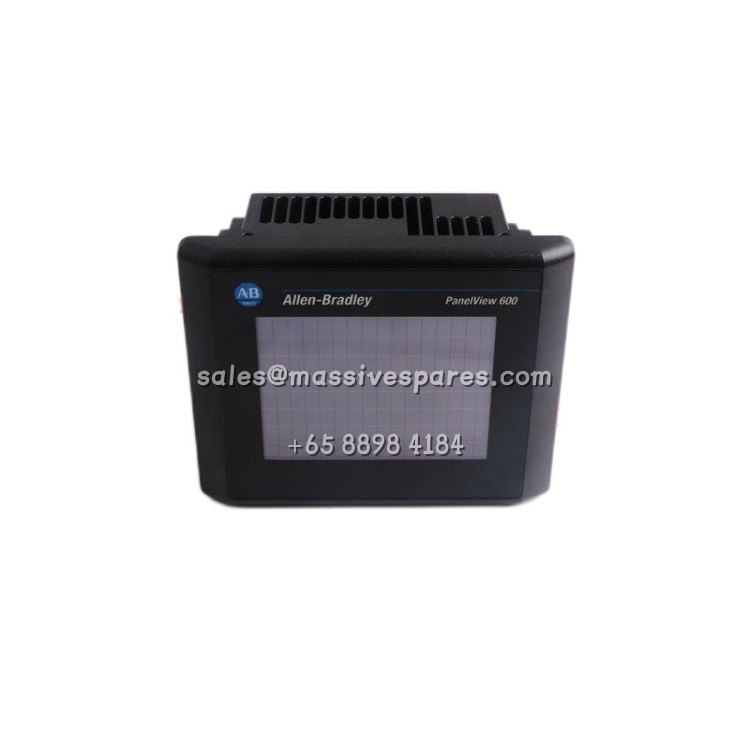
The Allen-Bradley 2711P-T15C4D1 is a PanelView Plus 1500 series operator terminal from Rockwell Automation, and it occupies a specific, often misunderstood place in the Bulletin 2711P family. This is the original PanelView Plus generation—not the later PanelView Plus 6—identified by the D1 suffix, which denotes 24 V DC input paired with the 64 MB Flash / 64 MB RAM logic configuration. The terminal is built around a 15.0-inch color active-matrix TFT with a 1024 × 768 XGA panel and an 8-wire analog resistive touchscreen. That combination still reads clearly on a busy line: the 4:3 aspect ratio and 300 cd/m² brightness put a dense alarm grid, multi-trend display, and vessel graphic on screen at the same time without the scaling compromises of a widescreen panel.
What makes the 2711P-T15C4D1 strategically valuable is its modularity. The catalog number describes a complete, factory-assembled terminal, but underneath the bezel it is two field-replaceable halves: the 2711P-RDT15C touch display assembly and the 2711P-RP1 logic module. The display contributes the panel, backlight, and touch sensor; the logic module contributes the 64 MB Flash / 64 MB RAM compute engine, the real-time clock, and the communication ports. When a backlight dims after years of shifts, you replace the lamp or the display head and leave the application where it sits. When a brownout corrupts the image or the DC input stage fails, you swap the logic module with four captive screws and reload the runtime from the CompactFlash card or a USB stick. That split is the reason plants with a dozen 1500 terminals can stock two spare part numbers instead of a dozen complete units.
Operationally, the Allen-Bradley 2711P-T15C4D1 speaks EtherNet/IP natively through its 10/100 Mbps Ethernet port and carries an RS-232 serial port for DF1 point-to-point links, printers, or barcode readers. Two USB host ports handle keyboard, mouse, and removable media duties, while the internal expansion bay accepts a 2711P-RN6, giving the terminal DH+, DH-485, and Remote I/O on a single card—the classic migration bridge for a plant still running PLC-5 or SLC assets alongside a new Logix controller. Applications are built in FactoryTalk View Studio for Machine Edition (the earlier RSView Machine Edition .MER runtime is also part of this terminal’s heritage) and stored in the logic module’s Flash, with the battery-backed RTC stamping every alarm and recipe event. The platform is discontinued, but its installed base is enormous, and a terminal that can be repaired at the module level instead of migrated at the panel level is still the lowest-risk option on a three-shift line.
Technical Specifications
| Parameter | Value |
|---|---|
| Product Model | 2711P-T15C4D1 |
| Manufacturer | Allen-Bradley / Rockwell Automation |
| Product Type | PanelView Plus 1500 Operator Terminal (Touch, Color, DC Powered) |
| Display | 15.0 in. color active-matrix TFT LCD, 1024 × 768 (XGA), 18-bit color, 300 cd/m² |
| Display Area | 304 × 228 mm (12.0 × 9.0 in.) |
| Operator Input | Analog resistive touchscreen, 10–110 g actuation force, 1 million press rating |
| Backlight | CCFL, minimum 50,000 hr life at 25 °C (77 °F), field-replaceable |
| Memory | 64 MB RAM / 64 MB Flash (approx. 20–25 MB user/application space on early RP1 series) |
| Input Power | 24 V DC nominal, 18–32 V DC range; 70 W maximum (2.9 A @ 24 V DC), 39 W typical |
| Communication Ports | 1 × Ethernet 10/100Base-T (Auto-MDI/MDI-X, EtherNet/IP), 1 × RS-232 (9-pin D-sub), 2 × USB 2.0 host |
| Expansion / Storage | Internal CompactFlash slot (originally 2711P-RW1, 32 MB, preloaded with RSView ME); expansion bay for 2711P-RN6 communication module |
| Logic Module | 2711P-RP1 (32 MB Flash / 64 MB RAM variant; series A–D application flash ≈20 MB) |
| Display Module | 2711P-RDT15C (touch color, 1500 family) |
| Real-Time Clock | Battery-backed, ±2 min/month, 4 yr minimum battery life at 25 °C; 2711P-RY2032 equivalent |
| Status Indicators | COMM (green), Fault (red) LEDs; Reset and Default/Restore switches |
| Front-Panel Rating | NEMA Type 12, 13, 4X (indoor use only); IEC IP54 / IP65 when correctly gasketed and mounted |
| Operating Environment | 0 to 55 °C (32 to 131 °F); 5–95 % RH, non-condensing; operating altitude to 2000 m |
| Mechanical (Terminal) | 416 mm W × 330 mm H × 65 mm D (16.37 × 12.99 × 2.56 in.); panel cutout 391 × 305 mm (15.39 × 12.01 in.) |
| Weight | Approx. 4.2 kg (9.3 lb) |
| Shock / Vibration | 15 G @ 11 ms; 10–57 Hz 0.012 in p-p displacement, 57–500 Hz 2 G acceleration |
| Approvals | UL, CE, CSA, RoHS, Marine certified |
| Runtime Software | FactoryTalk View Machine Edition Station (preloaded, activated); developed with FactoryTalk View Studio ME |
| Lifecycle Status | Discontinued (display module effective 30-Sep-2021; original Plus 1500 platform end-of-life) |
Main Features and Advantages
A 15-inch canvas that respects the operator’s eyes. The 2711P-T15C4D1 uses a standard 4:3 XGA panel, and that geometry is doing real work on the floor. Unlike a widescreen HMI forced to letterbox a legacy project, the 1024 × 768 canvas maps cleanly to the alarm summary, trend, and graphic templates that RSView ME and early FactoryTalk View ME were designed around. The 18-bit color depth renders valve states, motor colors, and recipe-step indicators without dithering, and the 300 cd/m² backlight keeps the screen readable under the mixed overhead and skylight conditions of a packaging hall. Because the CCFL lamp is field-replaceable and rated to 50,000 hours, the display ages gracefully instead of turning into a dim, unreadable panel that operators learn to “lean in and squint at.”
Resistive touch that forgives the real world. The 8-wire analog resistive touchscreen on the 2711P-T15C4D1 is not the glamorous choice, and that is exactly the point. It registers a finger in a nitrile glove, a screwdriver tip during commissioning, and a stylus in a greasy environment—none of which a capacitive screen handles reliably. The 10–110 g actuation force is light enough for rapid recipe entry but firm enough to reject vibration-induced ghost taps, and the one-million-press rating means the overlay outlasts several planned maintenance cycles. When calibration does drift after a panel cleaning or a hard plant shutdown, it is re-zeroed through the Configuration menu in minutes rather than replaced.
Legacy-network reach without a gateway. The base terminal already gives you Ethernet for EtherNet/IP tag traffic to ControlLogix and CompactLogix, plus RS-232 for a DF1 link to a MicroLogix, SLC, or a serial printer and barcode scanner. The difference with the 2711P-T15C4D1 is the expansion bay: drop in a 2711P-RN6 and the same terminal suddenly carries DH+, DH-485, and Remote I/O. That is the configuration that lets a utility or a steel-plant drive system keep a PLC-5 DH+ network alive on one side of the cabinet while the new Logix backbone comes up on the other. No protocol converter, no extra 24 V rail, no second enclosure cutout.
Repair granularity that protects the schedule. A complete 2711P-T15C4D1 is expensive to replace and unnecessary to replace. The touch overlay and CCFL live in the 2711P-RDT15C display assembly; the CPU, Flash, RAM, Ethernet PHY, and DC input stage live on the 2711P-RP1 logic module. A technician can separate the two in the panel, swap the failed half, reseat the connectors, torque the four captive screws, and reload the .MER from the CompactFlash card or a USB stick—all inside a planned changeover window. For a plant running a 2010-vintage bottling line or a water-treatment SCADA node, that is the difference between a two-hour repair and a three-day panel rebuild.
Memory that matches the era, and a migration path that admits it. The 64 MB Flash / 64 MB RAM split on the RP1 logic module is modest next to the 512 MB pairs in the PanelView Plus 6 generation, but it is honest about the application class: alarm counts in the low thousands, a handful of trend pens, and recipe sets that fit on a 32 MB CompactFlash card. If your project has grown past that, the 2711P-T15C4D1 tells you so early, and the migration to a 2711P-T15C4D8 (same cutout, same display family, 512 MB memory, CE 6.0) is a known, documented path rather than a guess.