

Description
Application Scenarios
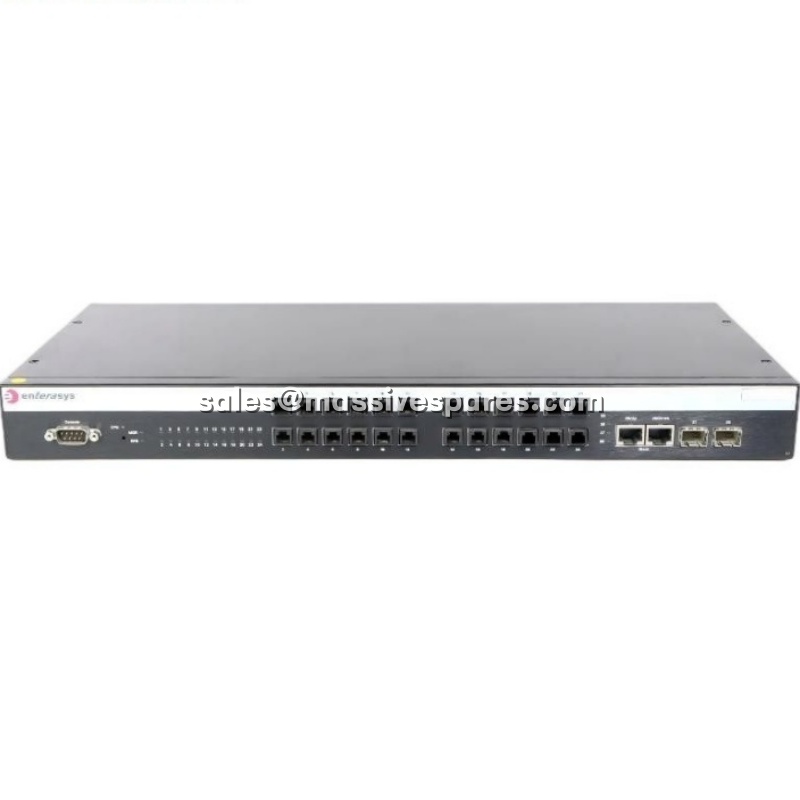
A refining client operating a fluid catalytic cracking (FCC) unit had spent months fighting intermittent Foxboro FCP and FBM dropouts. The root cause was not the controllers: copper runs from remote I/O rack rooms passed within inches of 4,160 V MCC bus duct and large pump-motor feeders, generating burst CRC errors and ground-loop offsets that reset ports during unit transitions. After replacing a tangle of standalone media converters with a single A2H124-24FX, the 24 remote fiber drops were consolidated into one 1U chassis in the unit rack room. Multimode 100BASE-FX links eliminated the ground reference between process areas, and the preconfigured QoS treatment kept FCP peer traffic and interlock messaging ahead of historian and engineering-station traffic during high-load events. The panel also regained usable rack space and cut the media-converter spare-part count to one interchangeable SFP type.
The A2H124-24FX is equally at home in coal- and gas-fired boiler feedwater DCS cabinets, where long fiber runs exceed copper distance limits, and in chemical-plant outdoor auxiliary shelters and turbine/compressor TSI and SIS communication zones. In each case the unit addresses the same operational pain points: electrical noise corrupting control traffic, cabinet real estate consumed by converter pairs, and unpredictable failover when a single fiber path is compromised.
Parameter
| Main Parameters | Value/Description |
|---|---|
| Product Model | A2H124-24FX (Foxboro order/assembly number P0973BJ) |
| Manufacturer | Enterasys Networks, supplied/OEM-configured for Foxboro (Invensys / Schneider Electric) |
| Product Category | Layer 2 managed industrial Ethernet switch, 1U rack-mount |
| Base Fiber Ports | 24 × 100BASE-FX fixed fiber ports, MT-RJ connectors, 100 Mbps full-duplex |
| Uplink / Stack Ports | 2 × 10/100/1000BASE-T RJ45 (configurable as uplink or stacking port); 2 × SFP / Mini-GBIC Gigabit slots |
| Management Port | 1 × RJ45 out-of-band management port; 1 × DB9 RS232 console port; reset button |
| Switching Capacity | 12.8 Gbps standalone (102.4 Gbps stacked), wire-speed, non-blocking |
| Forwarding Rate | 9.5 Mpps standalone (76.2 Mpps stacked) |
| MAC Address Table | 8,192 entries; configuration and VLAN definitions stored in onboard flash |
| Stacking | Up to 8 identical A2-series units as one logical switch domain; no dedicated stacking hardware required |
| Protocols / Features | IEEE 802.1Q VLAN (4,096 VLAN IDs), 802.1p QoS, RSTP/STP/MSTP, IGMP snooping, LACP port aggregation, 802.1X, ACL, port security; jumbo frames up to 9,216 bytes |
| Management | Web GUI, CLI (Telnet/console), SNMP v1/v2c/v3, RMON |
| Power Input | 100–240 VAC, 50/60 Hz universal inlet (typical; some variants support redundant 24 VDC 18–36 VDC) |
| Power Consumption | 38–59 W maximum depending on fitted SFP population |
| Isolation | 1,500 V surge isolation between fiber transceiver bank and main CPU/switch ASIC |
| Operating Temperature | 0 °C to +50 °C continuous; storage –40 °C to +70 °C |
| Environmental Rating | 5–95 % RH non-condensing; PCB conformal coating; fanless natural-convection cooling; IP30 metal enclosure |
| Dimensions (W × H × D) | 441 × 44 × 210 mm (17.4 × 1.73 × 8.3 in), standard 19-inch 1U |
| Weight | Approx. 2.7–3.5 kg (5.9–7.7 lb), varies by power-supply configuration |