
Description
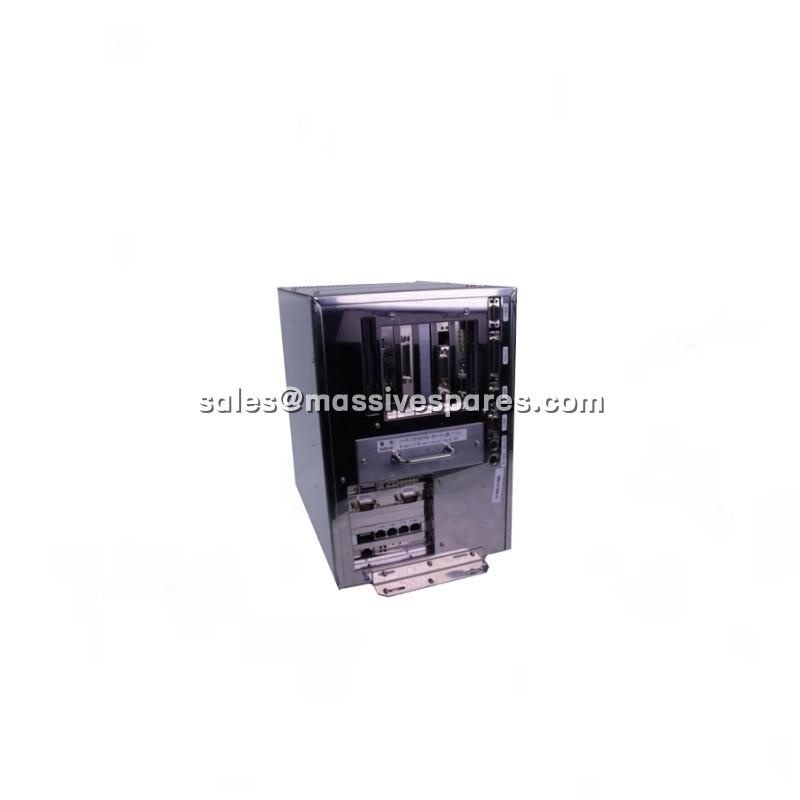
Application Scenarios
In a semiconductor fabrication facility running TEL coater/developer tracks, a Tokyo Electron 2986-411806-11 control unit manages the coordination of wafer transfer robots, process modules, and chemical delivery systems across multiple tool platforms. When a communication fault disrupts the handshake between the coater track and the photolithography scanner, the control unit’s diagnostic reporting directs maintenance engineers to the specific interface module requiring attention, minimizing the risk of wafer scrap due to process interruption .
For a wafer cleaning equipment manufacturer integrating TEL process modules into a 300mm production line, the 2986-411806-11 provides the central control logic that synchronizes chemical dispense sequences, spin coater rotation profiles, and temperature ramp curves. Its RS-232C and Ethernet interfaces enable integration with both legacy host controllers and modern factory automation networks .
Parameter
| Parameter | Value/Description |
|---|---|
| Product Model | 2986-411806-11 |
| Manufacturer | Tokyo Electron (TEL) |
| Product Category | System Control Unit / Controller Module |
| Intended Equipment | Semiconductor manufacturing equipment (coater/developer, cleaning, photolithography post-processing) |
| Power Consumption | Approx. 120 W |
| Communication Interfaces | RS-232C, Ethernet |
| Operating Temperature Range | –20°C to +55°C |
| Dimensions (W × H × D) | Approx. 200 mm × 70 mm × 120 mm |
| Weight | Approx. 2.0 kg |
| Certification | ISO 9001, CE, RoHS compliant |
| Application | Automation control, process management, equipment scheduling |
Technical Principles and Innovative Values
Centralized Control Architecture for Semiconductor Process Tools: The Tokyo Electron 2986-411806-11 serves as the “brain” module within TEL semiconductor equipment platforms, coordinating multiple subsystems including wafer handling robots, process chambers, chemical delivery units, and environmental control systems. This centralized architecture enables deterministic sequencing of complex multi-step process recipes, critical for maintaining wafer-to-wafer process consistency in sub-7nm technology nodes .
Dual-Protocol Communication for Legacy and Modern Integration: The control unit provides both RS-232C serial and Ethernet connectivity, enabling seamless integration with the diverse communication landscape of semiconductor fabs. This dual-interface design allows the 2986-411806-11 to bridge legacy TEL equipment controllers with modern factory host systems, supporting both SECS/GEM protocol implementations and proprietary TEL communication standards .
Compact Form Factor for Cleanroom Equipment Racks: At approximately 200 mm × 70 mm × 120 mm, the 2986-411806-11 is engineered for installation within the space-constrained equipment front-end modules (EFEMs) and control racks characteristic of semiconductor tools. The compact footprint allows dense packaging of control electronics without compromising thermal management or serviceability .
Semiconductor-Grade Reliability Standards: Manufactured to ISO 9001 and CE/RoHS standards, the 2986-411806-11 is designed for the continuous operation and low downtime requirements of semiconductor production. Its operating temperature range of –20°C to +55°C accommodates the ambient conditions within cleanroom equipment bays and sub-fab utility areas .