

Description
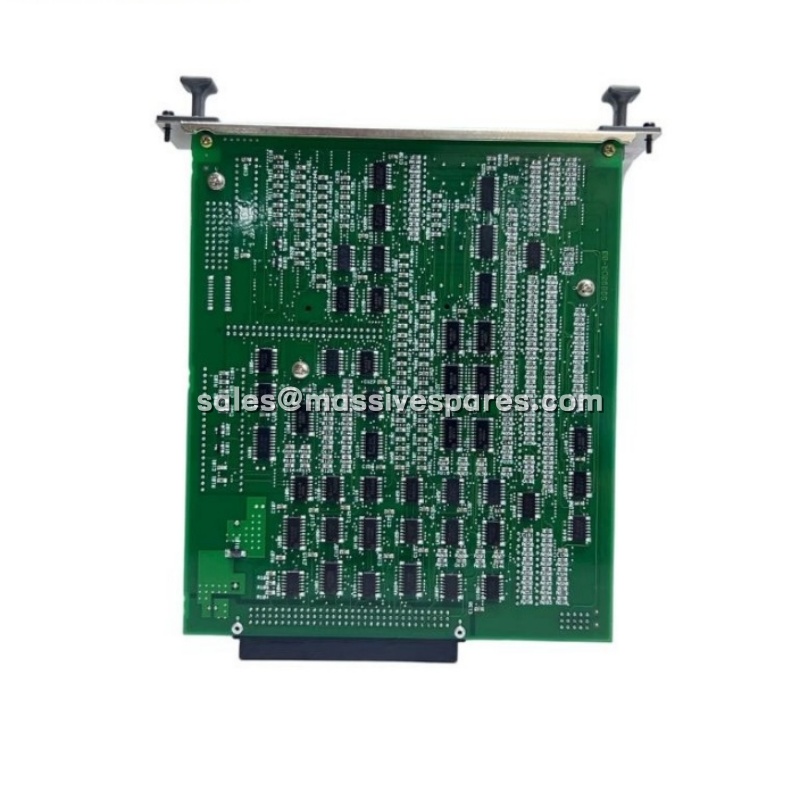
Application Scenarios
In a petrochemical plant, an aging process analyzer provides critical composition data for reactor control, but its only communication interface is a standard RS-232C serial port. The CENTUM DCS cannot directly receive this data through its control network. Without integration, operators must manually read the analyzer display and enter values into the DCS, introducing delays and potential transcription errors that degrade control quality.
Installing a Yokogawa ACM21 in the Field Control Station’s communication card nest solves this problem. The ACM21 connects directly to the analyzer’s serial port, and a user program running in the FCS polls the analyzer at regular intervals, transferring composition data into the DCS database. Operators now see real-time analyzer readings on their trend displays, and the advanced control application can automatically adjust reactor conditions based on the incoming data. The manual transcription step is eliminated, and reactor temperature control improves from ±2°C to ±0.8°C because the DCS receives fresh composition data every few seconds instead of whenever an operator happens to walk by the analyzer.
In power generation plants, the ACM21 is commonly used to connect turbine supervisory instruments, vibration monitors, and other serial-equipped auxiliary systems to the CENTUM control system, ensuring that critical equipment health data is continuously available to plant operators .
Parameters
| Parameter | Value/Description |
|---|---|
| Product Model | ACM21 |
| Manufacturer | Yokogawa Electric Corporation |
| Product Category | RS-232C General-Purpose Communication Card |
| Compatible Systems | CENTUM CS 3000, CENTUM CS 1000, CENTUM VP |
| Interface Type | RS-232C, single port |
| Connection Mode | Point-to-point |
| Communication Mode | Half-duplex |
| Synchronization | Start-stop synchronization |
| Communication Speed | 1200 / 2400 / 4800 / 9600 / 19200 / 38400 bps |
| Transmission Code | ASCII / binary |
| Character Length | 7 or 8 bits |
| Stop Bit Length | 1 or 2 bits |
| Parity Check | None / odd / even |
| Transmission Distance | Maximum 15 meters |
| Connector Type | D-sub 25-pin (female) |
| Current Consumption | 1 A at 5.0 V DC |
| Installation | Communication Card Nest (can be combined with ACM71) |
Technical Principles and Innovative Values
Innovation Point 1 — Seamless Subsystem Integration via User Programs: The ACM21 is not a fixed-function gateway. It provides a raw serial communication channel that user programs running in the Field Control Station can access directly. Engineers write custom logic to define polling intervals, data parsing rules, and failure handling. This flexibility allows the ACM21 to interface with virtually any device that speaks RS-232C, from legacy PLCs to specialized analytical instruments, without requiring dedicated protocol converter hardware .
Innovation Point 2 — Wide Communication Parameter Flexibility: The supports configurable baud rates from 1200 to 38400 bps, selectable character lengths, stop bits, and parity settings . This adaptability means a single module type can serve different devices across the plant, reducing spare parts inventory. When a new serial device is added, engineers simply adjust the communication parameters in the user program rather than ordering a different hardware module.
Innovation Point 3 — Integrated Communication Card Nest Architecture: The installs in the dedicated Communication Card Nest, which can also accommodate the ACM71 Ethernet communication card . This shared nest architecture allows a single Field Control Station to support both serial and Ethernet-based subsystem integration, providing mixed connectivity without consuming additional cabinet space or mounting hardware.