

Description
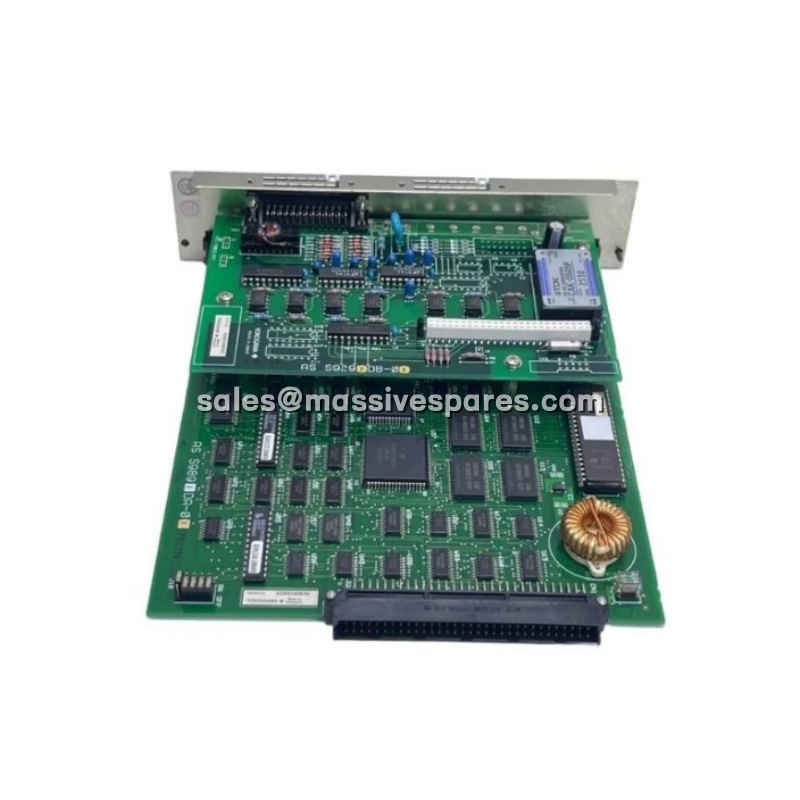
Application Scenarios
A specialty chemical plant was struggling to keep a 20-year-old total hydrocarbon analyzer online after the workstation that read it was retired. The analyzer spoke only RS-232C at 9600 bps, 7 data bits, even parity, one stop bit, and the operations team needed those readings inside the CENTUM historian for batch traceability. Rather than replace a perfectly serviceable analyzer, the site installed a Yokogawa ACM21 in the existing communication card nest. The engineering group set the card to match the analyzer’s exact baud rate, character length and parity, then assigned the serial exchange to a user program in the FCS. Within a short commissioning window the analyzer values appeared as live process points, complete with alarm and trend history. The same ACM21 card also carries maintenance-laptop traffic during offline testing, so one serial path now serves both the analyzer and the periodic engineering interface.
Another common use is linking a CENTUM system to a packaged skid or third-party controller that exposes only RS-232. Here the ACM21 acts as the bridge that keeps the package device’s data visible in the operator’s console and the control room’s data records, without adding a protocol converter box, external power supply or another cabinet device. Because the card is backplane-powered and shares the nest with other communication cards, it is particularly attractive during DCS extensions where panel space and spare parts count matter.
Parameter
| Main Parameters | Value/Description |
|---|---|
| Product Model | ACM21 |
| Manufacturer | Yokogawa Electric Corporation |
| Product Category | RS-232C general-purpose serial communication card |
| Interface | RS-232C, 1 port, point-to-point, asynchronous start-stop synchronization |
| Connector | 25-pin D-Sub female; Yokogawa modem cable KB3 and null-modem cable KB4 |
| Supported Speed | 1200 / 2400 / 4800 / 9600 / 19200 / 38400 bps (selected per channel in engineering configuration) |
| Transmission Code | ASCII or binary |
| Character / Stop Bits | 7 or 8 data bits; 1 or 2 stop bits |
| Parity | None / odd / even (no parity not available at 19200 bps on the original card definition) |
| Turnaround Delay | Approx. 1 ms signal-receive-after-transmit |
| Cable Distance | Maximum 15 m recommended for the RS-232C port |
| Compatible Nests | AMN33, AMN51 and related CENTUM communication card nests |
| Mounting | Plug-in card, backplane connector; no separate cabinet power wiring required |
| Supply / Current | 5.0 V DC from backplane, approx. 1 A |
| Operating Temperature | 0 to +55 °C (indoor control-room / cabinet environment) |
| Storage Temperature | –20 to +70 °C |
| Humidity | 10–95 % RH, non-condensing |
| Dimensions (H × W × D) | 248 × 125 × 130 mm (approx., may vary by revision) |
| Weight | Approx. 0.3–0.7 kg depending on revision and packaging |
| Isolation / Protection | Yokogawa-recommended ferrite clamp filter on the RS-232C cable for enhanced noise immunity; observe card-ground and shield-treatment rules |
Technical Principles and Innovative Values
- Innovation Point 1 — Engineered as a DCS-native serial gateway, not an external converter. The ACM21 lives on the CENTUM backplane and is addressed by the FCS user program, so serial data becomes ordinary control-system data: taggable, alarmable, historized and trended without middleware.
- Innovation Point 2 — Flexible legacy framing. With selectable 1200–38400 bps speed, 7/8-bit character length, 1/2 stop bits and none/odd/even parity, the can match older analyzers and package controllers exactly, rather than forcing the field device to change.
- Innovation Point 3 — Hardware-ready cable scheme. The 25-pin D-Sub interface works with Yokogawa modem cable KB3 and null-modem cable KB4, which removes the uncertainty of home-made crossover wiring and preserves signal naming at both ends.
- Innovation Point 4 — Offloads serial handling from control logic. Communication management runs on the card and its user-program exchange, so the controller’s control loop and safety functions are not blocked by byte-by-byte serial I/O.
- Innovation Point 5 — Conservative, predictable link behavior. Start-stop asynchronous synchronization and a defined receive-after-transmit timing suit short, stable point-to-point instrument links where deterministic framing matters more than high throughput.
- Innovation Point 6 — Field-proven, common spare-part architecture. The shares its card nest with the RS-422/485 ACM22 and other Yokogawa serial modules, so sites standardize spares and maintenance training across the serial subsystem instead of carrying unique spares for every link.