

Description
Application Scenarios
In a large-scale liquefied natural gas (LNG) receiving terminal, the emergency shutdown (ESD) system must respond to gas detection alarms, fire signals, and process upsets within milliseconds while maintaining uninterrupted operation during routine maintenance. The terminal’s safety lifecycle plan required a SIL3-certified controller that could support hot-swap maintenance without compromising safety integrity.
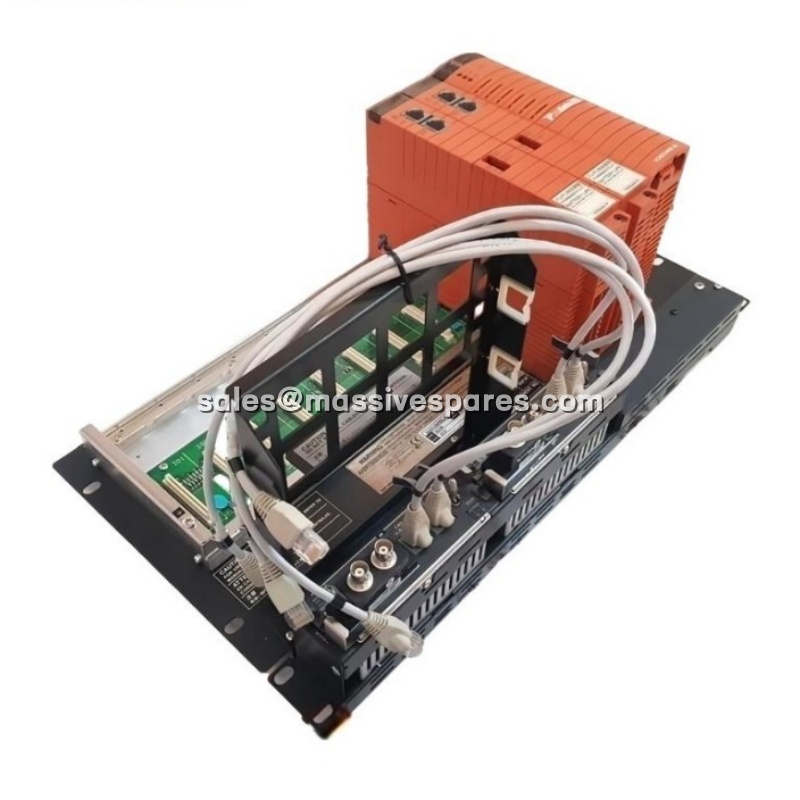
The engineering team selected the Yokogawa SSC10D-S2111 as the core safety controller for the terminal’s ProSafe-RS SIS. With its dual-redundant architecture, the Yokogawa SSC10D-S2111 executes ESD logic in a deterministic scan cycle while simultaneously cross-checking both processor channels. When a pressure transmitter on a cryogenic storage tank drifted outside its safe operating range, the Yokogawa SSC10D-S2111 detected the anomaly and issued the isolation command within its configured 10–100 ms scan cycle, preventing overpressure conditions in the tank.
During a planned maintenance window, technicians replaced one processor module of the Yokogawa SSC10D-S2111 while the LNG terminal remained in full operation. The redundant channel assumed control with a switchover time of under 1 millisecond, and the terminal’s safety functions continued without interruption. This hot-swap capability eliminated the need for a full plant shutdown, saving an estimated 48 hours of production downtime .
For offshore platform applications where cabinet space is limited, the Yokogawa SSC10D-S2111 supports up to nine safety node units (SNUs), enabling distributed safety architectures that reduce field wiring and simplify installation. Its Vnet/IP communication interface integrates seamlessly with the platform’s CENTUM VP DCS, providing operators with unified visibility of both process and safety systems .
Parameter
| Parameter | Value/Description |
|---|---|
| Product Model | Yokogawa SSC10D-S2111 |
| Manufacturer | Yokogawa Electric Corporation |
| Product Category | Duplexed Safety Control Unit (SIS Controller) |
| System Compatibility | ProSafe-RS Safety Instrumented System |
| Processor Architecture | MIPS R5000, 32-bit RISC |
| Memory | 32 MB Flash / 64 MB RAM |
| Redundancy Configuration | Dual-redundant (1oo2D) processor |
| Safety Integrity Level | SIL3 (IEC 61508 / IEC 61511) |
| Response Time (Safety Logic) | ≤10 ms typical |
| Redundancy Switchover | ≤1 ms, bumpless |
| Communication Interface | Dual-redundant Vnet/IP, 100 Mbps |
| ESB Bus Interface | Dual-redundant, 128 Mbps |
| Safety Node Capacity | Up to 9 SNB10D node units |
| Local I/O Capacity | Up to 8 I/O modules per CPU |
| Power Supply (S2111) | 100–120V AC, dual-redundant |
| Power Consumption | Approx. 200 VA |
| Operating Temperature | -10°C to +55°C (standard, fanless) |
| Storage Temperature | -20°C to +70°C |
| Humidity | 5%–95% RH, non-condensing |
| Protection Rating | IP20, ISA G3 (corrosion resistance) |
| Memory Backup | Non-rechargeable battery, up to 3 years |
| Mounting | 19-inch rack-mounted chassis |
| Certifications | CE, ATEX, IECEx, TÜV, RoHS |