Application Scenarios
Picture a packaging machinery OEM designing a high-speed case erector. The machine requires four axes of coordinated motion: a servo-driven infeed conveyor for product spacing, a vertical axis for case blank pickup, a horizontal axis for case forming, and a rotary axis for flap folding. The motion must be tightly synchronized—if the rotary folder leads or lags the horizontal former by even a few milliseconds, the case is crushed or misfolded, resulting in rejected product and jammed machinery.
The engineering team chose the 1768-MO4SE to interface the CompactLogix L45S safety controller with four Kinetix 6000 SERCOS servo drives. The fiber-optic SERCOS ring provided the deterministic communication needed for precise axis synchronization, while the CompactLogix executed the motion profiles and coordinated the sequence logic. During commissioning, the team used Rockwell’s Motion Analyzer software to tune each axis, and the result was a machine capable of 120 cases per minute with positional repeatability measured in hundredths of a millimeter. When a changeover to a different case size was required, the operator selected a new recipe on the HMI, and the 1768-MO4SE automatically reconfigured the servo parameters for the new motion profile—no manual drive reconfiguration, no mechanical adjustment.
Parameter
| Parameter | Value / Description |
|---|---|
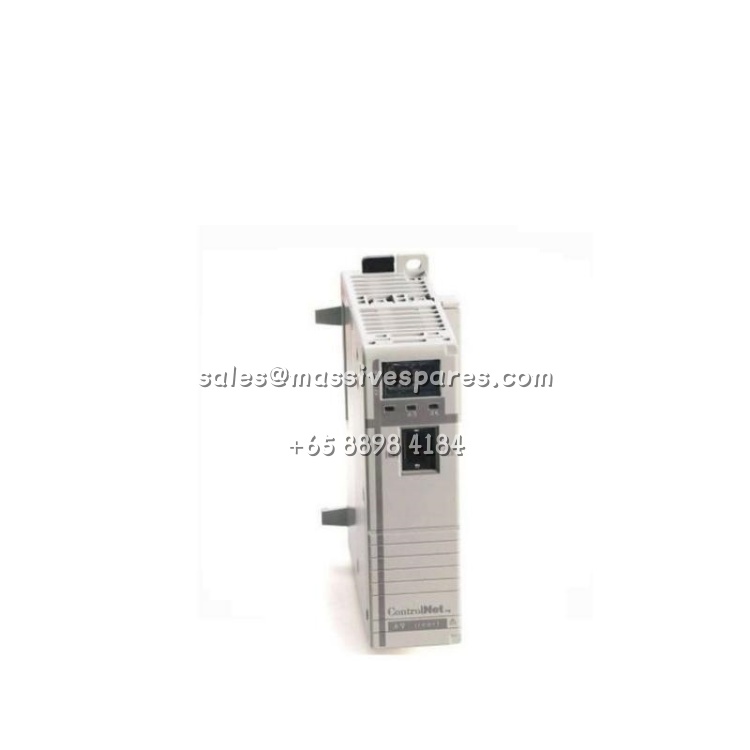
| Product Model | 1768-MO4SE |
| Manufacturer | Rockwell Automation (Allen-Bradley) |
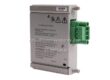
| Product Category | CompactLogix motion interface module (SERCOS) |
| Compatible Platform | Allen-Bradley CompactLogix 5370/5380 series, Logix5000 controllers |
| Number of Axes | 4 axes of motion control |
| Communication Interface | SERCOS (SErial Realtime COmmunication System), fiber-optic ring |
| Communication Medium | Fiber-optic cable (SERCOS ring topology) |
| Update Time | 2 ms typical (SERCOS cycle time) |
| Servo Update Rate | 250 µs to 4 ms (configurable SERCOS cycle) |
| Position Feedback | Via SERCOS drive (resolver, encoder, or absolute encoder depending on drive) |
| Motion Control Types | Point-to-point, velocity, torque, electronic gearing, electronic camming |
| Coordinated Motion | Yes – multi-axis coordinated motion profiles supported |
| Terminal Block | 1768-TBNH (20-position terminal block) |
| Input Voltage | 24 V DC nominal |
| Power Dissipation | 8 W |
| Enclosure Type | Open-style (requires installation in a rated control cabinet) |
| Operating Temperature | 0 °C to +60 °C (32 °F to 140 °F) |
| Storage Temperature | -40 °C to +85 °C (-40 °F to 185 °F) |
| Relative Humidity | 5% to 95% (non-condensing) |
| Shock Resistance | 30 G |
| Vibration Resistance | 2 G @ 10–500 Hz |
| Dimensions (W × H × D) | 30 × 140 × 110 mm (1.18 × 5.51 × 4.33 in) |
| Weight | Approx. 0.28 kg (0.62 lbs) |
| Configuration Software | Studio 5000 / RSLogix 5000 with Motion Analyzer |
| Compatible Drives | Kinetix 6000, Kinetix 6500 (SERCOS-compatible servo drives) |
| Product Status | Mature / legacy product; available as new surplus, refurbished, or used spare |
Technical Principles and Innovative Values
- Innovation Point 1 – SERCOS Fiber-Optic Deterministic Communication: The 1768-MO4SE uses a fiber-optic SERCOS ring to communicate with servo drives. Unlike Ethernet-based motion control, which shares bandwidth with HMI, historian, and enterprise traffic, the SERCOS ring is a dedicated, deterministic network with a fixed communication cycle. This guarantees that servo updates occur on time, every time—essential for high-speed coordinated motion where a missed update means a positioning error.
- Innovation Point 2 – Offloaded Motion Timing: By handling the millisecond-level servo communication independently of the controller’s backplane scan, the 1768-MO4SE allows the CompactLogix processor to focus on sequence logic, HMI updates, and communication tasks. The motion interface module manages the demanding real-time timing of servo updates, while the controller calculates motion profiles and makes decisions. This division of labor is what makes multi-axis coordinated motion possible in a compact controller form factor.
- Innovation Point 3 – Four-Axis Coordinated Motion: Supporting four axes of coordinated motion, the 1768-MO4SE enables complex motion profiles including point-to-point positioning, velocity control, torque control, electronic gearing (one axis following another at a programmed ratio), and electronic camming (one axis following a non-linear profile defined by a cam table). These capabilities are what transform a simple pick-and-place operation into a sophisticated synchronized machine.
- Innovation Point 4 – Fiber-Optic Noise Immunity: The SERCOS ring uses fiber-optic cable, which is immune to the electromagnetic interference generated by servo motors, VFDs, and high-current busbars. In a cabinet where a standard copper network cable would pick up noise and suffer communication errors, the fiber-optic SERCOS ring maintains signal integrity—a critical advantage in high-power motion control applications.
- Innovation Point 5 – Tight Logix5000 Integration: As a native CompactLogix I/O type, the 1768-MO4SE appears in the Logix5000 I/O configuration tree and supports standard motion instructions including MAM (Motion Axis Move), MAG (Motion Axis Gear), MAC (Motion Axis Cam), and MAJ (Motion Axis Jog). This consistency means motion programmers already familiar with the Logix5000 motion instruction set require no additional training.
- Innovation Point 6 – Legacy System Preservation: As a mature product serving the CompactLogix platform, the 1768-MO4SE plays a vital role in maintaining and extending the life of installed SERCOS motion systems. Rather than forcing a forklift upgrade of servo drives and motion modules to a newer protocol, plants can retain proven SERCOS infrastructure while modernizing other aspects of the control system.