Technical Specifications
| Parameter | Value |
|---|---|
| Product Model | 2711-RP6 |
| Manufacturer | Allen-Bradley / Rockwell Automation |
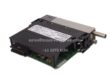
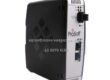
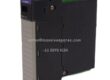
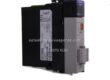
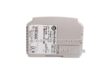
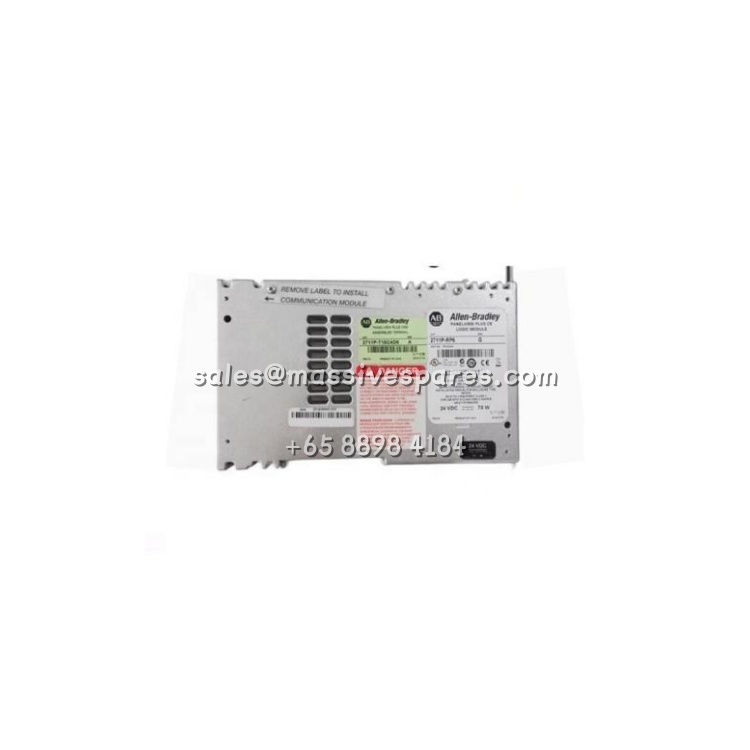
| Product Type | PanelView Plus Logic Module (removable HMI compute / communications module) |
| Compatible Terminals | PanelView Plus 600, 1000 and 1500 (600/1000/1500 class display assemblies) |
| Platform / Generation | PanelView Plus 6 logic generation; Windows CE 6.0 runtime |
| Processor | 1 GHz class ARM applications processor |
| System Memory | 256 MB RAM |
| Nonvolatile Storage | 512 MB flash (approximately 70–80 MB free for user project / alarms / recipes) |
| Real-Time Clock | Battery-backed RTC, ±2 min/month; field-replaceable coin cell, 4 years minimum at 25 °C |
| Ethernet Interface | 1 × 10/100Base-T, Auto-MDI/MDI-X, located on terminal rear panel via logic-module I/O header |
| Serial Interface | 1 × RS-232 (DB9 on terminal rear; UART routed through the logic module) |
| USB Interfaces | 1 × USB host (Type A), 1 × USB device (Type B), rear-panel accessible |
| Removable Media | Hot-swappable SD card slot, SD/SDHC (1784-SDx / 1784-SDHCx), FAT32 formatted |
| Supported Protocols | EtherNet/IP (CIP), TCP/IP; DF1, Modbus RTU/ASCII, DH-485 on the serial path per application configuration |
| Runtime Software | FactoryTalk View Machine Edition runtime; loads .MER applications, 67 online languages |
| Watchdog / Diagnostics | Runtime watchdog and boot-monitor recovery; status LEDs and POST reported through the display |
| Input Power | 24 V DC nominal, supplied by the host terminal backplane from the panel’s external 18–30 V DC supply |
| Power Dissipation | Approximately 9–15 W depending on terminal class, backlight state and USB/PMC loading |
| Mechanical Form / Fit | Shielded metal logic-module canister with board-to-backplane connectors and display ribbon; retained by a single captive/panel screw |
| Operating Environment | 0…+55 °C, 5…95% RH non-condensing, up to 2000 m; logic module operates inside the sealed terminal housing |
| Agency / Compliance | UL, cULus, CE, RoHS (per host terminal label and revision) |
| Lifecycle Status | Obsolete / discontinued by OEM; supplied as new-surplus, refurbished or tested exchange stock |
Main Features and Advantages
One spare covers three panel sizes
The most underrated feature of the 2711-RP6 is commonality. The logic module is shared across the 600, 1000 and 1500 classes, so a maintenance store does not need to hold a different brain for every display diagonal on the plant list. A 5.7-inch local station, a 10.4-inch machine HMI and a 15-inch supervisor panel can all come back online from the same shelf part. That consolidation only works if firmware revisions and application versions are tracked, but for a site disciplined enough to label its SD images, the 2711-RP6 is one of the cheapest spares-reduction wins in the cabinet.
A true field-replaceable compute node
Swapping the 2711-RP6 is a ten-minute job rather than a panel-strip job. Release the terminal from the door, undo the logic-module retaining screw, disconnect the display ribbon and backplane headers, and the faulty brain is out. The display, touch overlay, bezel gasket, Ethernet and serial wiring, and the panel cutout all stay untouched. Because the application and recipes can be carried on the SD card, recovery is often a matter of moving the media from the failed unit to the replacement 2711-RP6 and rebooting into a known-good image.
Communications that bridge two generations of control equipment
Ethernet handles EtherNet/IP tag traffic to ControlLogix, CompactLogix and Micro800 controllers, while the RS-232 path keeps the older world alive — a MicroLogix DF1 link, a serial printer, a modem, or an analyser speaking Modbus RTU or ASCII. That duality is why the 2711-RP6 is so useful during staged migrations: the Ethernet side can move to a new Logix backbone while the serial side continues to serve the instrument that nobody has budgeted to replace yet. USB host and device ports add a final layer of convenience for keyboard attachment, runtime downloads and on-the-spot application transfer.
Predictable failure modes, no moving parts
There is no fan and no spinning disk inside the 2711-RP6. The flash is solid-state, the RTC is a coin cell, and the SD card is the only consumable media. That means failures tend to announce themselves: a flat battery drifts the clock, a full or worn flash corrupts on write, and a damaged ribbon produces a blank display while the logic module itself is still healthy. Learning to distinguish those symptoms from a genuinely failed 2711-RP6 is what separates a twenty-minute repair from an expensive false spare-order.
Application Field
The primary use of the 2711-RP6 is resurrection rather than new design. On a packaging line, a form-fill-seal machine or a cartoner, the outer display assembly may be perfect while the terminal suddenly fails to boot, drops its IP configuration, or throws a runtime error on every restart. Dropping in a tested 2711-RP6 restores the original .MER, the original alarm history behaviour and the original operator screen flow without reopening the panel cutout or retraining the crew. In a validation-sensitive environment, that matters: the screens, alarms and recipe fields the quality system signed off on are exactly what go back into service.
Material handling and process skids use the module the same way. A sortation cell, palletising station or water-treatment skid typically pairs a small local HMI with a larger supervisor panel elsewhere on the line. Both may share the same 2711-RP6 logic generation, so a single tested module in the stores becomes a universal repair path for the whole cell. When the fault is in the communication stack — Ethernet link unstable, serial port unresponsive, USB not enumerating — the module swap is also the fastest diagnostic: move the suspect 2711-RP6 to a known-good display, and the fault either follows the module or stays with the bezel and ribbon.
The second major application is the spare-pool and lifecycle programme. Plants that still depend on PanelView Plus 600/1000/1500 terminals know the platform is out of production, and a logic-module failure is the one that cannot be patched with a new overlay or a backlight. Procuring a 2711-RP6 before it is needed turns an unpredictable failure into a scheduled twenty-minute maintenance window. It also creates an orderly migration path: while the legacy terminal stays in service, the engineering team can develop the replacement HMI at a sensible pace, test it against a non-critical station, and only then cut over the critical lines.
Finally, the 2711-RP6 is valued by system integrators and panel builders who refurbish second-user equipment. A used terminal with a perfect screen but a dead logic module is uneconomical until you have a source of tested modules; once you do, the 2711-RP6 is what makes the whole unit saleable again. That aftermarket role has kept the part relevant long after the catalogue listing disappeared.
Related Products
2711P-RP6A — Alternate factory suffix of the same PanelView Plus 6 600/1000/1500 logic module, usually distinguished by firmware load, component revision or regional agency marking. Always compare the full sticker string against the installed 2711-RP6 before swapping.
2711P-RP6C — Later-component-revision logic module for the same terminal family. Mechanically and pin-compatible with the 2711-RP6, but the CE build and firmware should be aligned to the existing .MER and terminal series.
2711P-RP5 — Logic module for the earlier PanelView Plus 550/600/1000 generation (CE 5.x / older ME runtime). It is not a direct substitute for the 2711-RP6; the ribbon, firmware and application revision boundaries make it a last-resort or migration-only option.
2711P-RP7 — Logic module associated with the PanelView Plus 7 architecture. It is the modern replacement direction rather than a fitment for a 2711-RP6, and the display assembly, cutout and application conversion must all be planned.
2711P-RY2032 — Replacement RTC coin cell used inside the PanelView Plus logic module. A weak cell is a frequent cause of clock drift and lost configuration on a stored 2711-RP6; replace it before blaming the flash or the application.
1784-SDHC32 — 32 GB SDHC media for holding the runtime image, recipes and alarm history. Keeping a labelled, known-good card with every 2711-RP6 turns a module swap into a reboot-and-load rather than a search for project files.
2711P-RN20 — Optional additional Ethernet communication module for larger PanelView Plus terminals. Where a second independent EtherNet/IP network is required, this is the accessory that pairs with the 2711-RP6 communication fit.
2711P-T6M20D8 — 5.7-inch grayscale touch PanelView Plus 6 600 terminal that houses the 2711-RP6 logic generation. The most common display assembly encountered during a module-only swap or diagnosis.
2711P-T10C4D8 — 10.4-inch colour touch PanelView Plus 6 1000 terminal, the middle of the three display classes that share the 2711-RP6 logic module and a frequent source of cross-compatible spares.
2711P-T15C4D8 — 15-inch colour touch PanelView Plus 6 1500 terminal, the largest host for the 2711-RP6. A module pulled from a 1500 can often be validated in a 600 or 1000 bezel during bench testing, subject to firmware and runtime revision checks.