Product Overview
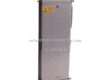
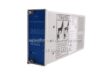
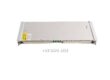
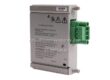
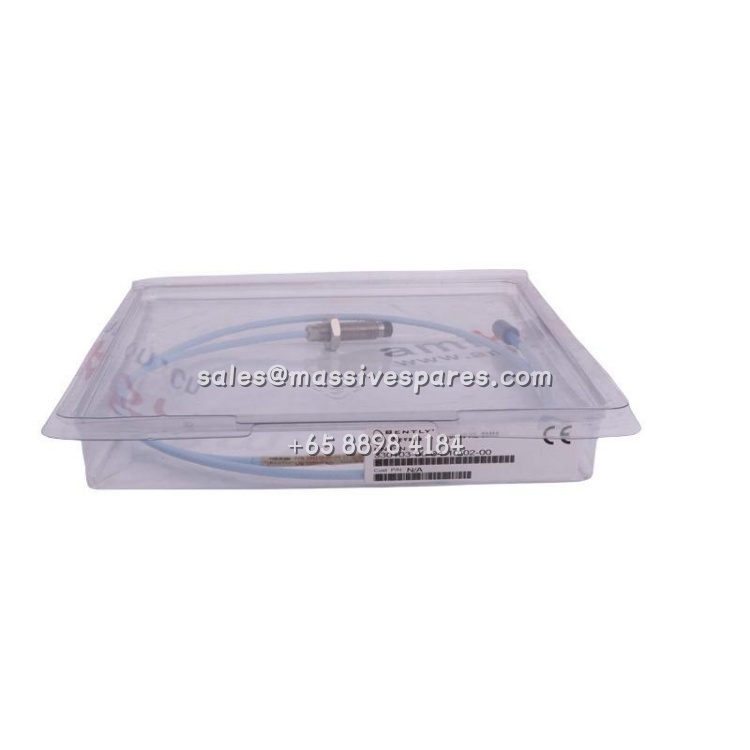
The Bently Nevada 3300/55 Dual Velocity Monitor is a rack-mounted, dual-channel protection module from the legacy Bently Nevada 3300 machinery monitoring family, purpose-built to measure absolute casing or bearing-housing vibration velocity on critical rotating assets. Rather than inferring mechanical condition from shaft displacement, the 3300/55 accepts live signals directly from Velomitor® piezo-velocity transducers, High Temperature Velomitor Systems (HTVS) and Velocity Seismoprobe® sensors, then converts that raw seismic signal into a calibrated velocity value, compares it against independently set Alert and Danger thresholds, and drives both local annunciation and hard-wired trip contacts. That architecture is why the module remains a standard-issue reference on steam and gas turbines, centrifugal compressors, large motors, fans and pumps wherever ISO 10816-style velocity severity is the accepted acceptance criterion.
What gives the Bently Nevada 3300/55 its longevity in the field is configurability without software dependency. Sensitivity is selected by on-board jumpers at 100 mV/in/s, 145 mV/in/s or 500 mV/in/s, while per-channel high-pass and low-pass corner frequencies can be tailored to the machine’s speed and fault-frequency spectrum — 3 to 400 Hz high-pass and 24 to 3,000 Hz low-pass for Velomitor/HTVS paths, with Velocity Seismoprobe inputs extending to 10 kHz. The result is a measurement chain that rejects low-frequency foundation sway and high-frequency electrical noise alike, while preserving the 1×, 2× and blade- or gear-mesh content engineers actually use for diagnosis.
Operationally, the Bently Nevada 3300/55 sits between the sensor and the plant’s safety and information layers. Each channel delivers a proportional recorder output — selectable as +4 to +20 mA, 0 to –10 VDC or +1 to +5 VDC — so DCS, SCADA, PLC and historian points see the same value the protection logic acts on. Front-panel BNC and rear-terminal buffered outputs carry the raw or filtered transducer waveform, which lets a portable FFT analyser or data collector be connected without breaking the protection path. The module’s two 63-segment vertical LCD bargraphs, green OK LED, red Bypass LED and Alarm/Danger contact logic give operators an immediate read on machine and channel health, even when the host system is out of service.
For plants maintaining mature 3300 installations, the 3300/55 is a continuity part. It is not pin- or firmware-compatible with the newer 3500 platform, and mixing the two families is a common specification error. Supplied as a tested, revision-verified module with label and option-code matching, the Bently Nevada 3300/55 Dual Velocity Monitor restores a failed channel to the original protection baseline without re-engineering the rack, re-terminating the field cable or re-writing the alarm philosophy.
Technical Specifications
| Parameter | Value |
|---|---|
| Product Model | 3300/55 (configuration-dependent, e.g. 3300/55-01-04-…) |
| Manufacturer | Bently Nevada (Baker Hughes / ex-GE) |
| Product Type | Dual-Channel Velocity Monitor / Machinery Protection Module |
| Series / Platform | Bently Nevada 3300 Series rack system (not 3500-compatible) |
| Input Channels | 2 independent velocity channels |
| Compatible Transducers | Velomitor®, HTVS, Velocity Seismoprobe® |
| Input Sensitivity | Jumper-selectable 100 / 145 / 500 mV per inch per second |
| Frequency Response | 3 Hz – 3,000 Hz (Velomitor/HTVS); 3 Hz – 10,000 Hz (Velocity Seismoprobe), unfiltered |
| High-Pass Filter | 3 – 400 Hz, 2-pole (≈40 dB/decade), per channel, jumper-selected |
| Low-Pass Filter | 24 – 3,000 Hz, 2-pole (≈40 dB/decade), per channel, jumper-selected |
| Measurement Scales | Per option code; typical 0–20 mm/s pk, 0–50.8 mm/s pk (0–1.0 / 0–2.0 in/s pk) |
| Accuracy | ±0.33 % of full-scale typical; ±1.0 % max (±2 % at 2× Trip Multiply, ±3 % at 3×) |
| Recorder / Analog Output | +4 to +20 mA, 0 to –10 VDC, or +1 to +5 VDC; one per channel, proportional to full-scale |
| Current Output Compliance | 0 to +12 VDC across load; 0 to 600 Ω load capability |
| Alarm Setpoints | Alert and Danger per channel, adjustable 0–100 % of full-scale |
| Alarm Repeatability | Within ±0.39 % of full-scale |
| Relay Interface | Alarm relay module mounts behind monitor; Alert and Danger contacts, OR/AND voting configurable |
| Buffered Outputs | Front-panel BNC and rear-terminal per channel; filtered/unfiltered, velocity/displacement selectable |
| Display / Indicators | 63-segment vertical LCD per channel; green OK, red Bypass, Alert/Danger status |
| Power / Consumption | –24 VDC from 3300 backplane; ≈1.5 W typical (≈7.7 W rack-slot budget on some configurations) |
| Operating Temperature | 0 °C to +65 °C |
| Storage Temperature | –40 °C to +85 °C |
| Humidity | Up to 95 % RH, non-condensing |
| Mechanical Form | 3300 single-slot rack module; approx. 165 × 25 × 102 mm per channel module, 0.28 kg |
Main Features and Advantages
Two channels, one protection philosophy: The defining strength of the 3300/55 is that it gives you two fully independent velocity channels in a single slot. Mount one sensor horizontally and one vertically on the same bearing housing and you get orthogonal casing-velocity coverage; alternatively, dedicate one channel to each of two smaller machines and halve the rack real estate. Because scaling, filtering and alarms are per-channel, a slow-speed fan and a high-speed motor can share a module without compromising either setpoint.
Sensor-native signal conditioning: The Bently Nevada 3300/55 does not need an external interface or proximitor card to talk to seismic sensors. Velomitor, HTVS and Velocity Seismoprobe inputs are accepted directly, and the jumper-selected 100/145/500 mV/in/s sensitivity scales the gain to the probe family you already have in the field. That matters on a retrofit, where re-cabling a housing-mounted velocity sensor is expensive and changing the sensor type just to match a new monitor is not an option.
Filtering you can tune to the machine, not the catalogue: Per-channel high- and low-pass networks let you suppress foundation roll and drive-train high-frequency hash while keeping the fault band of interest intact. The integrator-before- or -after-filter positioning option further lets you decide whether the buffered output is velocity or displacement, so the same module feeds both the protection trip chain and a diagnostic analyst’s portable analyser without an extra signal conditioner.
Alarm logic built for trip reliability: Alert and Danger thresholds are set as a percentage of full-scale and held with better than ±0.4 % repeatability. Latching or non-latching behaviour, Danger Bypass and Timed OK/Channel Defeat are selected to match the plant’s trip philosophy, while OR/AND relay voting is wired at the alarm relay module. The 3300/55 therefore slots cleanly into an API 670-aligned protection scheme rather than sitting downstream as a mere indicator.
DCS and analyst access without compromising protection: Each channel’s recorder output is independently scaled, so the control room sees a live 4–20 mA trend that maps exactly to the local bargraph. Simultaneously, the short-circuit-protected buffered outputs let a technician connect an FFT collector at the front panel during a suspect-alarm investigation while the protection channel stays live. That dual-access design is a real time-saver during startup and post-repair validation.
Legacy-platform continuity: Because the 3300 family is long out of active catalogue preference, the practical advantage of a verified Bently Nevada 3300/55 is availability. A module that matches the original option code, tests on a 3300 backplane and ships with traceable documentation turns a protection-channel failure from a trip-event into a scheduled swap.