Product Overview
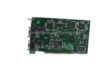
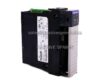
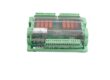
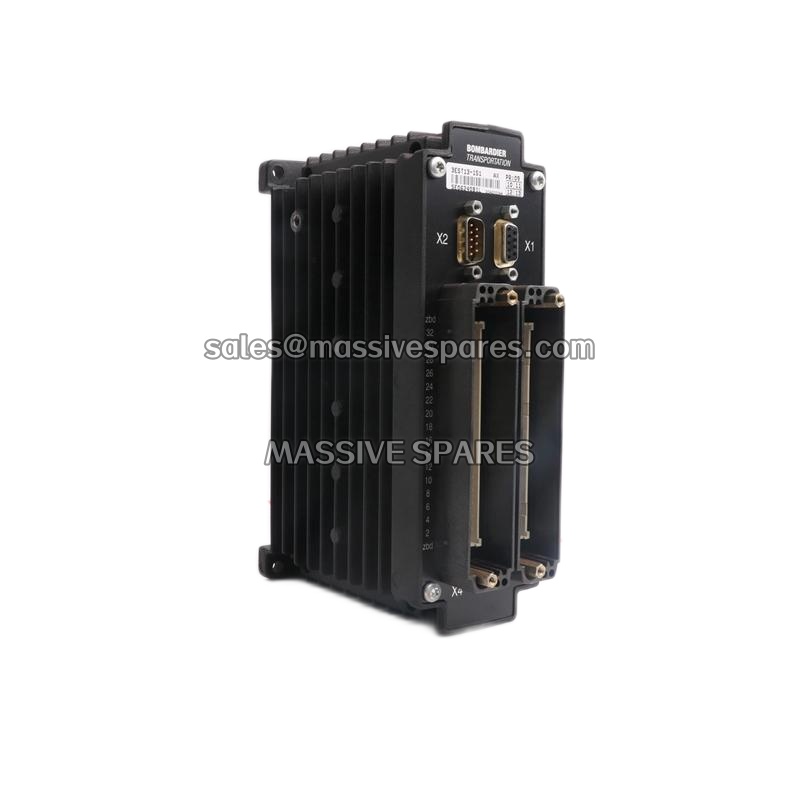
The Bombardier Transportation 3EST13-151 DCA2000A is a vehicle-borne analog input/output module from Bombardier Transportation’s 3EST series, commercially identified by the board marking DCA2000A and belonging to the DCA2000 family of car-body I/O within the MITRAC vehicle control platform. Bombardier Transportation’s rail control portfolio, including MITRAC, was acquired by Alstom in 2021; the module is therefore now sourced through Alstom channels or qualified MRO specialists, while remaining mechanically and firmware-compatible with the original MITRAC rack. In plain terms, the Bombardier Transportation 3EST13-151 DCA2000A is the “vehicle-level end acquisition” card: it sits closest to the transducers, converts their analog quantities into digital process data, and delivers that data to the VCU/CCU over the train communication network. It is not a cabinet-grade industrial I/O card dressed up for rail duty; it is a rail-grade device designed from the substrate up for the shock, vibration, temperature span and EMC environment of a moving train.
The Bombardier Transportation 3EST13-151 DCA2000A is the analog member of the 3EST13 AX/DX I/O unit family, paired with the DCD2000 digital module (the names differ by one letter—A for Analog, D for Digital—and the BOMs do not interchange, a distinction that matters at 02:00 in a depot). Two hardware裁减 (cut-down configurations) are documented. The compact auxiliary-control form provides 2 analog inputs (0–10 V / 4–20 mA), 2 digital inputs (24 V DC) and 4 relay outputs (250 V AC/DC, 2 A). The higher-density MITRAC form provides 16 analog inputs and 4 analog outputs, 0–10 V / 0–20 mA, 12-bit resolution, with a deterministic ≤100 ms conversion cycle. The correct channel count for any given vehicle must be confirmed against the vehicle BOM and rack position, not inferred from the model number—this is the single most common cause of a mis-specified spare.
The Bombardier Transportation 3EST13-151 DCA2000A interfaces natively as an MVB slave (IEC 61375-3-3, 1.5 Mbit/s) on MITRAC/ORION/CITYFLO fleets, and via RS-485 Modbus RTU on derivative and auxiliary configurations. The VCU therefore sees each analog channel as a two-byte process-data word in the MVB telegram—no OPC wrapper, no PROFIBUS gateway, no “why is my AI not in the tag list” mystery. Powered from the vehicle battery (24 V DC in saloon racks, 74/110 V DC stepped down internally in underframe and bogie racks), the Bombardier Transportation 3EST13-151 DCA2000A is the component that decides whether the driver’s HMI shows a credible cooling-water temperature or a yellow “out of range” flag that grounds the train.
Technical Specifications
| Parameter | Value |
|---|---|
| Product Model | 3EST13-151 (commercial: DCA2000A) |
| Manufacturer | Bombardier Transportation (BT; rail control portfolio now part of Alstom Mobility) |
| Product Type | Vehicle-borne Analog I/O Module (3EST13 AX unit family) |
| Platform | MITRAC / ORION / CITYFLO vehicle control; car-body I/O rack |
| Family Relation | DCA2000 (Analog) paired with DCD2000 (Digital); BOMs not interchangeable |
| Analog Inputs (compact form) | 2 AI, 0–10 V DC / 4–20 mA DC, configurable per channel |
| Analog Inputs (MITRAC高密度 form) | 16 AI, 0–10 V / 0–20 mA (4–20 mA passive loop supported) |
| Analog Outputs | 4 AO, 0–10 V / 0–20 mA, voltage/current configurable |
| Digital Inputs (compact form) | 2 DI, 24 V DC |
| Relay Outputs (compact form) | 4 RO, 250 V AC/DC, 2 A |
| Input Impedance | Current mode ≈ 250 Ω (internal shunt); voltage mode ≥ 1 MΩ |
| Resolution | 12 bit per channel (14 bit on later batches; confirm per BOM) |
| Accuracy | ±0.3 % FS at 25 °C; ±0.5 % FS over –25 °C to +70 °C |
| Conversion / Sampling Cycle | ≤ 100 ms per channel (deterministic); synchronized to MVB process-data cycle, typically 16–32 ms per scan |
| System Bus | MVB slave, IEC 61375-3-3, 1.5 Mbit/s, process-data telegrams |
| Alternative Bus | RS-485, Modbus RTU; CANopen LSS/PDO on some CITYFLO/ORION variants |
| Node Addressing | Auto-enumerated MVB slave; one I/O rack = one MVB slave node, 8–16 modules share node address |
| Supply Voltage | 24 V DC (saloon/cabinet rack); 74 V / 110 V DC (bogie/underframe rack, internally stepped down) |
| Current Draw | ≈ 50–250 mA at 24 V DC (configuration-dependent) |
| Power Consumption | ≤ 1 W typical, ≤ 5 W module; ≤ 15 W max including relay-driver stage |
| Isolation | Galvanic isolation of field side from logic; internal DC/DC with surge/load-dump absorption |
| Status Indication | Per-channel and per-module status LEDs (PWR, ERR, ACT, range/valid) |
| Field Connectors | 2 × M12 circular, shielded, vibration-resistant (compact form); Harting/TE heavy-duty keyed connectors on rack form |
| Substrate | Multilayer FR-4, conformal coated (polyurethane, ≈ 50 µm), G3 corrosion class |
| Protection Functions | Reverse-polarity protection, overvoltage/load-dump suppression, open-circuit and out-of-range detection, watchdog |
| Operating Temperature | –25 °C to +70 °C (saloon/cabinet); –40 °C to +85 °C (bogie-mounted batches, BOM-dependent) |
| Storage Temperature | –55 °C to +85 °C |
| Relative Humidity | 5 % – 95 % RH, non-condensing, with condensation tolerance |
| Vibration / Shock | IEC 61373 Category 1 Class B (saloon) or Class A (bogie); confirm BOM |
| Protection Rating | IP20 (within cabinet); IP54 possible with rack outer shroud |
| Dimensions (approx.) | 100 × 60 × 50 mm (compact) to 160 × 100 × 20 mm (rack module), variant-dependent |
| Net Weight | ≈ 0.2 – 0.5 kg |
| Mounting | BT vehicle I/O rack / 19″ subrack or DIN-profile inside car-body electrical cabinet; coded keying |
| Certifications | EN 50155, EN 50121 (EMC), IEC 61373, EN 45545 (fire/smoke toxicity, HL3 typical), EN 60068, CE, UL, ISO 9001, CRCC (China) |
| Lifecycle Status | Mature / end-of-life progression post-Alstom acquisition; supplied as new-surplus or verified serviceable |