Description
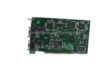
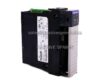
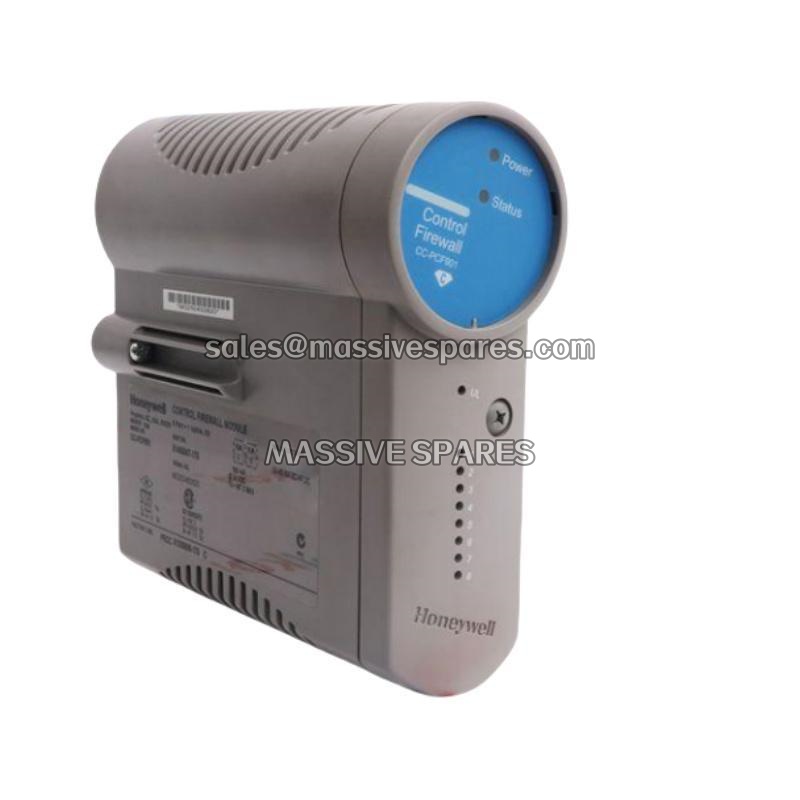
The Honeywell 8C-TAIXA1 (part number 51307127-175) is the 8C-coated, non-redundant, 16-channel single-ended analog input IOTA (Input/Output Termination Assembly) for the Honeywell Experion PKS Series 8 I/O system, and it mates with the 8C-PAINA1 single-ended analog input IOM (Input Output Module). Its job is to terminate sixteen 4–20 mA field transmitter loops, condition those low-level signals, and hand digitized process values to the C300 controller over the Series 8 I/O Link—without the control strategy ever having to think about wiring, common mode or grounding.
It is deliberately not a temperature-input module (that is the 8C-TAIMA1 / 8C-PAIMA1 pair), and it is deliberately not an isolated-per-channel design. What it is is the highest-density, lowest-cost, corrosion-hardened way to get sixteen current loops into a C300 system when the field instruments share a clean, unified ground—which, in a properly designed marshalling cabinet, they do.
Application Scenarios
A refinery crude-distillation unit carries 140 field transmitters: differential-pressure flow, pressure, level and analytical cells, almost all of them 4–20 mA two-wire. The original I/O design used isolated-per-channel analog input cards at four channels each. It was correct, but it was expensive: 35 modules, 35 slots, 35 termination assemblies, and a cabinet that had physically run out of rail. The instrument engineer’s choice was either a second cabinet or a different I/O strategy.
The solution was the Honeywell 8C-TAIXA1. By grouping loops whose field-side grounds were already common—pumps on a single skid, a shared instrument air header, a common junction-box tray—the design consolidated sixteen loops onto one 6-inch IOTA. Module count fell to nine, slot count fell by 26, and the cabinet closure was cancelled. The key engineering discipline was grounding, not configuration: because the 8C-TAIXA1 is a common-ground, single-ended design, the plant enforced a single equipotential plane at the marshalling cabinet and banned “clever” grounding tricks at the transmitter. The result was a 60% reduction in I/O hardware cost, a 20 Hz update rate (50 ms per channel), ±0.075% FS accuracy at 23.5 °C ±2 °C, and crosstalk below –60 dB. The control loops did not change; the bill of materials did.
The same module solves a different problem in a chemical plant running a hydrochloric-acid absorption section. Here the hazard is not cost but corrosion: vapor finds the one uncoated trace, wicks under the conformal layer, and a 3,000 module becomes a 3,000 resistor. The 8C-TAIXA1 (the “8C” prefix) carries a G3-grade conformal coating per ANSI/ISA-S71.04, qualified for the mixed-gas, high-humidity, salt-fog environment of a Gulf Coast chlor-alkali unit. Three years after installation, the failure rate of the coated IOTAs was statistically indistinguishable from the uncoated ones in the air-conditioned control room—and materially lower than the third-party “equivalent” cards the plant had tried the decade before.