
Application Scenarios
A large-scale petrochemical complex in the Middle East faced a fundamental infrastructure constraint: the central control room and the tank farm instrumentation were separated by approximately 3.5 kilometers of process area, with no feasible path for conventional copper-based control cabling. Running electrical ESB bus cables across this distance would expose the communication link to severe electromagnetic interference from high-voltage pump motors and would violate grounding isolation requirements between the two areas.
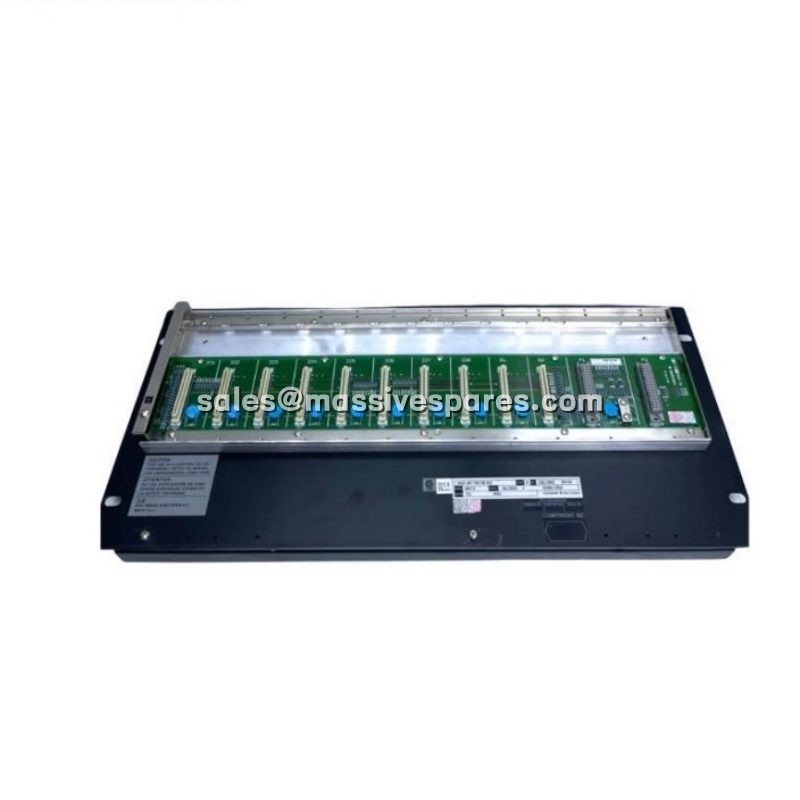
The solution deployed ANB11D-225 node units at both the control room end and the remote instrument enclosure (RIE), establishing a fiber-optic ESB bus link that completely eliminated EMI susceptibility and ground loop concerns. The ANB11D-225 optical repeater function converted the FCU’s electrical ESB signals into optical pulses at the transmitting end and reconstructed them at the receiving end, maintaining deterministic communication with remote I/O modules as if they were physically adjacent to the controller. Since commissioning, the fiber link has maintained 100% availability across three years of continuous operation, and the plant avoided the multi-million-dollar cost of constructing a climate-controlled satellite control room in the process area.
Parameter
| Parameter | Value/Description |
|---|---|
| Product Model | ANB11D-225 |
| Manufacturer | Yokogawa Electric Corporation |
| Product Category | Optical ESB Bus Node Unit (Dual-Redundant) |
| System Compatibility | CENTUM VP / CENTUM CS 3000 DCS |
| Applicable FCU | AFV30 / AFV40 series |
| Optical Transmission Distance | 5 km (suffix -2) |
| Power Supply Configuration | Dual-Redundant (Active-Active) |
| Input Voltage Options | 100–120 V AC / 220–240 V AC / 24 V DC |
| Power Consumption | 230 VA / 120 W (max, AC versions) |
| I/O Module Capacity | Up to 8 FIO modules per node |
| Connection to FCU | ESB Bus Couple Module EC401 or EC402 |
| Mounting | 19-inch rack (M5 × 4 screws) |
| Weight | 10 kg (including 8 I/O modules) |
| Explosion Protection Options | Basic type / ISA G3 with -20°C to 70°C / Explosion-proof variants |
| Regulatory Compliance | CSA, CE, C-Tick, KC, FM Non-Incendive |
Technical Principles and Innovative Values
Innovation Point 1: Optical ESB Bus Architecture Eliminates Distance Barriers. The ANB11D-225 converts the ESB bus’s electrical differential signals into optical pulses for transmission over fiber optic cable. This design enables I/O nodes to be placed up to 5 kilometers from the FCU without signal degradation, completely immune to electromagnetic interference and ground potential differences that would corrupt electrical transmission over such distances. For plants with geographically dispersed process areas—offshore platforms, tank farms, mining operations—this architecture eliminates the need for satellite control rooms or complex signal conditioning.
Innovation Point 2: Dual-Redundant Power and Bus Path. Every critical power path within the ANB11D-225 is duplicated. Dual power supply modules operate in active-active redundancy, and the optical ESB bus itself is configured as a dual-redundant loop. If a single power supply fails or a fiber strand is damaged, the system continues operating without interruption. The unit’s internal diagnostics continuously monitor both power rails and optical link integrity, reporting any degradation to the FCU for proactive maintenance.
Innovation Point 3: Integrated Node Power Distribution. Unlike simple optical media converters that only handle signal conversion, the ANB11D-225 functions as a complete node unit. It supplies regulated power to up to eight FIO (Field I/O) modules mounted in its chassis, manages the backplane communication with those modules, and multiplexes their data onto the optical ESB bus. This integration reduces component count, simplifies cabinet wiring, and provides a single point of configuration for the entire remote I/O cluster.