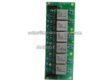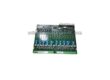
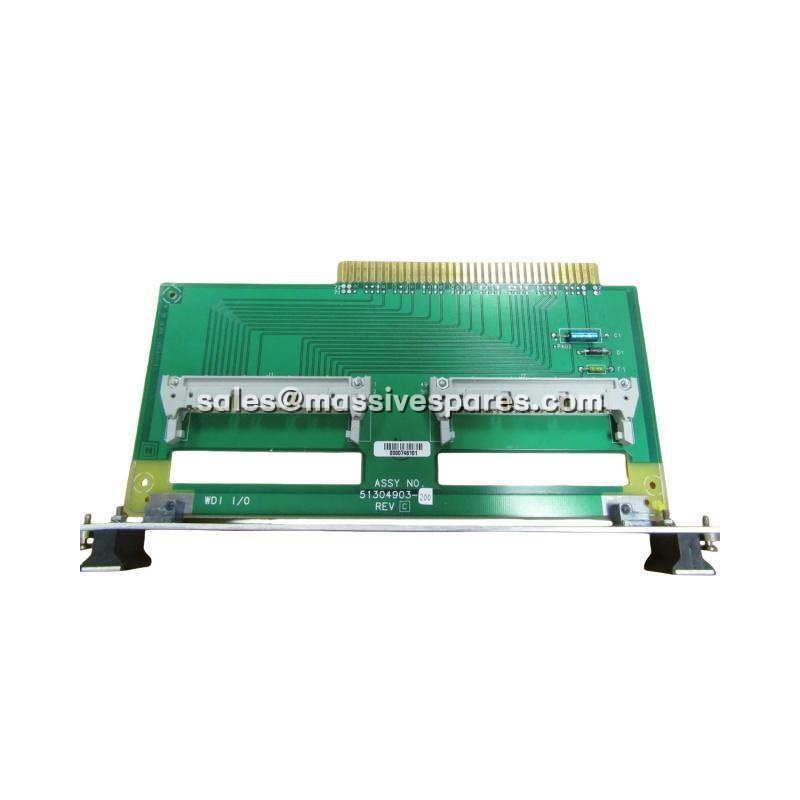
Application Scenarios
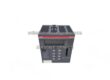
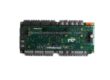
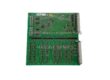
In a refinery or chemical plant operating a legacy Honeywell TDC 3000 system, the Universal Control Network (UCN) and Local Control Network (LCN) must exchange data continuously to maintain process visibility and control. When a Network Interface Module (NIM) experiences a communication fault, the entire control network segment can become isolated from operator stations, leaving critical process parameters unmonitored. The 80364052-100 functions as the main logic board within the NIM chassis, acting as the communication gateway that routes data between UCN process controllers and LCN supervisory systems . In redundant NIM configurations, a pair of 80364052-100 boards ensures that if one network path degrades or fails, the alternate path maintains uninterrupted data flow, preserving operator visibility and control continuity in continuous-process facilities where downtime carries significant safety and financial consequences.
Parameter
| Main Parameters | Value/Description |
|---|---|
| Product Model | 80364052-100 |
| Alternate Part Number | 51401583-100 (Assembly/MPN designation) |
| Manufacturer | Honeywell / Yamatake-Honeywell |
| Product Category | DCS Module / Enhanced Process Network Interface (EPNI) Board |
| System Compatibility | Honeywell TDC 3000 DCS |
| Network Architecture | UCN to LCN Interface (via NIM) |
| Module Type | Network Interface Module Main Logic Board |
| Communication Function | UCN/LCN Data Routing and Message Translation |
| Redundancy Support | Redundant NIM Pair Configuration |
| Operating Temperature | -40°C to +85°C |
| Power Consumption | ≤ 5 W |
| Memory Capacity | 128 KB |
| Communication Interface | RS-485 / Modbus RTU |
| Dimensions (W x H x D) | 178.8mm x 95.3mm x 64.5mm |
| Weight | 0.5 kg |
| Certifications | UL, CE, CSA |
Innovation Point 1: UCN-to-LCN Gateway Architecture. The 80364052-100 operates as a specialized network bridge within the Honeywell TDC 3000 architecture. It translates and routes messages between the Universal Control Network—where process controllers and I/O subsystems reside—and the Local Control Network, which connects operator stations and supervisory databases . This dual-network role requires the board to manage different protocol stacks simultaneously, ensuring that real-time control data reaches its destination without introducing latency that could affect regulatory loop performance.
Innovation Point 2: Redundant NIM Pair Operation. The 80364052-100 is typically deployed in redundant pairs (Primary and Secondary NIMs) to eliminate single points of failure in the network communication path . When the primary board detects a fault or loses synchronization, the secondary unit assumes active duty automatically, maintaining data flow between UCN and LCN segments. This redundancy architecture is essential in continuous-process industries where a communication outage at the network interface level would blind operators to process conditions across an entire control node.
Innovation Point 3: Replaceable Board-Level Spare Design. For facilities maintaining legacy TDC 3000 infrastructure, the 80364052-100 serves as a critical spare component that can be replaced at the board level without replacing the entire NIM assembly . This modular approach extends the operational life of existing DCS installations while deferring capital expenditure on full system migration. The board’s identification as assembly number 80364052-100 and manufacturing part number 51401583-100 simplifies spare parts procurement and inventory management .