Application Scenarios
A water and wastewater utility operating a network of remote pumping stations had a familiar problem: each station had a handful of digital status points — pump running, high-level float, door open, mains failure, valve end-position — that had to be brought back to the central SCADA. Running individual copper pairs to the master station was expensive and unreliable over distance, and the existing panels had no spare capacity for additional hardwired points.
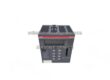
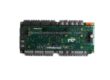
The answer in modern practice is a distributed I/O drop at each station, and the 8720R1 ELVISU-0010 is exactly the class of module that fills that role. Installed on a DIN rail in the station panel, the 8720R1 ELVISU-0010 takes the local discrete signals directly, and returns them to the SCADA over a single network link. The RS-485 port provides a resilient serial path where Ethernet fibre or copper is not economical to run, and the Ethernet port handles sites where the network already exists.
The pain point addressed is the cost of the last mile in plant signalling. Every hardwired point costs cable, tray space, terminations, drawings and commissioning time, and every additional pair is another potential earth loop in a site with indifferent grounding. Consolidating sixteen points into one module with 500 V DC isolation and a single communications path removes most of that cost and most of that risk. For the utility, the operational gain was equally significant: channel-level status became visible at the master station, so a failed float switch or a lifted terminal could be located from the control room instead of by a technician driving to site.
The same logic applies across water treatment, building services, remote wellhead and pipeline monitoring, factory utilities and distributed machine cells — anywhere discrete signals are geographically scattered and expensive to home-run.
Parameter
| Main Parameters | Value / Description |
|---|---|
| Product Model | 8720R1 ELVISU-0010 |
| Manufacturer Part Reference | 705211777-58 |
| Manufacturer | Most commonly catalogued as SZM / SZM Electronics; some distributors attribute Yokogawa with Japan origin. Brand attribution is unconfirmed — verify against the unit label |
| Product Category | Industrial control / digital input module for distributed I/O |
| Digital Inputs | 16 channels at 24 V DC (verify channel count against the unit label; some listings describe fewer) |
| Supply Voltage | 24 V DC |
| Ethernet Interface | 10/100 Mbit |
| Serial Interface | RS-485, 2-wire |
| Isolation | 500 V DC galvanic isolation between field and logic |
| Operating Temperature | -40 °C to +85 °C |
| Storage Temperature | -45 °C to +85 °C |
| Humidity | 5% to 95%, non-condensing (upper bound unconfirmed in some sources) |
| Module Dimensions | Approximately 7.6 cm x 12.7 cm x 12.7 cm; shipping carton approximately 24.8 cm x 18 cm x 5.5 cm |
| Weight | Approximately 0.25 kg net; listing weights range up to 0.76 kg, so confirm which figure applies |
| Mounting | DIN rail or panel/rack mounting within a control enclosure |
| Ingress Protection | IP20 is the credible rating for an enclosure-mounted module; IP67 claims in some listings should not be relied on |
| Tariff / Customs Code | 8537101190 as cited by distributors |
Note: no OEM datasheet is publicly available for the 8720R1 ELVISU-0010. The values above reflect the most consistent cluster across independent distributor listings and should be confirmed physically or against the unit label before design-in.
Technical Principles and Innovative Values
Innovation Point 1: Distributed acquisition instead of home-run wiring. The fundamental value of the 8720R1 ELVISU-0010 is architectural. By placing sixteen digital input channels at the point where the signals physically exist and returning them over one network connection, the module replaces sixteen cable runs with one. In brownfield sites where containment is full and new cable routes are impractical, this is often the only economically viable way to add points.
Innovation Point 2: 500 V DC galvanic isolation as standard. Industrial panels are electrically hostile places. Long cable runs, mixed earth potentials, contactor coils and variable speed drives all inject transients and common-mode voltage into signal wiring. The isolation on the 8720R1 ELVISU-0010 breaks that path, so a fault on the field side does not propagate into the logic side and take down the node or, worse, the controller. This is also what makes the module usable across panels that do not share a clean common earth.
Innovation Point 3: Dual-network flexibility for mixed infrastructure. The 8720R1 carries both an Ethernet port and a 2-wire RS-485 port. That combination matters on real projects because plants are rarely uniform: newer areas have Ethernet available, older areas have a serial multidrop already in the ground. One module type can serve both, which reduces spares variety and lets a migration happen area by area rather than as a single expensive cutover.
Innovation Point 4: Wide-temperature design for field mounting. With a stated -40 °C to +85 °C operating range, the 8720R1 can be installed in unheated kiosks, outdoor enclosures and plant-level panels without climate control. That removes the enclosure, heater and power budget that control-room-grade hardware would demand, and it is frequently the deciding factor in remote station economics.
Innovation Point 5: Compact footprint that respects scarce panel space. At roughly three inches per side and a quarter of a kilogram, the 8720R1 adds sixteen points in a fraction of the space that discrete relay-based marshalling would occupy. In retrofit panels where every millimetre of rail is contested, density per channel is a genuine engineering constraint rather than a marketing point.
Application Cases and Industry Value
Case 1: Remote pumping station telemetry. A regional water utility needed pump run status, level float alarms, intrusion contacts and mains failure indication from a series of unmanned pumping stations. The existing arrangement used individual telemetry pairs, which were expensive to extend and were becoming unreliable as the cable aged. Deploying a compact digital input module of the 8720R1 class at each station, communicating over the existing serial path, allowed all status points to be consolidated into a single drop per site. The measurable outcomes were the elimination of new cable routes, faster fault location because channel status was visible centrally, and reduced drive-outs for what turned out to be wiring faults rather than equipment failures. Commissioning was limited to mounting the module, landing the field conductors and mapping the channels in the SCADA database.
Case 2: Factory utilities monitoring in a discrete manufacturing plant. A plant wanted visibility of compressed air pressure switches, coolant flow switches, exhaust fan status and isolator positions across several workshop areas, primarily to support energy monitoring and preventive maintenance. Installing 8720R1 modules in local panels, with Ethernet backhaul to the plant SCADA, gave the maintenance team status visibility they had never previously had without a dedicated PLC per area. The value delivered was largely in maintenance behaviour: fan failures and tripped isolators surfaced as alarms rather than being discovered during rounds, and the accumulated status history supported a shift from fixed-interval to condition-based attention on utility equipment. Because the modules are DIN-rail mounted and network-connected, additional areas could be added later without disturbing the existing installation.