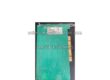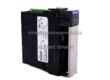
Application Scenarios
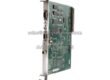
Consider a combined-cycle power plant commissioned in the late 1990s whose turbine, boiler, and balance-of-plant controls all run on ABB Procontrol P13. During a scheduled outage, the O&M team discovers intermittent communication dropouts on one local bus segment — I/O modules report stale data, the sequence-of-events log shows gaps, and operators see occasional frozen setpoints on the HMI. In almost every case the root cause traces back to the bus coupling layer: a degraded 70BK03B-E module whose local-bus driver circuitry has drifted out of specification after two decades of continuous 24-hour duty. That is precisely the failure mode this module is designed to solve — replacing the suspect 70BK03B-E restores clean signal transfer between the Procontrol processor and its I/O cluster in a matter of minutes, without touching field wiring, without reprogramming the controller, and without a full-system shutdown. The pain points it addresses are the ones every legacy-DCS owner eventually faces: obsolete spare availability, the risk of cascading bus failures on a single point of the architecture, and the prohibitive cost of a full platform migration when only one coupling module is at fault.
Parameter
| Main Parameters | Value/Description |
|---|---|
| Product Model | 70BK03B-E |
| Ordering Number | HESG447271R0002 |
| Manufacturer | ABB (Power Generation / Automation Products) |
| Product Category | Bus Coupler — Local Bus / Serial Interface Module |
| Host System | ABB Procontrol P13 (compatible with Procontrol P14 architecture) |
| Core Function | Couples the processing section to the Procontrol local module bus; transfers control/status/synchronization traffic |
| Module Family | Procontrol 70-series plug-in module, subrack-mounted |
| Approx. Dimensions | ≈ 198 × 261 × 20 mm (module card, per regional listing) |
| Approx. Weight | ≈ 0.32–0.5 kg |
| Country of Origin | Germany / Switzerland |
| HS Tariff Code | 85389091 |
| Revision | R0002 (R2 build — current functional supersession of R0001) |
The model nomenclature follows ABB Procontrol convention: 70 = Procontrol P13 module family, BK = Bus Coupler function, 03B = hardware generation, and the trailing -E distinguishes the local-bus variant from the -ES serial-interface build; HESG447271R0002 is the complete ABB ordering code buyers should quote when requesting quotes or verifying stock.
Technical Principles and Innovative Values
- Innovation Point 1 — Dedicated local-bus coupling hardware: rather than sharing a generic communication path, the 70BK03B-E implements ABB’s proprietary Procontrol local-bus protocol in dedicated logic, giving deterministic transfer of cyclic I/O data between the processor and the I/O tier — the behavior that real-time turbine and boiler control depends on.
- Innovation Point 2 — Segmented bus architecture support: by terminating one local-bus segment and bridging it to the processing section, the 70BK03B-E lets plant engineers partition a large Procontrol installation into electrically isolated segments, so a fault or maintenance action on one segment does not propagate across the whole DCS — a segmentation discipline that modern Ethernet-based systems still emulate.
- Innovation Point 3 — Hot-plug-capable subrack mounting: consistent with the Procontrol P13 design philosophy documented for sibling bus-coupling modules, the 70BK03B-E family is intended to be inserted and removed on a powered subrack during operation, which converts a bus-coupler failure from a plant trip into a module-swap event.
- Innovation Point 4 — R2 hardware revision with extended service life: the HESG447271R0002 build supersedes the earlier R0001 with updated component selections, so a 70BK03B-E installed today typically offers a longer remaining service life than the original board it replaces — a meaningful advantage when the surrounding Procontrol system is expected to run for another decade.
- Innovation Point 5 — Native OEM interoperability: because the 70BK03B-E was designed alongside the Procontrol processor and I/O modules it serves, it requires no parameter loading or configuration file after insertion; the processor recognizes the coupler on power-up and resumes the same bus timing profile, eliminating a common source of commissioning errors on third-party retrofit parts.