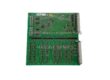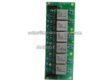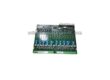
Description
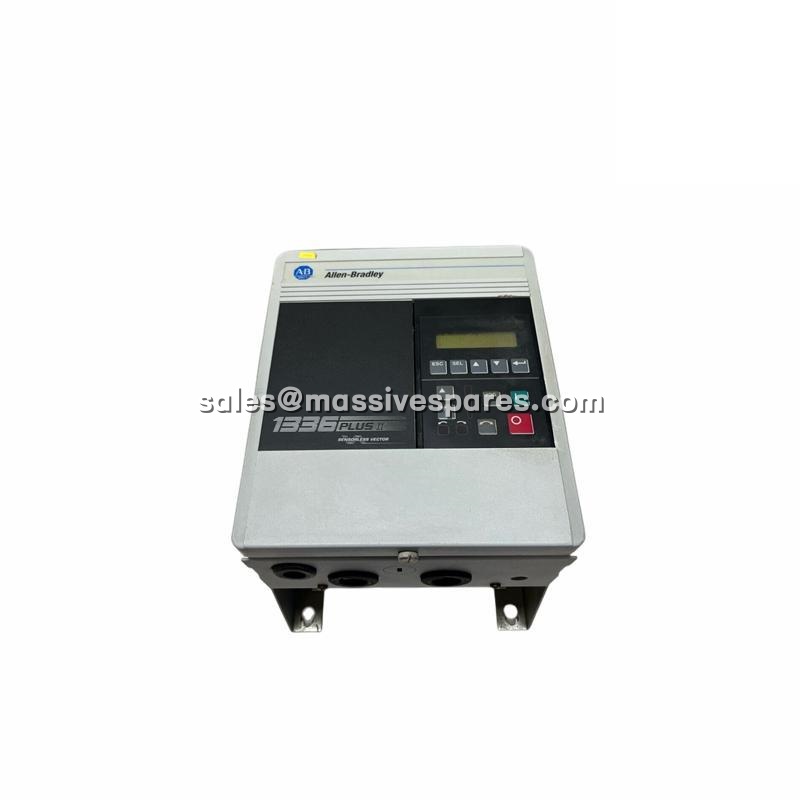
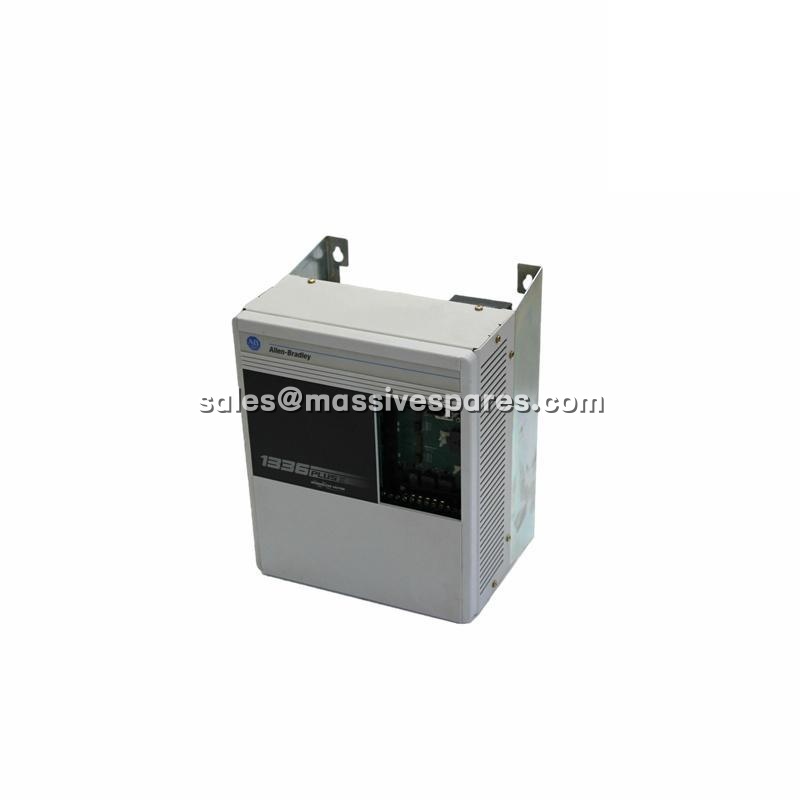
The 1336F-BRF100-AA-EN is a Bulletin 1336F PLUS II adjustable frequency AC drive from Allen-Bradley (Rockwell Automation). It is a 10 HP (7.5 kW) unit in the 480 V input class, rated at 16 A output, and belongs to the 1336 PLUS II family — the second generation of the 1336 platform, covering 0.5 to 400 HP across multiple voltage classes.
The drive controls a three-phase induction motor by adjusting the frequency and voltage of the power supplied to it. Unlike a mechanical speed control or a fixed-speed starter, it matches motor speed to process demand while managing acceleration, deceleration and torque. The PLUS II generation added sensorless vector control to the traditional Volts per Hertz method, giving the drive usable low-speed torque without requiring a shaft encoder or feedback wiring.
Application Scenarios
A regional water utility was running a 10 HP return-sludge pump on a manual bypass arrangement: either full speed or off, with a hand valve set to keep the flow within range. The valve wore, the flow swung with wet-well level, and the operators adjusted it by hand several times a day. Installing the 1336F-BRF100-AA-EN moved speed control into the control system. A 4–20 mA signal from the level transmitter became the speed reference, and the two independently programmable acceleration and deceleration ramps handled pump starts and stops without water hammer. The hand valve was left fully open and locked. Energy use fell in proportion to the reduced speed, but the more immediate benefit was that flow no longer depended on whoever last touched the valve.
The second installation was on a 10 HP screw conveyor in a bulk-solids plant. This load is constant-torque: it needs real torque at low speed, not just a spinning shaft. The drive was switched from the default Volts per Hertz mode to sensorless vector control. No encoder was fitted, no extra cable was run, and the low-speed torque improved enough that the conveyor no longer stalled on a full hopper start. The maintenance team’s note in the job report was brief: “Starts full now. We stopped carrying a pry bar.”
Parameter
| Main Parameters | Value / Description |
|---|---|
| Product Model | 1336F-BRF100-AA-EN |
| Manufacturer | Rockwell Automation (Allen-Bradley brand) |
| Product Category | Adjustable Frequency AC Drive (VFD) |
| Product Family | Bulletin 1336F PLUS II |
| Power Rating | 10 HP / 7.5 kW (constant torque) |
| Output Current | 16 A |
| Input Voltage Class | 460 / 480 V AC, 3-phase |
| Frame / Enclosure | NEMA Type 1 (IP20) |
| Control Method | Volts per Hertz (V/Hz) and Sensorless Vector |
| Control Option | Standard control |
| Control Inputs | 115 V AC control option |
| HMI Language | EN — English |
| Human Interface | Integral keypad with digital display, Start and Stop pushbuttons |
| Communication | Serial port for remote monitoring and parameter adjustment |
| Mechanical Mounting | Flange-mount option code available in the AA option set |
| Product Lifecycle | Discontinued / obsolete |
Technical Principles and Innovative Values
- Sensorless vector control without feedback wiring. Innovation Point 1: the drive estimates rotor flux and torque current from measured stator current and voltage, then controls them independently. The practical result is substantially higher starting and low-speed torque than standard V/Hz control can produce. A shaft encoder is not required, so the sensorless mode retains the simplicity of a two- or three-wire motor connection while delivering performance closer to a closed-loop drive.
- One chassis, two control philosophies. Innovation Point 2: the 1336F-BRF100-AA-EN offers both Volts per Hertz and sensorless vector modes, selected in software rather than by hardware. Volts per Hertz suits fans and pumps where the load falls with speed; sensorless vector suits conveyors, extruders and positive-displacement machinery where torque must remain constant. A plant can therefore standardise on one drive family across dissimilar loads.
- Low-speed torque is the real test of a sensorless drive. Innovation Point 3: on a constant-torque load, V/Hz control loses torque as speed falls because stator resistance becomes a larger share of the total impedance and the voltage drop can no longer be ignored. Sensorless vector compensation recovers that torque. For the 1336F-BRF100-AA-EN, this means a conveyor, auger or screw feeder can start under load instead of being brought up to speed first and loaded afterwards.
- Local interface is complete, not abbreviated. Innovation Point 4: the integral keypad with digital display, green Start pushbutton and red Stop pushbutton gives the operator full commissioning access at the drive. Speed, direction, ramp times and fault reset are available on the panel without a laptop, which matters during installation and during those occasions when the network is unavailable.
- Remote access reaches beyond speed reference. Innovation Point 5: the serial port allows monitoring and parameter adjustment from a remote location. A technician can read drive status, change acceleration and deceleration profiles, and adjust control parameters without standing in front of the panel. This is the difference between a half-day site visit and a ten-minute workstation session.
- Two acceleration and deceleration ramps cover different operating states. Innovation Point 6: independent ramp programming allows a gentle start for a full hopper or a long conveyor and a shorter ramp for normal running. The active ramp can be selected by a digital input or a serial command, so the drive adapts to the process state rather than carrying one compromise setting.
- Adjustable current limit protects both ends of the circuit. Innovation Point 7: when load current rises, the drive limits output before the current reaches a level that would trip upstream protection or overheat the motor. Genuine overloads are still handled by the drive’s own protection functions; process upsets are absorbed without a stop.