Product Overview
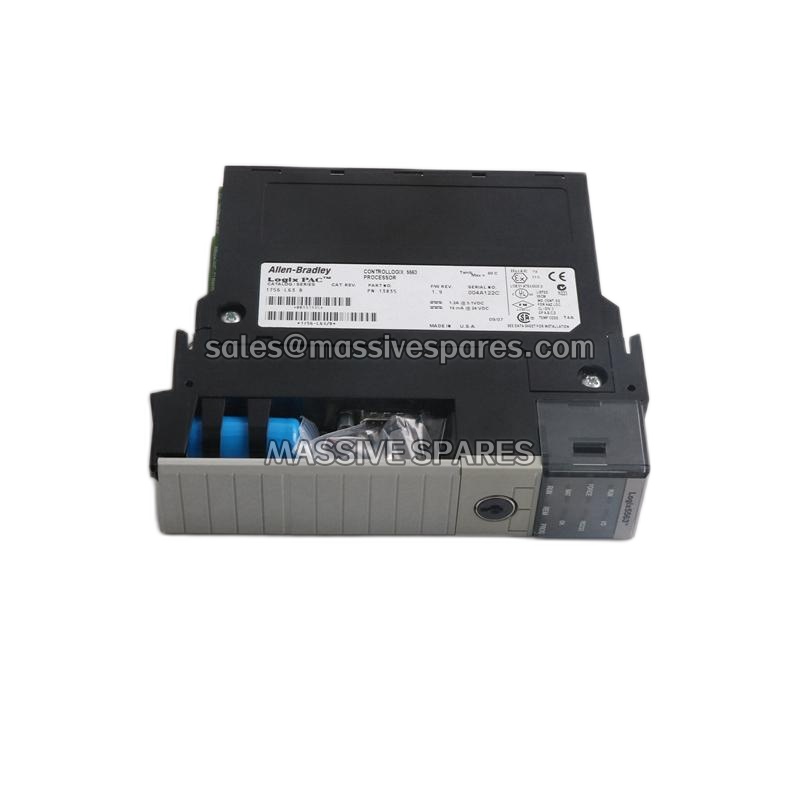
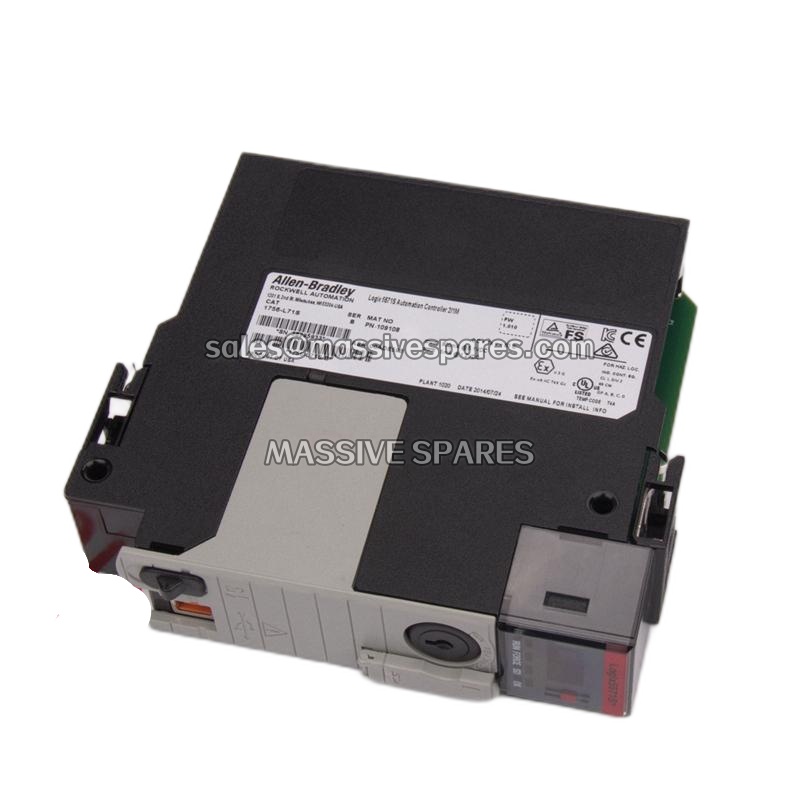
The 1756-L62S is a high-performance safety-certified programmable logic controller (PLC) processor manufactured by Allen-Bradley, a brand of Rockwell Automation, and forms the computational heart of the GuardLogix 5570 safety control platform. As the safety-rated variant of the popular Logix5562 controller, the 1756-L62S delivers 4 MB of user memory and is specifically engineered to execute both standard control logic and safety-critical application code within a single, tightly integrated control architecture. This dual-capability design allows machine builders and plant engineers to consolidate safety and standard control functions, reducing hardware costs, panel space, and system complexity while maintaining full compliance with international functional safety standards.
The core function of the 1756-L62S is to provide a SIL 3 (Safety Integrity Level 3) capable safety controller that can be deployed in applications where personnel protection, equipment safeguarding, and process shutdown are paramount. The processor executes safety instructions using dedicated safety memory and a certified safety operating system that is entirely separate from the standard control task, ensuring that a fault in the standard program cannot compromise the safety function. With 4 MB of user memory, the 1756-L62S offers substantial capacity for complex safety applications involving multiple safety zones, extensive I/O, and sophisticated diagnostic routines, making it suitable for large machinery, automated production lines, and process safety systems.
Positioned as a premium safety controller within the ControlLogix/GUARD I/O ecosystem, the 1756-L62S is designed to work seamlessly with Guard I/O safety modules, standard 1756 I/O, and a wide range of communication networks including EtherNet/IP, ControlNet, and DeviceNet. Its support for safety-rated communication over EtherNet/IP (CIP Safety) enables the creation of distributed safety architectures without the need for dedicated safety wiring. With its combination of 4 MB memory capacity, SIL 3 certification, and dual-purpose safety/standard execution, the 1756-L62S provides machine designers and system integrators with a powerful, flexible, and cost-effective foundation for building safety systems that are both highly capable and straightforward to engineer, commission, and maintain.
Technical Specifications
| Parameter Name | Parameter Value |
|---|---|
| Product Model | 1756-L62S |
| Manufacturer | Allen-Bradley (Rockwell Automation) |
| Product Type | GuardLogix Safety Processor |
| Platform | GuardLogix 5570 / ControlLogix 1756 |
| Controller Type | Logix5562S (Safety-Lock) |
| User Memory | 4 MB |
| Safety Memory | Dedicated safety memory partition |
| Safety Integrity Level | SIL 3 (IEC 61508 / IEC 62061) |
| Maximum I/O Modules | 128 (ControlLogix + Guard I/O) |
| Maximum Safety I/O | 256 safety I/O points |
| Communication Ports | 1 x RS-232, 1 x USB |
| Supported Networks | EtherNet/IP, ControlNet, DeviceNet, SynchLink |
| Task Execution | Standard + Safety (independent) |
| Event Task Response | As low as 100 microseconds |
| Power Supply | Requires 1756-PA72 / 1756-PB72 (not included) |
| Backplane Current Draw | 1.2 A @ 5.1V DC |
| Power Dissipation, Max | 7.5 W |
| Operating Temperature | 0°C to 60°C (32°F to 140°F) |
| Storage Temperature | -40°C to 85°C (-40°F to 185°F) |
| Certifications | CE, UL, cULus, CSA, TÜV, ATEX, IECEx, RoHS |
| Dimensions (W x H x D) | 5.7 x 6.65 x 5.8 in (145 x 169 x 145 mm) |
Main Features and Advantages
The 1756-L62S combines the processing power of a high-end Logix controller with the rigorous safety certification of a dedicated safety PLC, all within a single module that occupies just one slot in a standard ControlLogix chassis. This consolidation is one of the module’s most compelling advantages, as it eliminates the need for separate safety and standard controllers, reducing panel space, wiring, and overall system cost. The 1756-L62S executes both standard and safety tasks in parallel, with the safety operating system running independently in protected memory. This architecture guarantees that the safety function remains operational and uncompromised even if the standard application encounters a fault or enters a major fault state.
With 4 MB of user memory, the 1756-L62S provides ample capacity for large and complex safety applications. This generous memory allocation allows engineers to implement sophisticated safety logic involving multiple safety zones, extensive diagnostic routines, complex interlocking sequences, and large I/O counts without concern for memory limitations. The processor supports up to 256 safety I/O points and 128 total I/O modules, making it suitable for everything from single-machine safeguarding to plant-wide safety systems spanning multiple cells and processes.
A key technical strength of the 1756-L62S is its support for CIP Safety over EtherNet/IP, which enables safety-rated communication across standard industrial Ethernet infrastructure. This capability allows safety I/O, drives, and devices to be distributed throughout a facility without requiring dedicated safety wiring, significantly reducing installation cost and complexity. The processor also supports ControlNet and DeviceNet networks, providing flexible connectivity options for both new and retrofit installations. When paired with Guard I/O modules, the 1756-L62S forms a complete safety system with device-level diagnostics, automatic device replacement, and electronic keying for enhanced security.
The 1756-L62S is certified to SIL 3 under IEC 61508 and IEC 62061, and meets the requirements of ISO 13849-1 (PLe, Cat. 4) for machine safety applications. This comprehensive certification portfolio makes the processor suitable for deployment in virtually any safety-critical application, from simple emergency stop circuits to complex press and robotic cell safeguarding. Configuration and programming are performed using Rockwell Automation’s Studio 5000 Logix Designer software with the Safety Task add-on, providing a familiar development environment with built-in safety function blocks and automated safety validation tools.