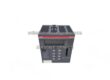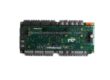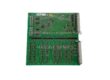
Description
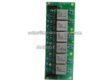
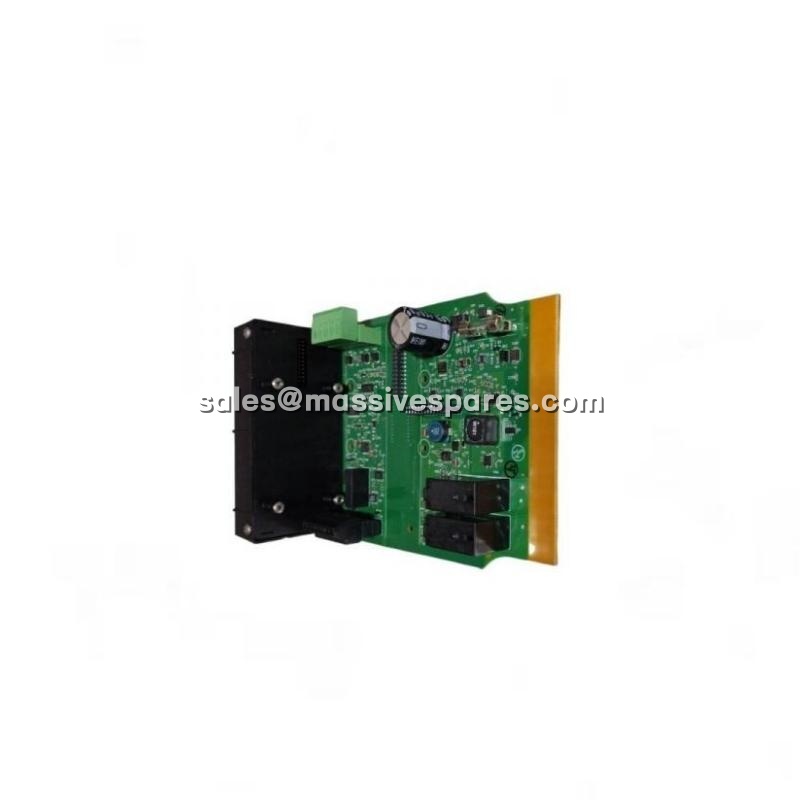
The 8177-4002 is a 16-way, 110 V AC digital input module from Alstom, built for the GEM 80 programmable controller family — the platform originally developed by GEC Alsthom Drives & Controls at Kidsgrove, Staffordshire, and carried through the CEGELEC, Alstom, Converteam and GE lineage. It belongs to the AC input branch of the GEM 80 I/O range, alongside its 110 V AC output counterpart, the 8178-4002.
In practical terms, 8177-4002 is the module that lets a GEM 80 controller listen to a plant wired on AC control voltage. It accepts sixteen independent 110 V AC discrete signals — limit switches, relay contacts, MCC auxiliary contacts, pushbuttons and circuit-breaker status — conditions and isolates each one, and presents the resulting state to the controller over the GEM 80 backplane. Its value is almost entirely about legacy continuity: it is the part you need when an installed GEM 80 rack has to keep working.
Application Scenarios
A water utility operates a treatment works controlled by an Alstom GEM 80 rack commissioned in the 1990s. The plant was wired the way British and European plants of that era usually were: 110 V AC control circuits running out to remote pumping stations, penstocks and screening equipment. Every status signal coming back — “pump running,” “valve fully open,” “screen differential high,” “level switch tripped” — arrives as a 110 V AC contact, not as a clean 24 V DC signal.
8177-4002 is the module designed for exactly that environment. Sixteen AC inputs per card means one slot absorbs an entire remote station’s worth of status, with per-channel LED indication so a technician standing at the rack can see which contact is made without a laptop. Opto-isolation between the field side and the system side keeps 110 V AC transients — and the inductive kick from a contactor coil three hundred metres away — out of the controller backplane. In practice, this is the difference between a rack that has survived thirty years in an electrically hostile plant and one that has not.
The pain points it addresses are specific to legacy AC-wired sites: the cost of re-wiring an entire plant to 24 V DC simply to change a card, the difficulty of sourcing AC-rated input modules as the GEM 80 installed base ages, and the risk of a plant-wide re-engineering project when a single input card fails. For operators keeping a functioning GEM 80 system alive, 8177-4002 is not an upgrade — it is continuity.
Parameter
| Main Parameters | Value/Description |
|---|---|
| Product Model | 8177-4002 |
| Manufacturer | Alstom (lineage: GEC Alsthom / CEGELEC / Alstom Drives & Controls / Converteam / GE) |
| Product Category | Digital (discrete) AC input module — GEM 80 I/O range |
| Number of Channels | 16 independent inputs, single module slot |
| Nominal Input Voltage | 110 V AC, 50/60 Hz — matches legacy AC control-circuit wiring directly |
| Input Type | AC discrete logic level; accepts contact closures from switches, relays and auxiliary contacts |
| Channel Isolation | Optical isolation between field side and system side — protects the controller backplane from AC transients |
| Response Time | Standard GEM 80 input response (industrial rate; ≤15 ms on/off per distributor data — verify against your module) |
| Diagnostics | Per-channel LED status indication for all 16 inputs, plus backplane-based status reporting |
| Field Wiring Interface | Screw-type terminal block |
| System Compatibility | GEM 80 PLC family, including GEM 80-10 / 80-20 / 80-30 and the ALSPA GEM 80-400 series controller racks |
| Backplane Interface | GEM 80 I/O subrack bus — plug-in module, no firmware or configuration change required for like-for-like replacement |
| Form Factor | Standard GEM 80 I/O module / 3U Eurocard class |
| Operating Temperature | Industrial range, typically −20 °C to +55 °C or +60 °C (confirm against the module label) |
| Weight | Approximately 0.4 kg |
| Lifecycle Status | Discontinued legacy part — available through specialist surplus and repair channels |
Technical Principles and Innovative Values
Innovation Point 1: AC input impedance matched to real plant wiring. The 8177-4002 is designed for 110 V AC signal levels, matching the control voltage already distributed across older British, European and Commonwealth-heritage plants. That means field devices connect directly — no interposing relays, no voltage conversion, no re-wiring campaign to accommodate a DC-only input card.
Innovation Point 2: Sixteen channels in one slot. Channel density matters most in legacy racks where slots are already full. 8177-4002 consolidates sixteen discrete AC signals into a single module position, which is often the difference between absorbing a new monitoring requirement and being forced into a rack expansion.
Innovation Point 3: Optical isolation as standard. Each channel is optically isolated from the system side, so a transient on a 110 V AC field circuit — an inductive spike, a lightning-induced surge on a long cable run to a remote pumping station — cannot propagate into the controller backplane. In plants with hundreds of metres of outdoor AC control cabling, this is the single most important reliability feature.
Innovation Point 4: Per-channel LED diagnostics at the rack. Sixteen individual status indicators mean a maintenance technician can identify a failed or stuck input by looking at the module. In a legacy system where engineering software, programming cables and laptops may no longer be available, local LED diagnostics are not a convenience — they are the primary fault-finding tool.
Innovation Point 5: Plug-in compatibility within the GEM 80 family. 8177-4002 occupies a standard GEM 80 I/O subrack slot and works with the existing backplane, so a like-for-like replacement requires no configuration change and no application software modification. For a plant with no remaining GEM 80 expertise, that simplicity is decisive.
Innovation Point 6: A platform built for long service. The GEM 80 family was engineered for industrial and utility applications with multi-decade plant lifecycles, and its continued presence in power, water, rail and metals reflects that. Modules like 8177-4002 remain in demand precisely because the systems they serve were built to outlast the product lines that followed them.