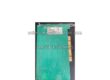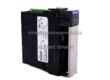
Product Overview
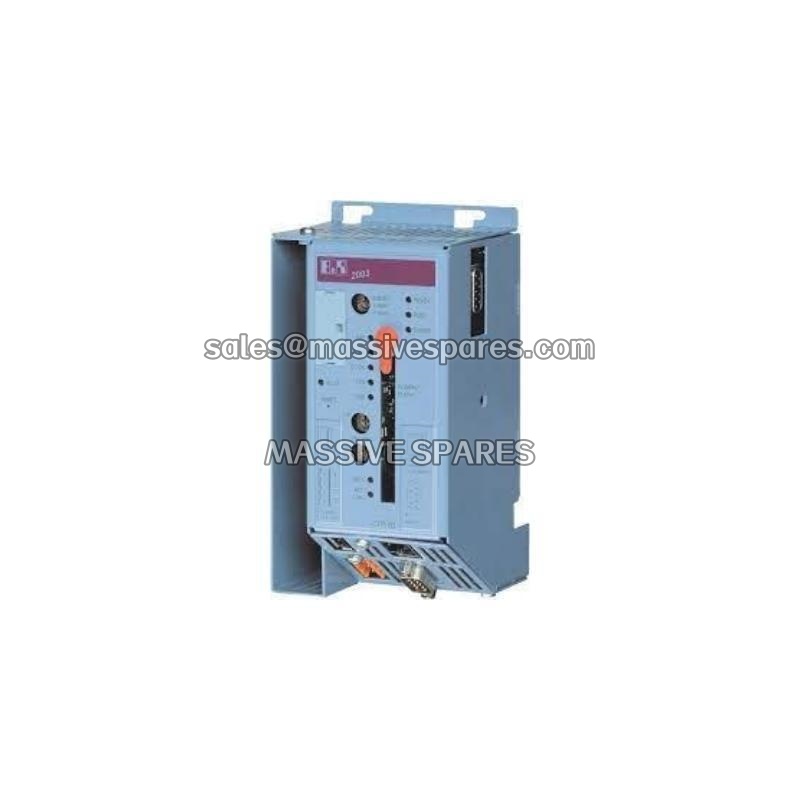
The B&R 7CP570.60-1 is a high-performance central processing unit for the B&R System 2003 modular control platform. Identified internally as the CP570, this single-slot controller combines an Intel Celeron 300 processor, 64 MB of DRAM, 512 kB of SRAM-based retentive storage, and removable CompactFlash application memory. It executes real-time control tasks, communicates with engineering and network devices, and connects through the System 2003 backplane to digital, analog, temperature, motion, and specialty I/O modules.
Unlike a simple logic solver, the B&R 7CP570.60-1 is a programmable computer controller designed for applications requiring short cycle times, floating-point calculations, and substantial user-data handling. Its independent I/O processor, onboard cache, and floating-point capability make it suitable for complex machine control, process automation, data acquisition, and communication-intensive systems. The CPU does not provide complete sensor/actuator terminal counts by itself; actual I/O capacity depends on the installed 2003 modules, rack slots, addressing, and system configuration.
The B&R 7CP570.60-1 CP570 provides one RS232 serial interface, one 10/100BASE-T Ethernet interface, and one USB 1.1 interface. An aPCI expansion slot accepts compatible interface modules for additional fieldbus or network connectivity. A removable CompactFlash card stores the application, while a lithium battery preserves the real-time clock, SRAM content, and retentive variables. For legacy System 2003 installations, the B&R 7CP570.60-1 is therefore a critical spare and continuity component, but it must be matched to the existing hardware revision, CompactFlash image, Automation Studio configuration, and aPCI communication module.
Technical Specifications
| Parameter | Value |
|---|---|
| Product Model | 7CP570.60-1 |
| Product Identifier | CP570 |
| Manufacturer | B&R Industrial Automation GmbH |
| Product Type | System 2003 CPU / Programmable Logic Controller |
| Platform | B&R System 2003 |
| Processor | Intel Celeron 300 |
| Standard Memory | 64 MB DRAM / SDRAM |
| Retentive Memory | 512 kB SRAM total; 496 kB user SRAM and 32 kB retentive variables per detailed data-sheet subdivision |
| Cache | 16 kB instruction cache, 16 kB data cache, 128 kB L2 cache |
| Floating-Point Unit | Integrated |
| Typical Instruction Cycle | 0.018 µs |
| Application Memory | Removable CompactFlash, ordered separately |
| Serial Interface | 1 × RS232, up to 115.2 kbit/s |
| Ethernet Interface | 1 × RJ45, 10/100BASE-T |
| USB Interface | 1 × USB 1.1 |
| Expansion | 1 × aPCI slot for compatible IF7xx interface modules |
| Real-Time Clock | Integrated, lithium-battery buffered |
| Rated Supply Voltage | 24 VDC |
| Input Voltage Range | 20.4–30 VDC |
| Power Rating | 15 W internal/power-supply summary; 30 W maximum input power |
| Protection Rating | IP20 |
| Horizontal Operating Temperature | 0 °C to +60 °C |
| Vertical Operating Temperature | 0 °C to +50 °C |
| Storage Temperature | -25 °C to +60 °C |
| Relative Humidity | 5% to 95%, non-condensing |
| Mounting | System 2003 rack module |
| Certifications | CE, UKCA; cULus HazLoc E180196, Class I Division 2 Groups A/B/C/D, per current official product page and subject to unit marking |
Values are configuration- and nameplate-dependent where applicable. Unverified claims such as exact weight, depth, pinout, surge current, and built-in I/O point count are intentionally omitted.
Main Features and Advantages
Computing performance for complex control: The B&R 7CP570.60-1 combines a Celeron 300 processor with an independent I/O processor and floating-point unit. This architecture supports demanding control algorithms, arithmetic processing, data handling, and communication tasks that exceed the capability of simpler logic controllers. The documented 0.018 µs typical instruction cycle and fast task execution make the CPU suitable for high-speed machinery and time-critical control loops.
Flexible application storage: The removable CompactFlash card separates the application image from the CPU hardware. This allows service teams to preserve a validated application, clone a tested image for a spare, or replace a failed card without rewriting the control project. Because the CF card is a separate accessory, the exact capacity and file system must be matched to the Automation Studio version and the project’s tested recovery procedure.
Integrated engineering and service interfaces: The B&R 7CP570.60-1 CP570 provides RS232, Ethernet, and USB interfaces on a single module. RS232 supports programming and serial communication, Ethernet provides 10/100 Mbit/s connectivity, and USB 1.1 simplifies service access. These interfaces reduce the need for additional interface hardware during commissioning and fault diagnosis.
Expandable communication architecture: The aPCI slot allows the controller to adapt to different network and fieldbus requirements through compatible interface modules. This preserves investment in existing System 2003 machinery while enabling communication with HMIs, SCADA systems, drives, remote I/O, and other controllers. Protocol capability depends on the installed aPCI module and software configuration, so the CPU should not be described as natively supporting every industrial Ethernet or fieldbus protocol.
Reliable retention of critical data: The 512 kB SRAM and real-time clock are buffered by an internal lithium battery. This retains user data, retentive variables, and time information during brief power interruptions. The battery requires proactive replacement, and a verified backup should always be maintained before any intervention.