Description
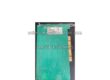
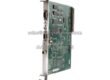
The B&R 8AC112.60-1 is an ACOPOS plug-in communication module that equips a B&R ACOPOS servo drive with an Ethernet POWERLINK real-time interface. It occupies Slot 1 of the drive, provides two RJ45 ports and an integrated 2-port hub, and runs at 100 Mbit/s. Its job is to carry drive commands, encoder and actual-value feedback, parameterization and diagnostics on a cycle-synchronous, jitter-free bus—the narrow, deterministic data path on which high-speed multi-axis motion actually depends.
Designed for “complex and time-critical” applications, the 8AC112.60-1 is the original POWERLINK V1 interface card for the ACOPOS generation. It lets drives be daisy-chained without an external switch, addresses them with an onboard rotary/node switch, and keeps the motion bus isolated from the noise of the cabinet. For plants still running ACOPOS-based packaging, printing, textile, plastics and handling machines, it is not a commodity part—it is the difference between a synchronized web and a scrapped one.
Application Scenarios
A European tissue-converting line runs a 12-axis ACOPOS drive train: unwind, splice, emboss, perforate, fold, cut and two stacker lanes. The original design used a star topology with a managed industrial switch, and the panel was beautiful. Then the switch failed during a grade change. The line stopped for four hours, the web broke, and the crew spent another two hours re-threading. The root cause was architectural, not electrical: a single managed switch was a single point of failure in a system that needed none.
The retrofit installed the B&R 8AC112.60-1 in every drive. The network became a line (daisy chain) with the integrated 2-port hub doing the work, and a second, independent run formed a redundant path at the application level. With POWERLINK’s managed node replacement, a failed station could be swapped live—the new drive learned its node number from the switch setting, not from a laptop. Cycle time stayed at 400 µs across ten drives; total cable length stayed inside the 200 m envelope; and the switch disappeared from the bill of materials. The line has not had a network-related stop since. The saving was not the price of a switch. It was the elimination of the kind of fault that loses a shift.
The same module solves a different problem in a Chinese printing-press rebuild. The press owner wanted a modern HMI and remote diagnostics, but the ACOPOS 1045 drives, the mechanics and the validated cam tables were all still good. A forklift upgrade was proposed at seven figures. Instead, the team kept the 8AC112.60-1-equipped drives, moved the controller to an X20 system, and used the existing POWERLINK V1 network as the integration backbone. The key engineering decision was version discipline: the 8AC112.60-1 speaks POWERLINK V1, and current B&R CPUs no longer do. The project therefore transferred a new bootloader into the ACOPOS drives (via a temporary 8AC110.60-2 CAN card and the service port) before the old controller was removed. Result: a 1990s-vintage drive train gained a 2020s HMI, the cams were not touched, and the rebuild took six days instead of six months.
Parameter
| Main Parameters | Value / Description |
|---|---|
| Product Model | 8AC112.60-1 |
| Manufacturer | B&R Industrial Automation (Bernecker + Rainer), Eggelsberg, Austria — now part of ABB |
| Product Category | ACOPOS plug-in communication / interface module (option card) |
| Protocol | Ethernet POWERLINK (real-time Industrial Ethernet; POWERLINK V1 on this card) |
| Supported Drives | ACOPOS / ACOPOSmulti servo drives with a Slot 1 option slot (e.g., ACOPOS 1045, 1090 and multi-axis variants); confirm drive revision before ordering |
| Installation Slot | Slot 1 (the slot is electrically and mechanically keyed; forcing it is a bent-pin event) |
| B&R ID Code | 0x11C9 |
| Dynamic Node Allocation (DNA) | No — node number set manually on the module |
| Network Ports | 2 × RJ45, module-side, with integrated 2-port hub |
| Transfer Rate | 100 Mbit/s (Fast Ethernet) |
| Cycle Synchrony | Synchronous to the POWERLINK cycle — isochronous data exchange, no jitter from the application |
| Station Operating Modes | Controlled by the POWERLINK managing node (MN); module operates transparently to the drive |
| Cabling Topology | Star or tree; line topology realized device-to-device via the integrated hub |
| Max. Hub Levels | 10 |
| Segment Length | Max. 100 m between two stations |
| Cable-Length Rule | With a 400 µs cycle and 10 ACOPOS servo drives, max. total cable length is 200 m |
| Network-Capable | Yes (managed POWERLINK device) |
| Node Addressing | Rotary/node switch on the module face (decimal node number) |
| Electrical Isolation | Yes — bus ports isolated from internal logic |
| Watchdog | Hardware watchdog and software watchdog, both via the ACOPOS servo drive |
| Status Indication | LED status indicators (link/activity and fault) |
| Power Consumption | Max. 2.5 W (drawn from the ACOPOS internal supply via the slot) |
| Power Conversion Equipment | External 24 V DC supply to the ACOPOS drive (module itself has no separate supply terminal) |
| Dimensions | Approx. 115 × 90 × 48 mm (PCB/plug-in form factor, specific to ACOPOS slot) |
| Weight | Approx. 0.2 kg |
| Protection Class | IP20 (installed inside the ACOPOS drive enclosure) |
| Mounting | Plugs directly into the drive option slot; retain with the module faceplate screws for EMC continuity |
| Operating Temperature | Nominal +5 … +40 °C; max. +55 °C |
| Storage Temperature | –25 … +55 °C |
| Transport Temperature | –25 … +70 °C |
| Relative Humidity | 5 … 85% in operation; 5 … 95% in storage; ≤ 95% at +40 °C in transport (non-condensing) |
| Certifications | CE; cULus E225616 (Power Conversion Equipment); KC |
| Lifecycle Note | Legacy / Classics status; successor family is the 8AC114.60-2 (POWERLINK V2). Verify protocol version against the managing CPU before specifying |