Technical Specifications
| Parameter Name | Parameter Value |
|---|---|
| Product Model | 5X00226G03 (also written 5X00226G3) |
| Manufacturer | Emerson Automation Solutions (Westinghouse Ovation heritage) |
| Product Type | I/O Interface Controller / Events Input Contact (SOE Digital Input) Module |
| Platform | Emerson Ovation DCS, V5 / V5.5 hardware generation |
| Compatible Controllers | Ovation OCR1100, OCR400; downward compatible with Ovation 1.x |
| Input Channels | 16, single-ended; 8 channels share one common |
| Input Type | Wet contact (24–125 VDC, field-supplied) or dry contact (internal 24 VDC excitation) |
| Input Voltage Range | 24–125 VDC (24 VDC typical) |
| ON-State Threshold | ≥ 15 VDC |
| OFF-State Threshold | ≤ 5 VDC |
| Input Current | 3–5 mA typical (internal current limiting) |
| Isolation | Opto-isolation, 1500 Vrms field-to-logic, 1-minute withstand |
| SOE Timestamp Resolution | ≤ 1 ms |
| Response / Scan Time | < 10 ms typical; debounce filter software-configurable (e.g., 20–50 ms for chattering relay contacts) |
| Diagnostics | Per-channel open-wire detection, short-circuit protection, 16 channel status LEDs, OK / FAULT system LEDs, remote fault-code reporting |
| Communication Interface | Ovation proprietary high-speed I/O backplane bus; no front-panel fieldbus ports |
| Field Wiring | Terminates on mated terminal / connector board in the Ovation card file (terminal board dependency) |
| Logic Power | +5 VDC via Ovation backplane; 24 VDC internal excitation for dry contacts |
| Power Consumption | < 2 W typical (module-specific) |
| Hot-Swap Capability | Yes (removal interrupts all associated I/O channels simultaneously) |
| Operating Temperature | 0 °C to +60 °C (standard DCS cabinet range) |
| Storage Temperature | –40 °C to +85 °C |
| Humidity | 5% to 95% RH, non-condensing |
| Vibration Resistance | 0.05 g RMS, 5 Hz to 500 Hz |
| Shock Resistance | 15 g, 11 ms half-sine wave |
| Ingress Protection | IP20 (installed in enclosed I/O rack) |
| EMC / Environmental | IEC 61000-4 series; ESD ±8 kV contact / ±15 kV air, EFT ±2 kV, surge ±1 kV; IEEE 379 nuclear-grade environmental reference (batch-dependent) |
| Approvals | CE, UL 61010-1, CSA (per batch) |
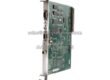
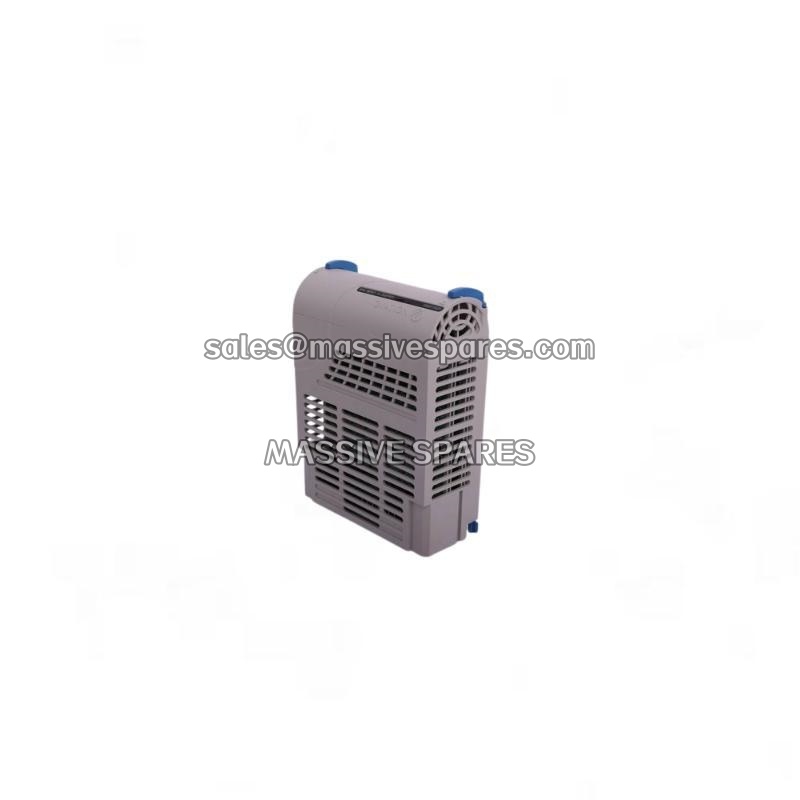
| Form Factor | Standard Ovation plug-in card, one slot in I/O card file, secured by top/bottom ejector latches |
| Module Dimensions (approx.) | 142 mm × 105 mm × 38 mm (module only) |
| Weight | ≈ 0.15 kg (module only); ≈ 0.68 kg dressed with terminal board |
| Typical MTBF | > 500,000 hours |
Main Features and Advantages
One-millisecond SOE resolution turns a trip into a diagnosis:
The most consequential feature of the Emerson 5X00226G03 is its Sequence-of-Events timestamping at ≤1 ms. In a 1000 MW ultra-supercritical unit, a turbine trip may be preceded by dozens of contact changes across the boiler-protection cabinet, the turbine-protection cabinet, and the electrical switchyard — sometimes within the same 20 ms. A standard DI module tells the operator only that “alarm exists”; the Emerson 5X00226G03 tells the operator which contact closed first, second, and third. That ordering is the raw material of root-cause analysis and determines whether the corrective action is a bearing inspection, a burner-management logic change, or a relay-coil replacement. For plants under regulatory pressure to demonstrate trip causality, this is not a luxury feature.
Wet- and dry-contact flexibility without interposing relays:
Every channel of the Emerson 5X00226G03 can accept a wet contact from a device that supplies its own 24–125 VDC source, or a dry contact sourced by the module’s internal 24 VDC excitation. This dual mode accommodates the real, mixed-vintage wiring of a brownfield plant: modern intelligent breakers on one end of the rack, 1980s electromechanical relays on the other. The 15 V / 5 V hysteresis band rejects the noise and ripple that would otherwise register as phantom transitions, while the 3–5 mA input current is gentle enough not to burden a tired contact. The result is fewer interposing relays, fewer terminals, and fewer points of failure in the cabinet.
1500 Vrms opto-isolation and built-in transient suppression:
The field side of the Emerson 5X00226G03 is galvanically separated from the logic backplane at 1500 Vrms. In a motor control center, a switchyard, or an arc-furnace bay, that isolation is the difference between a ground-loop-induced false trip and a clean signal. Each channel also carries transient suppression, which is why the module is routinely installed without additional RC or diode networks on the input. The 16 green per-channel LEDs and the OK/FAULT indicators turn the faceplate into a first-line troubleshooting tool: a channel that is physically lit but logically off points at once to a backplane or database issue rather than a wiring issue.