Product Overview
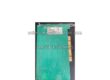
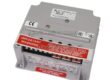
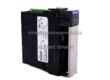
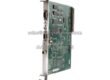
The HIMA F8652X is a high-integrity central module (CPU) that forms the computational heart of the HIMA H51q series Programmable Electronic System (PES), a fault-tolerant safety controller purpose-built for emergency shutdown (ESD), safety instrumented system (SIS), and burner management system (BMS) duties in the process industries. Positioned within HIMA’s第三代 HIQuad architecture, the HIMA F8652X implements a Quadruple Modular Redundant (QMR) structure: four independent microprocessors execute the safety application in lockstep, with every external memory and I/O access compared by testable hardware comparators. Any disagreement forces the affected channel into a predefined safe state, while the remaining healthy channels carry the load without process interruption. This design delivers the 1oo2D (one-out-of-two, diagnostic-covered) architecture that underpins AK6 / SIL 3 capability, giving operators both the safety integrity and the availability that continuous-process plants demand.
In practice, the HIMA F8652X is mounted in the central rack of an H51q-HRS or H51q-M system, where it receives process data from the distributed I/O subracks, executes the certified function blocks and interlock logic, and drives the safety outputs. Two CU (central unit) cards, each carrying two processors, make up one HIMA F8652X central unit; together they form a 4-2-0 degradation path — four processors running, then two after a CU fault, then a safe stop only if the second CU also fails. The module runs the ELOP II / SILworX engineered user program from Flash-EPROM, retains volatile data in battery-backed sRAM, and communicates with the DCS, historians, and asset management systems through the system communication interfaces. For asset owners, the HIMA F8652X represents a proven, certifiable, long-life platform: its I/O layer is preserved in the HIQuad X migration path, so a field installed decades ago can be modernized without rewiring the field.
Technical Specifications
| Parameter Name | Parameter Value |
|---|---|
| Product Model | HIMA F8652X |
| Manufacturer | HIMA Paul Hildebrandt GmbH + Co KG |
| Product Type | Central Module / Safety CPU (QMR) |
| Platform / Series | HIQuad H51q PES, 3rd generation central module |
| Redundancy Architecture | Quadruple Modular Redundant (QMR), 1oo2D per CU |
| Microprocessors | 4 × clock-synchronous microprocessors (2 per CU card) |
| Program Memory | Flash-EPROM, min. 100,000 write/erase cycles |
| Data Memory | sRAM, battery-backed for retention |
| Backup Battery | Lithium battery CR2477N (HIMA p/n 440000018) |
| System Bus / Interfaces | I/O bus, DPR (dual-port RAM), redundant CU link |
| Communication | System communication module interface; SafeEthernet / PROFIBUS DP-V1 capable via comms modules |
| Diagnostic Display | 5-digit alphanumeric LED (status, fault codes, MONO / STOP) |
| Hot-Swap Capability | Yes — module can be pulled under power (triggers alarm; in redundant pair the healthy CU continues) |
| Safety Integrity | IEC 61508 / IEC 61511, SIL 3 capable; AK6 |
| Operating Temperature | -40 °C to +85 °C (module), 0 °C to +60 °C (rack ambient typical) |
| Installation | 19-inch central rack, DIN/subrack guided insertion, keyed slot |
Main Features and Advantages
Quadruple Modular Redundant processing:
The defining strength of the HIMA is its QMR architecture. Four processors run the same safety application on the same input data, and a hardware comparator validates every critical external access. A single-bit upset, a stuck-at fault, or a drifiting A/D path cannot silently propagate into a trip-or-no-trip decision. The result is a controller that is both fail-safe and fault-tolerant — it goes to the safe state when it must, but it does not drag the plant down for a single-point failure.
Graceful degradation, not abrupt shutdown:
A single CU card can be removed or replaced online. The remaining CU transitions from 2004D to 1002D operation and keeps the process running, with the diagnostic display showing MONO on the active module and STOP on the failed one. This 4-2-0 behavior is what turns a safety system from a liability on the availability report into a contributor to production stability.
Certified function-block engineering:
User programs are built from IEC 61508 / IEC 61511 compliant function blocks in ELOP II or SILworX, with automatic cross-checking, forced-variable logging, and sequence-of-events recording. The HIMA stores up to 2,500 diagnostic data points internally, plus 500 per I/O module, so root-cause analysis after a trip is evidence-based rather than speculative.
Field-proven lifecycle and migration path:
Introduced in 1997, the H41q/H51q central modules were supported for a full decade in the traditional phase and remain serviceable. The HIMA I/O footprint is carried forward by the HIQuad X fourth-generation central module, which means existing field wiring, I/O subracks, and certified logic can be retained during a staged modernization — a material saving in engineering hours, testing scope, and downtime.
Cyber-resilient by design:
The safety controller is developed and tested against network attack scenarios (Achilles Level I certified on the platform), and the separation between the safety backplane and the open Ethernet/DCS network is enforced in hardware. The HIMA therefore cannot be coerced into an unsafe output state by a compromised upper-level network.