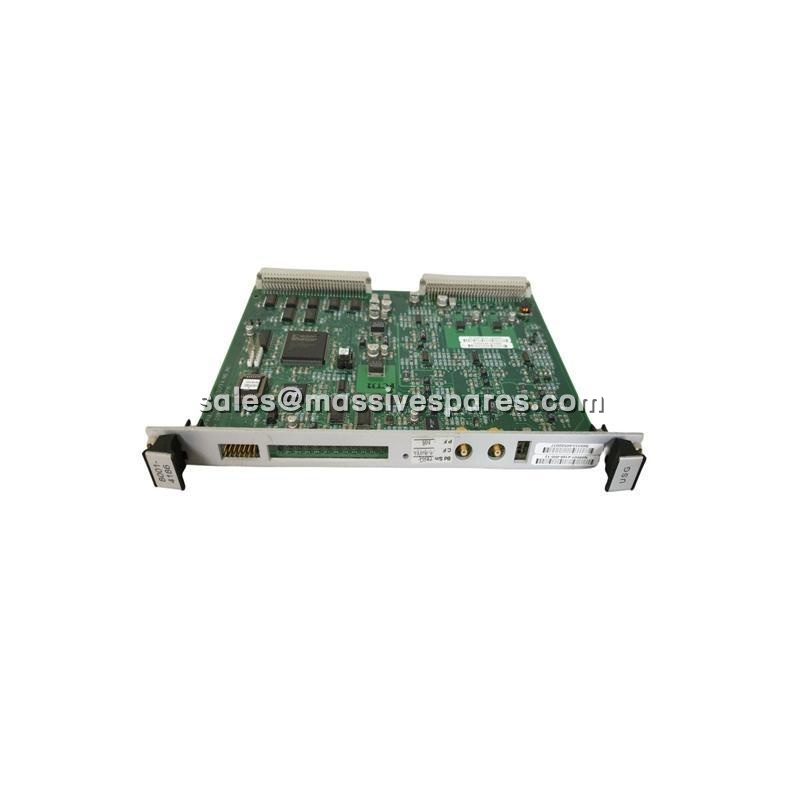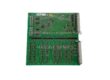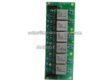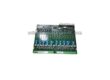
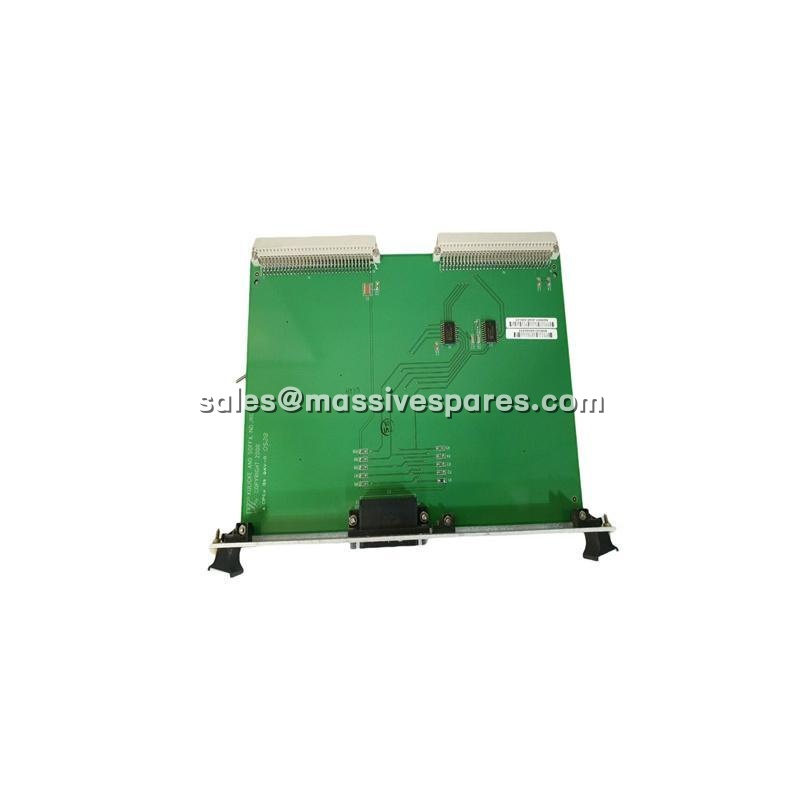
Technical Specifications
| Parameter Name | Parameter Value |
|---|---|
| Product Model | 8001-4246 |
| Manufacturer | Kulicke & Soffa (K&S) |
| Product Type | Illumination Board / Illum PCB Assembly (ILLUM BOARD) |
| Product Family | Kulicke & Soffa 8001 Series bonder control boards |
| Function | Drives and regulates illumination for the bonder optics and pattern recognition system (PRS) |
| Compatible Platforms | K&S 8000 Series wire bonders (ball bonder and wedge bonder configurations; verify against machine model and generation) |
| Supply Voltage | 12 V DC / 24 V DC depending on revision (confirm against your machine documentation) |
| Current Consumption | Low-power board, typically 50 mA to 1 A depending on illumination load and revision |
| Illumination Source | High-intensity LED array (revision dependent) |
| Brightness Control | Adjustable, typically 0–100% via software or on-board adjustment |
| Service Life | 50,000 to 100,000 hours claimed for the LED source, revision dependent |
| Optics Interface | Interfaces with 2X or 2X/4X dual magnification bonder optics and CCD vision camera |
| Control Interface | Backplane bus; intensity and mode commanded by the bonder control software |
| Form Factor | Printed circuit board assembly, backplane / card-cage mounted |
| Dimensions | Approximately 105 x 100 x 15 mm to 150 x 100 x 20 mm (revision dependent) |
| Weight | Approximately 0.15 kg to 0.5 kg bare board; up to approximately 2.6 kg with packaging |
| Operating Temperature | -20 °C to +70 °C typical for the installed board environment |
| Certifications | CE and RoHS compliant |
| Country of Origin | United States |
| Lifecycle Status | Obsolete / legacy – new surplus, refurbished and tested units only |
| Condition Supplied | New OEM surplus, refurbished, or tested used with functional verification |
Main Features and Advantages
Stable light is stable yield:
The core value of the Kulicke & Soffa 8001-4246 is that it makes the bonder’s vision system dependable. Pattern recognition in a wire bonder works by comparing a captured image against a taught reference, and the comparison is only as good as the contrast in that image. By delivering a regulated, low-ripple drive to the illumination source, the Kulicke & Soffa 8001-4246 keeps image contrast consistent from the first device in a lot to the last, which translates directly into fewer recognition failures, fewer misaligned bonds and less scrap on expensive packages.
Adjustable illumination for difficult surfaces:
Different packages present very different optical challenges: a shiny gold pad, a dark mould compound, a reflective leadframe and a textured substrate all respond differently to light. The Kulicke & Soffa 8001-4246 provides adjustable output, and in the wider K&S vision architecture this adjustability is what allows red and blue illumination modes and intensity profiles to be programmed per recipe. For a packaging house running mixed products on the same machine, that flexibility means the Kulicke & Soffa 8001-4246 supports fast changeovers without mechanical re-working of the lighting.
Designed for the bonder environment:
A wire bonder is a demanding place for electronics: continuous high-frequency ultrasonic energy, fast XY and Z motion, elevated work-holder temperatures and a cabinet dense with servo drives. The Kulicke & Soffa 8001-4246 is built as a ruggedised board assembly for exactly that environment, mounted on the machine backplane and protected by the machine enclosure, which is why these boards routinely deliver years of continuous service and why the dominant failure modes are age-related rather than random.
Modular spare that shortens diagnosis and repair:
Because the 8001 series is organised by function, illumination problems can be isolated to a single board rather than to the whole vision chain. Technicians can swap the Kulicke & Soffa 8001-4246 without disturbing the optics, the camera calibration or the mechanical alignment of the bond head, and a modular exchange takes minutes rather than the hours a deeper investigation would require. For lines where an hour of downtime is measured in lost units per hour, that serviceability is a decisive advantage over integrated designs.