
Description
Application Scenarios
In a combined-cycle power plant, a steam turbine train is protected by a Bently Nevada 3500 rack monitoring radial vibration, axial displacement, and shaft speed. The plant’s remote control room is 500 feet away from the turbine deck, yet operators need real-time visibility of machinery health during startup and load changes. Without local indication, they would rely solely on SCADA screens that update slowly and lack the granular detail needed for rapid fault diagnosis.
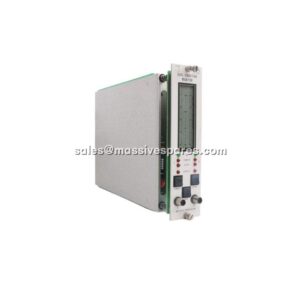
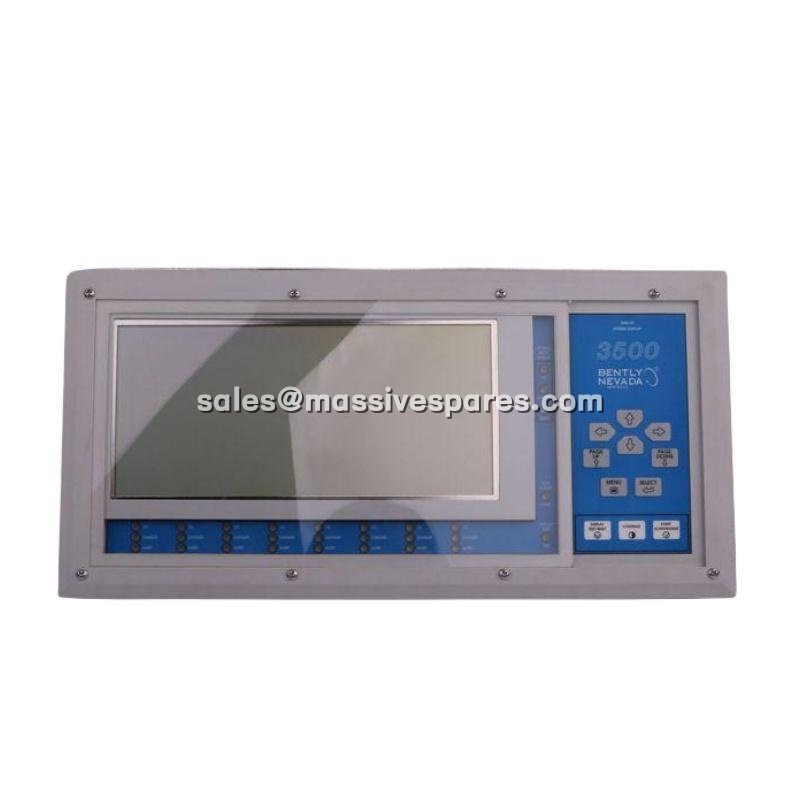
The 3500/93 135785-02 solves this by providing a dedicated LCD display that renders system events, alarm lists, and channel data directly at the machinery skid or remote location. When a high-vibration alarm triggers during turbine roll-up, the display immediately shows which channel crossed the threshold, enabling operators to correlate the event with operating conditions before the DCS even processes the alarm. This local “first-out” indication has proven invaluable for catching transient events that remote systems miss.
Parameter
| Main Parameters | Value / Description |
|---|---|
| Product Model | 3500/93 135785-02 |
| Manufacturer | Bently Nevada (Baker Hughes) |
| Product Category | System Display Unit / Interface Panel Display |
| Display Size | 7 inches |
| Resolution | 640 × 480 pixels |
| Backlight Type | LED backlight |
| Power Consumption | Max 15.5 W (Display Unit + DIM) |
| Operating Temperature | -40°C to +85°C |
| Protection Rating | IP65 |
| Mounting Options | Front panel, 19-inch EIA rack, panel mount, standalone |
| Max Displays per Rack | 2 units |
| Standard Cable Distance | 100 ft (30 m); 4000 ft with external power |
| Compliance | API Standard 670 |
Parameter notes
- Resolution 640 × 480: Sufficient for displaying multi-line alarm lists and trend graphics without excessive processor load.
- IP65 protection: Dust-tight and water-resistant, enabling installation in harsh industrial cabinets and outdoor shelters.
- API 670 compliance: Mandatory for machinery protection systems in oil & gas and petrochemical applications.
Technical Principles and Innovative Values
- Innovation Point 1: Dedicated local visualization independent of plant networks. Unlike SCADA-dependent displays, the 3500/93 135785-02 pulls data directly from the 3500 rack backplane via the Display Interface Module (DIM). This architecture ensures machinery status remains visible even if plant Ethernet networks fail, providing a critical layer of operational resilience.
- Innovation Point 2: Real-time event and alarm list rendering. The display updates in under one second, showing System Event Lists, Alarm Event Lists, and individual channel data with millisecond-level timestamps. This speed is essential for capturing transient events like brief vibration spikes during compressor surge or turbine startup.
- Innovation Point 3: Flexible mounting with extended cable capability. With standard cabling, the display operates up to 100 feet from the rack. Using an external power supply, this extends to 4000 feet, allowing control room mounting in large plants where the machinery deck is far from operator stations.
- Innovation Point 4: Dual-display support per rack. Up to two 3500/93 135785-02 units can connect to a single 3500 rack, enabling simultaneous monitoring at different locations—such as one display at the machine skid for field technicians and another in the control room for operators.