
Description
Application Scenarios
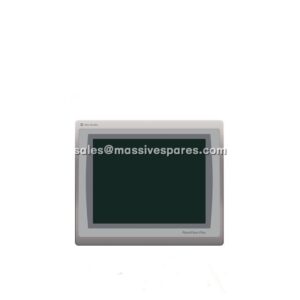
An automotive components plant runs a line of press and weld cells, each with a 10.4-inch PanelView Plus 6 on the operator pedestal. One morning a cell HMI goes dark: no boot, a red fault LED on the logic module, and a line stopped. The maintenance team has hours, not days, and no budget for a capital replacement of nine terminals.
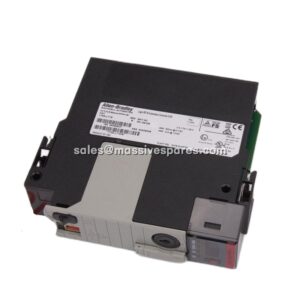
Because the terminal is modular, the diagnosis is quick and the fix is quicker. The display and touch panel are intact — only the logic module has failed. The technician pulls the terminal, removes the four captive screws, unplugs the failed board, and seats a 2711P-RP8D/A in the PCI bay. The runtime application is restored from the SD card or downloaded from the engineering workstation, the Ethernet and RS-232 connections go back into the same ports, and the cell is running again inside an hour — with the same screens, the same tag database and the same operator muscle memory.
The deeper pain point this solves is obsolescence arithmetic. These terminals were discontinued at the end of September 2023, and the instinct on a dead HMI is to assume the whole unit must be replaced and the panel re-cut. In practice, the 2711P-RP8D/A lets a plant keep the installed display, the panel cutout and the FactoryTalk View ME project, and spend on one board instead of a terminal, an engineering conversion and a panel modification.
Parameter
| Main Parameters | Value / Description |
|---|---|
| Product Model | 2711P-RP8D/A (Series A; DC-powered logic module. The “8” denotes Windows CE 6.0 without extended features, the “D” denotes 24 V DC input — the AC equivalent is 2711P-RP8A) |
| Manufacturer | Allen-Bradley (Rockwell Automation) |
| Product Category | HMI logic module — processor, memory and communications board for PanelView Plus 6 operator terminals |
| Memory | 512 MB RAM and 512 MB non-volatile flash; approximately 79 MB available for user applications, recipes and logs |
| Operating System | Windows CE 6.0, standard feature set: FTP server, VNC client/server, PDF reader, ActiveX controls, third-party device support. No extended features — no web browser, no Office file viewers, no media player |
| Preloaded Software | FactoryTalk View Machine Edition Station runtime, version 6.0 or later, preloaded and activated; FactoryTalk ViewPoint version 1.2 or later for browser-based remote viewing |
| Communication Ports | 1 × Ethernet 10/100 Base-T with auto MDI/MDI-X; 1 × RS-232 (9-pin D-sub) for controller communication, printing and file transfer; 2 × USB 2.0 host Type A ports; network interface for an optional communication module |
| Optional Network Modules | Single PCI slot accepts DH+/DH-485, ControlNet or an additional Ethernet module |
| Removable Storage | Hot-swappable Secure Digital card slot supporting 1784-SDx and 1784-SDHCx cards, for file transfer, firmware upgrade and data logging |
| Power Input | Isolated 18–32 V DC (24 V DC nominal); max terminal power consumption 70 W, max current 2.9 A at 24 V DC; reverse polarity protected |
| Real-Time Clock | Battery-backed RTC, CR2032 lithium coin cell (2711P-RY2032), four-year minimum life at 25 °C |
| Status & Maintenance | COMM (green) and FAULT (red) LEDs, plus reset and default switches for diagnostic and recovery operations |
| Compatibility | PanelView Plus 6 700, 1000, 1250 and 1500 display modules — mounts in the PCI bay on the rear of the display |
| Physical & Environmental | Approx. 160 × 130 × 85 mm, 0.55 kg; operating 0 °C to +55 °C, storage −25 °C to +70 °C; 5–95 % RH non-condensing; 15 g shock and 2 g vibration rated per IEC 60068 |
| Lifecycle Status | Discontinued by Rockwell Automation on 30 September 2023; the PanelView Plus 7 family is the published migration platform |
Technical Principles and Innovative Values
Innovation Point 1: A terminal deliberately split in two. The PanelView Plus 6 separates the display module from the logic module, and the 2711P-RP8D/A is the half that holds the processor, memory, power supply and all communications. This is not a packaging convenience — it changes the economics of a failure. A cracked screen is a display module; a dead board or a failed Ethernet port is a logic module. Neither forces replacement of the other, and a plant can stock one type of spare board across 7-inch, 10-inch, 12-inch and 15-inch terminals because the 2711P-RP8D/A fits them all.
Innovation Point 2: 512 MB where its predecessors had 64–128 MB. Earlier PanelView Plus logic modules carried a fraction of this memory, which capped application size, screen count and data-log depth. The 2711P-RP8D/A provides 512 MB of RAM and 512 MB of flash, which is what makes it capable of hosting the full modern firmware range — up to revision 12.x — and of keeping a graphic-heavy application responsive during peak tag traffic.
Innovation Point 3: A firmware bridge for brownfield hardware. This is the quietly decisive point. Original 2711P-RP logic modules cannot host firmware revision 6.x and later; their Windows CE image simply lacks the headroom. The 2711P-RP8D/A does support that range, which means a legacy PanelView Plus installation that must talk to a modern ControlLogix platform can often be upgraded by swapping the logic module rather than the terminal. It is the difference between a board-level upgrade and a controls project.
Innovation Point 4: Native dual-protocol connectivity with no gateway. Ethernet carries EtherNet/IP to the controller layer while the RS-232 port continues to serve DF1, Modbus RTU or a serial printer. Plants midway through a serial-to-Ethernet transition can run both simultaneously on the 2711P-RP8D/A, with no protocol converter to buy, license or fail.
Innovation Point 5: ViewPoint built in. FactoryTalk ViewPoint version 1.2 or later ships activated on the 2711P-RP8D/A, giving remote users access to the terminal’s displays through a standard web browser. An engineer can see what the operator sees without standing at the panel — a small feature that pays for itself the first time a fault is diagnosed from a desk.
Innovation Point 6: Hot-swappable SD storage. The SD card slot supports hot swapping, so recipe transfers, firmware upgrades and data log retrieval happen without powering down the terminal or opening the enclosure. For validated processes where the log is the evidence, this is how data gets out.