Description
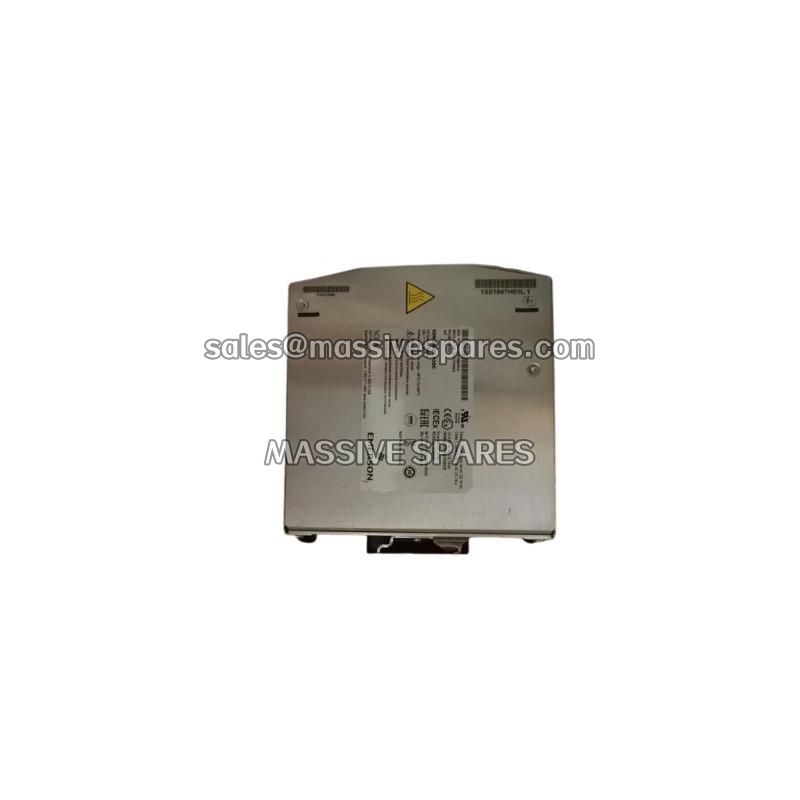
Application Scenarios
Picture a 600 MW coal-fired power plant during a hot summer afternoon. The Ovation DCS cabinet in the electronic room has been running continuously for over a decade, and the power supply modules have accumulated significant service hours. One module shows elevated ripple voltage during routine diagnostics, yet the plant cannot afford a shutdown. Within the 1X01047H01L-equipped Ovation rack, the redundant power configuration allows maintenance engineers to hot-swap the degrading module while the parallel unit seamlessly carries the full load. The operators on shift never notice the intervention. This is the core value proposition of the 1X01047H01L: it transforms power redundancy from a theoretical design principle into a practical, field-proven capability that keeps critical process control running through maintenance activities.
For plants using Emerson’s DeltaV system with M-series controllers, the same scenario plays out in pharmaceutical clean rooms or refinery processing units. The 1X01047H01L delivers uninterrupted 24 VDC to controller CPUs and I/O cards, ensuring that batch processes, safety interlocks, and continuous control loops remain active even when one power supply requires replacement. The alternative—shutting down production to change a failing power module—represents a cost that no operations manager wants to justify.
Parameter
| Parameter | Value/Description |
|---|---|
| Product Model | 1X01047H01L |
| Manufacturer | Emerson |
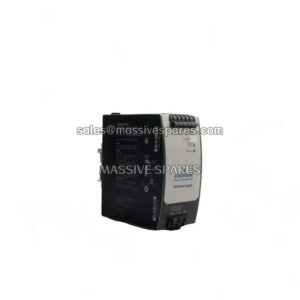
| Product Category | DCS Power Supply Module (DIN-rail) |
| Compatible Systems | Ovation DCS, DeltaV (system-dependent) |
| Input Voltage | 100–240 VAC, 50/60 Hz |
| Output Voltage | 24 VDC |
| Output Current | 20 A (documented for L1 configuration) |
| Associated Supply | SDN 20-24-100C-EPM |
| Mounting | DIN-rail (T-type compatible) |
| Redundancy Support | N+1 parallel redundant with auto load sharing |
| Hot-Swap | Supported (system configuration dependent) |
| Operating Temperature | -20°C to +70°C (varies by system enclosure) |
| Protection Features | Overvoltage, overcurrent, short circuit, thermal |
| Certifications | UL, CE, RoHS |
Technical Principles and Innovative Values
- Innovation Point 1: True Redundancy with Intelligent Load Sharing. The 1X01047H01L is not a simple parallel power supply. When configured in N+1 redundant arrangements, the module’s internal current-sharing circuitry ensures that each unit contributes proportionally to the total load. In practical terms, a system with three parallel modules carrying a 10 A load distributes approximately 3.3 A per unit, keeping individual component stress low and extending overall service life. This intelligent sharing prevents a single module from bearing disproportionate load and failing prematurely.
- Innovation Point 2: Hot-Swap Capability Without Process Interruption. The 1X01047H01L incorporates pre-charge and soft-start mechanisms that allow safe module removal and insertion while the control system remains powered and operational. When a replacement module is inserted, the inrush current is controlled, preventing voltage dips that could affect sensitive I/O electronics. For plants running continuous processes, this capability translates directly into maintenance flexibility: power supplies can be serviced on the operations schedule, not forced by equipment failure.
- Innovation Point 3: Native System Integration and Diagnostic Visibility. As an Emerson original equipment component, the 1X01047H01L communicates power status through the system backplane. Engineers using DeltaV Explorer or Ovation configuration tools can monitor output voltage, current draw, and module temperature in real time. Predictive diagnostics flag degrading performance—such as increasing ripple or abnormal temperature rise—before the module reaches failure threshold. This transforms power supply maintenance from reactive replacement to condition-based intervention.
- Innovation Point 4: Wide-Input Tolerance for Grid Instability. The 1X01047H01L accepts 100–240 VAC input with automatic range selection, maintaining regulated 24 VDC output even when plant power sags to 90 V or spikes to 264 V. In regions where grid quality is inconsistent, this tolerance directly protects downstream control electronics from voltage-induced faults that could otherwise cause I/O errors or communication dropouts.