
Description
Application Scenarios
A refinery runs a steam turbine drive on a Woodward MicroNet Plus rack that has been in service for fifteen years. The control logic is stable and the operators know it. What has changed is the reliability department’s requirement: shaft vibration, axial position and bearing temperature data from a Bently Nevada monitoring rack must now be visible on the turbine HMI and trended in the plant historian, so that mechanical degradation is caught before it becomes a trip.
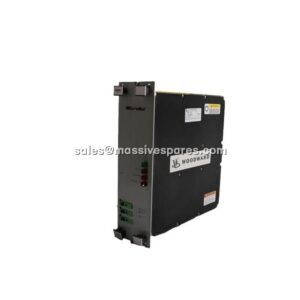
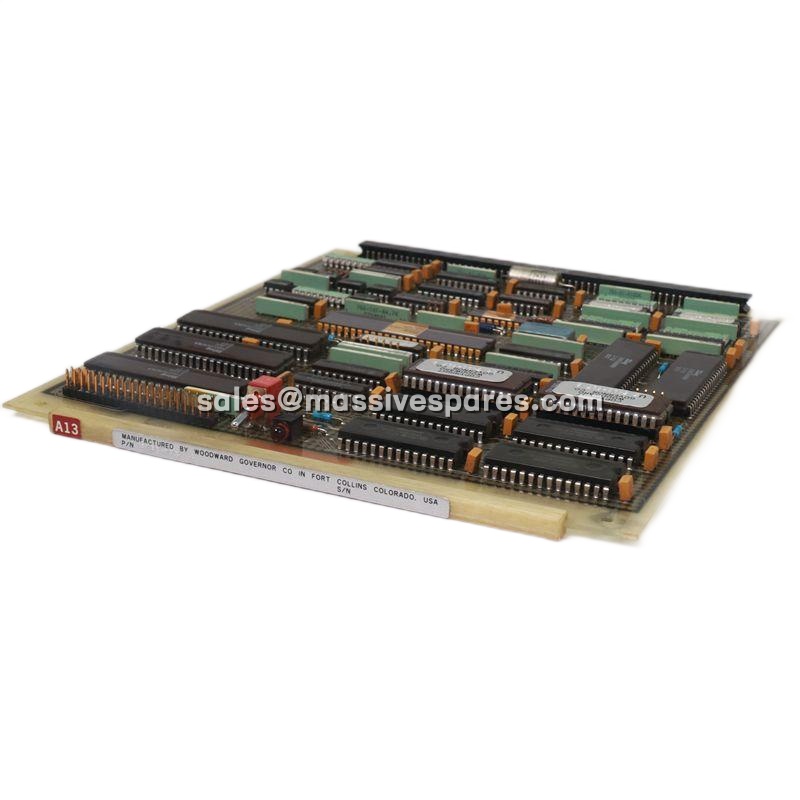
The turbine controller has no spare serial capacity, and the monitoring system speaks Modbus RTU over RS-485. Rather than add an external protocol converter — another box, another power supply, another failure point, another set of spares to stock — the integrator fits a 5463-473 into an available slot in the existing MicroNet Plus chassis. The module is validated by Woodward to operate in parallel with older SIO modules in the same chassis, so the legacy links stay exactly as they are. The vibration data is mapped into the application using the same GAP blocks already in the project, and the turbine CPU sees it as native I/O.
The pain points this resolves repeat across the installed base: serial capacity exhausted on ageing racks, the cost and risk of external gateways, application re-validation on every hardware change, and the obsolescence clock on the original SIO modules. For plants where the controller is sound but the communication demands have grown, 5463-473 is the least invasive path to adding connectivity.
Parameter
| Main Parameters | Value/Description |
|---|---|
| Product Model | 5463-473 |
| Manufacturer | Woodward |
| Product Category | Serial I/O (SIO) module — Smart-Plus architecture I/O module, not a main CPU |
| System Platform | Woodward MicroNet Plus (drop-in backward compatible with all MicroNet Plus systems) |
| Primary Function | Adds serial communication ports to the rack; used where additional serial ports are needed, e.g. connecting to third-party vibration monitoring systems |
| Serial Interfaces | RS-232 / RS-422 / RS-485 (port and mode configurable; exact port count varies by revision — confirm against the module nameplate) |
| Communication Protocols | Modbus RTU, Modbus ASCII, plus Woodward proprietary serial protocols |
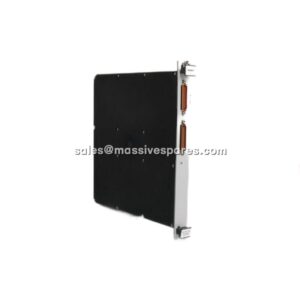
| Backplane Interface | MicroNet Plus high-speed backplane; VME-based module form factor, standard card cage slot |
| CPU / Software Compatibility | Optimized for use with 5200 and P1020 CPUs; requires Coder 4.06 or later |
| Application Programming | Uses the same GAP blocks as the SIO modules it replaces — no application rework required on upgrade |
| Chassis Coexistence | Validated by Woodward to work in parallel with older SIO modules in the same chassis |
| Power Supply | 24 V DC nominal, supplied via the system backplane (18–32 V DC range quoted in distributor data — verify against your chassis) |
| Operating Temperature | −40 °C to +70 °C typical for MicroNet Plus I/O (distributor listings vary; −20 °C to +65 °C is also quoted) |
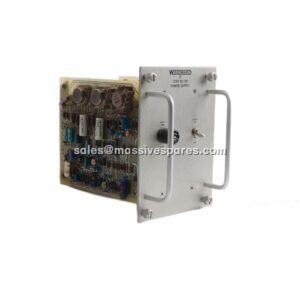
| Physical / Mounting | Approx. 228 × 192 × 10 mm; approx. 0.4–0.5 kg; rack-mounted card module secured at the front panel |
| Diagnostics | Status/fault LED indication, onboard toggle switch for address and configuration, built-in self-test |
| Lifecycle Status | Legacy: Woodward made the existing SIO part numbers non-preferred at the end of 2019 and directs new MicroNet Plus systems and spare-part orders to 5466-5006 and 5466-5007 |
Technical Principles and Innovative Values
Innovation Point 1: Smart-Plus architecture shared across the I/O family. The new SIO versions are built on the same module platform as the HDDIO, HDAIO, Speed and Speed/AIO modules. For the end user this means a common hardware generation, common diagnostics behaviour and a common sparing philosophy across the rack, rather than a mix of module vintages each with its own quirks.
Innovation Point 2: True drop-in backward compatibility. 5463-473 is backward compatible with all MicroNet Plus systems and uses the same GAP blocks as the modules it replaces. That is the single most valuable property of this module: the control application does not change, so the upgrade does not trigger the re-validation, re-testing and documentation burden that normally accompanies any hardware change in a turbine or compressor control system.
Innovation Point 3: Parallel operation with legacy modules. Woodward validated the new SIO modules to work alongside old SIO modules in the same chassis. Plants can therefore migrate one slot at a time — replacing a failed module with a 5463-473 while the rest of the rack stays on original hardware — instead of being forced into a forklift upgrade when a single card fails.
Innovation Point 4: Obsolescence-driven redesign, not a marketing refresh. The new SIO versions exist because electronic components on the existing modules reached end of life. That distinction matters for asset planning: this is Woodward keeping an installed base supportable, which is why the module retains electrical and functional equivalence to what it replaces.
Innovation Point 5: Multi-standard serial on one card. Supporting RS-232, RS-422 and RS-485 across configurable ports means 5463-473 can connect to vibration monitors, PLCs, HMIs, excitation systems and SCADA masters without external media converters — the kind of integration that otherwise accumulates one protocol box per device.
Innovation Point 6: Multi-protocol support including Modbus. With Modbus RTU and Modbus ASCII alongside Woodward’s proprietary protocols, 5463-473 speaks the language most plant systems already use, which shortens commissioning and keeps the integration inside the control platform where it can be diagnosed.