
Description
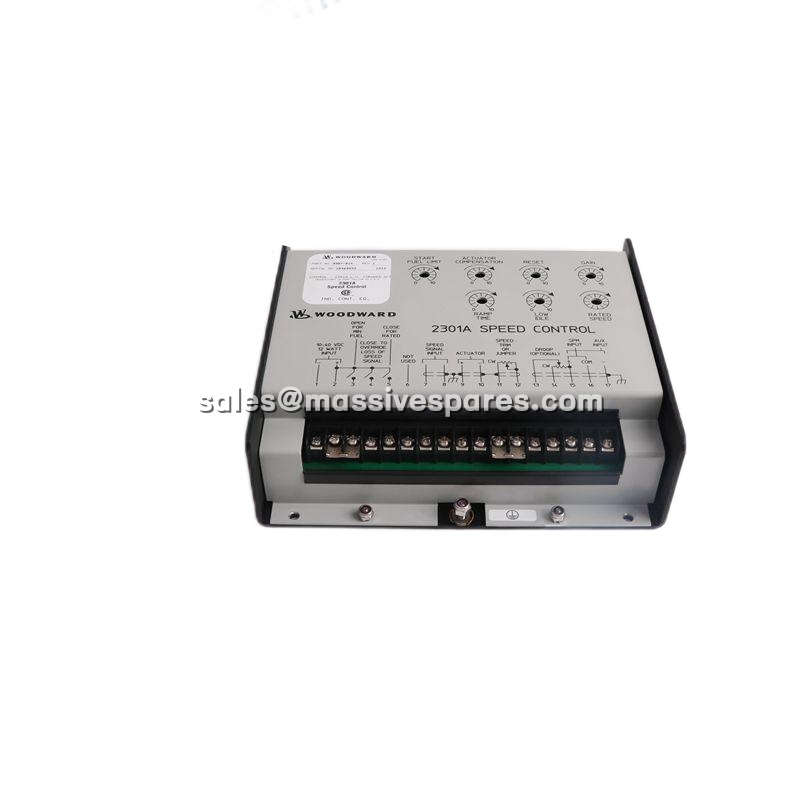
Technical Specifications
| Parameter Name | Parameter Value |
|---|---|
| Product Model | 9906-619 |
| Manufacturer | Woodward |
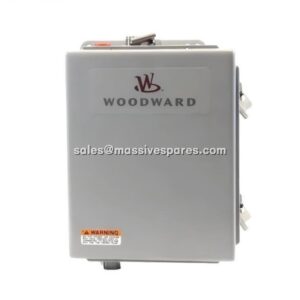
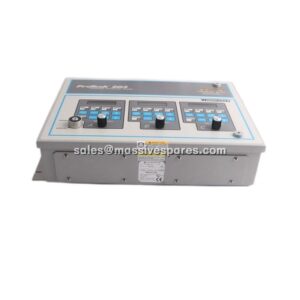
| Product Type | 723PLUS Digital Control (Low-Voltage Programmable Speed / Load Control Hardware) |
| Series / Platform | 723PLUS Digital Control family, Woodward Manual 02877 |
| Input Power | 18–40 Vdc (24 or 32 Vdc nominal) |
| Power Consumption | 40 W nominal; inrush current 7 A for 0.1 ms |
| Speed Signal Inputs | 2 channels, magnetic pickup (MPU) or proximity switch; 1.0–50.0 Vrms, 10 kΩ impedance |
| Speed Input Frequency | Magnetic pickup 400 Hz to 15 kHz; proximity switch 30 Hz to 15 kHz |
| Analog I/O | 4 analog inputs (±5 Vdc or 0–20 mA, externally powered transducers); 3 analog outputs (0–1 mA / 4–20 mA, or 0–200 mA actuator drive) |
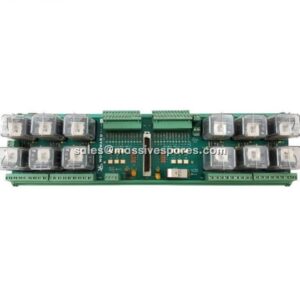
| Discrete I/O | 8 discrete inputs (24 Vdc, 10 mA, 10 ms response); 3 relay outputs (2.0 A resistive @ 28 Vdc; 0.5 A resistive @ 125 Vdc) |
| Actuator Output | 0–20 mA (max. 600 Ω load) or 0–200 mA (max. 70 Ω load), compatible with most Woodward actuators |
| Communication Interfaces | 2 LON channels (LonTalk / LinkNet); serial ports J1/J2/J3 supporting Hand Held Programmer, Watch Window, ServLink and Modbus RTU (RS-232 / RS-422 / RS-485) |
| Connections | 3 terminal strips plus 3 × 9-pin subminiature D connectors; sheet-metal chassis for panel / cabinet mounting |
| Operating Temperature | –40 to +70 °C (–40 to +158 °F); storage –55 to +105 °C; humidity 95 % at +20 to +55 °C |
| Physical Dimensions | 41.28 cm × 29.21 cm × 6.03 cm (16.25 in × 11.5 in × 2.375 in); weight approx. 1.8 kg |
| Certifications | CSA Class I Division 2 Groups A–D, CE, UL / cUL, ABS, BV, DNV, Lloyd’s Register, GL, NKK, RINA; EU EMC and LVD compliant (low-voltage model) |
Main Features and Advantages
Dual-speed-input flexibility: The Woodward 9906-619 provides two speed-signal channels that accept either passive magnetic pickups or active proximity switches, so the same hardware can be applied to engines and turbines with very different speed-sensing arrangements. When both inputs are used, one can serve as a redundant speed reference while the other supports torsional filtering, which is essential on reciprocating compressors and long drive trains where crankshaft or coupling twist can cause a single-sensor governor to hunt. Each input covers 1.0–50.0 Vrms, with a magnetic-pickup frequency range of 400 Hz to 15 kHz and a proximity-switch range starting at 30 Hz, giving the control the sensitivity needed for both slow-speed and high-speed prime movers.
Programmable I/O for any control philosophy: Four analog inputs, three analog outputs, eight discrete inputs and three relay outputs on the Woodward 9906-619 can be assigned to speed reference, load signal, fuel limiting, pressure or temperature feedback, actuator command, alarm and shutdown duties through the CONFIGURE and SERVICE menus. Isochronous and droop governing are both supported, and the integral load-sharing circuitry — combined with the two LON channels — allows multiple generator sets or mechanical drives to share load accurately without a separate load-sharing module. A configurable actuator output of 0–20 mA or 0–200 mA drives most Woodward actuators directly, and the relay outputs provide hard-contact annunciation and trip functions at ratings up to 2.0 A at 28 Vdc.
Serviceability and rugged construction: Field adjustment of the Woodward 9906-619 is performed with the 9907-205 Hand Held Programmer on serial port J1 or with Watch Window software over an RS-422 PC link, and the Test/Override function allows technicians to simulate I/O signals during commissioning without disturbing field wiring. All tuning data, speed curves and load parameters are saved to EEPROM, so setpoints are never lost when power is removed. Housed in a metal chassis with three terminal strips and three 9-pin D connectors, and certified to CSA, CE, UL and leading marine society requirements, the control withstands vibration, humidity and the wide –40 to +70 °C temperature range encountered in engine rooms, compressor shelters and offshore installations.
Application Field
Power generation and generator control: The Woodward 9906-619 is widely applied to diesel and gas generator sets that must run isochronously when isolated or in droop when paralleled with a utility bus. In multi-unit power plants, the control’s load-sharing function distributes active power evenly across machines over the LON network or legacy load-sharing lines, while an optional SPM-A synchronizer or DSLC handles automatic frequency matching and breaker closing. Base-load operation, import/export control and remote speed setting through a 4–20 mA input are all supported, which makes the Woodward 9906-619 suitable for standby, prime and cogeneration duty where frequency stability directly affects product quality and plant safety.
Oil and gas mechanical drive service: On gas-engine and reciprocating-compressor packages, the Woodward 9906-619 regulates engine speed against process pressure or flow demand and protects the machine with configurable overspeed trip logic that removes fuel or stops the unit through a hard relay contact. Torsional filtering on the second speed input stabilises governing on flexible couplings and long crankshafts, and start fuel, manifold pressure and torque limiters prevent the engine from being overloaded during transients. Because the control accepts 24 V or 32 V battery supplies, it fits remote wellhead and pipeline compressor installations where only a DC supply is available, and its load-sharing ability keeps multiple compressors on a common header balanced instead of pushing one machine into overload.
Marine propulsion and turbine applications: Certified by ABS, DNV, Lloyd’s Register, BV and other marine societies, the Woodward 9906-619 is used in single-engine and multi-engine marine control systems for clutch control, speed matching, torque sharing and soft loading and unloading of propulsion engines and generator drives. The same hardware is applied to small steam and gas turbines, where the actuator output positions the governing valve and the discrete inputs interface with turbine trip and permissive circuits. In every case, the Woodward 9906-619 is also the natural like-for-like replacement for existing 723PLUS panels, because the chassis footprint, terminal arrangement and connector layout match the original design, allowing operators to retain field wiring, application software and accumulated tuning data without cabinet modification.