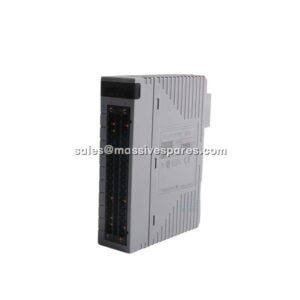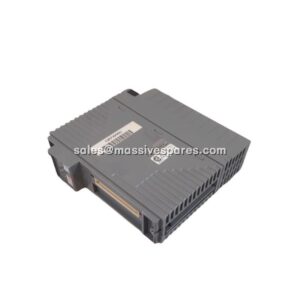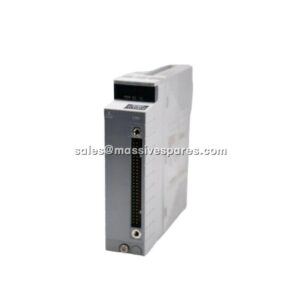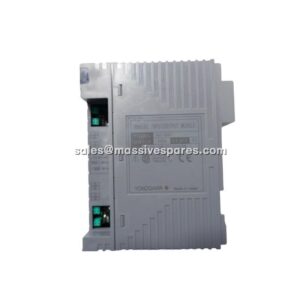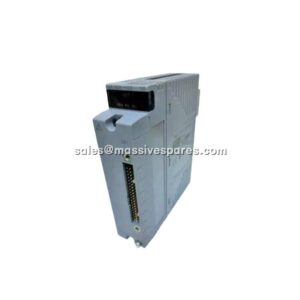

Description
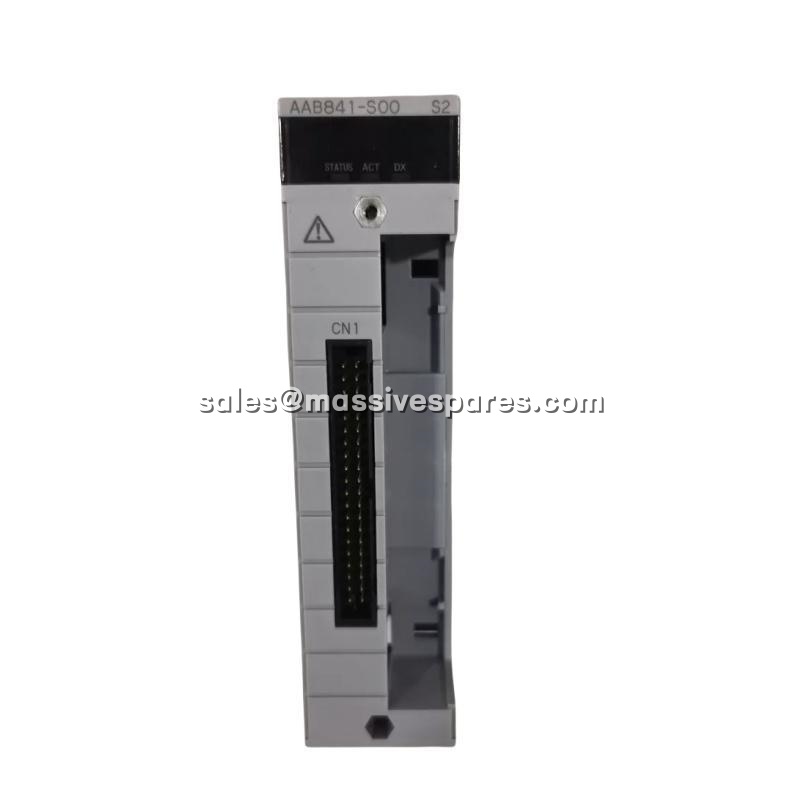
Application Scenarios
In a typical chemical plant control room, engineers often grapple with cabinet space exhaustion as they scale up process monitoring and control points. The traditional approach—dedicating separate cards for inputs and outputs—consumes valuable rack slots and complicates wiring management. When a major petrochemical facility upgraded its distributed control system to Yokogawa CENTUM VP, the YOKOGAWA AAB841 became the linchpin of the I/O consolidation strategy. Each YOKOGAWA AAB841 replaced what previously required two separate modules, cutting the card count in half and freeing cabinet space for surge protection and terminal accessories. Field technicians reported that the combined input/output design of the YOKOGAWA AAB841 simplified loop checkout procedures, and the standardized MIL connector interface enabled faster cable termination compared to legacy screw-terminal blocks.
Parameter
| Parameter | Value/Description |
|---|---|
| Product Model | YOKOGAWA AAB841 |
| Manufacturer | Yokogawa Electric Corporation |
| Product Category | Analog Input/Output Module (Combined AI/AO) |
| Input Channels | 8 channels (1–5 V DC, differential, non-isolated) |
| Output Channels | 8 channels (4–20 mA DC) |
| Input Impedance | ≥ 1 MΩ (power ON) |
| Allowable Load Resistance | 0–750 Ω |
| Signal Accuracy | ±0.3% of full scale |
| Data Refresh Cycle | 10 ms |
| Input Step Response | 100 ms |
| Output Step Response | 40 ms |
| Maximum Current Consumption | 310 mA @ 5V DC; 250 mA @ 24V DC |
| Weight | Approximately 0.3 kg |
| External Connection | KS cable, pressure clamp terminal, MIL connector |
| Compatible Systems | CENTUM VP / CS 3000 / ProSafe-RS |
Technical Principles and Innovative Values
The YOKOGAWA AAB841 operates on Yokogawa‘s proven FIO architecture, converting field analog signals into digital values for controller processing while simultaneously transforming digital commands into precise 4–20 mA output currents. Its design philosophy prioritizes density and cost efficiency without sacrificing the accuracy required for process control loops.
- Innovation Point 1 – Dual-Function Channel Integration: The YOKOGAWA AAB841 consolidates 8 inputs and 8 outputs on a single PCB, directly addressing the cabinet space constraints common in brownfield expansions. This integration reduces base module and bus interface requirements by 50% compared to separate-function cards, enabling higher I/O density per rack without additional infrastructure investment.
- Innovation Point 2 – Software-Configurable Channel Direction (S50 Variant): The AAB841-S50 style allows each of its 8 channels to be independently configured as either input or output through the CENTUM VP Engineering Station, with no hardware jumpers or physical modifications required. This software-defined flexibility means late-stage loop changes or capacity reallocation can be executed without spare parts or cabinet rework, significantly reducing project change-order costs.
- Innovation Point 3 – Optimized Non-Isolated Architecture: By eliminating per-channel isolation transformers and opto-couplers, the YOKOGAWA AAB841 achieves a compact form factor and lower unit cost. This design is well-suited for localized cabinet wiring where ground potential differences are controlled, making it an economically rational choice for high-channel-count applications.