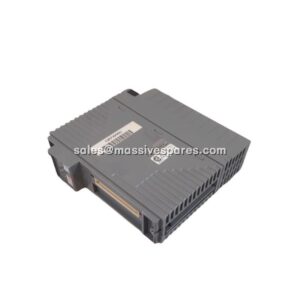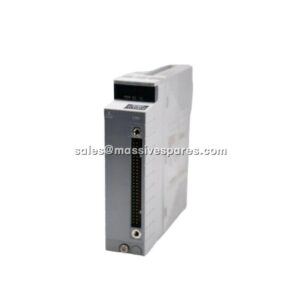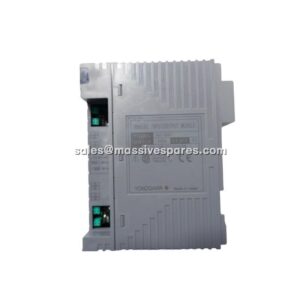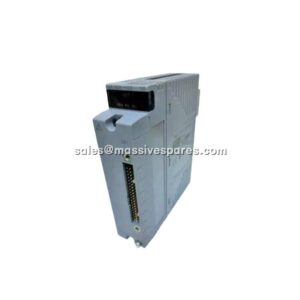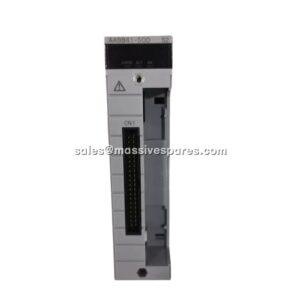

Description
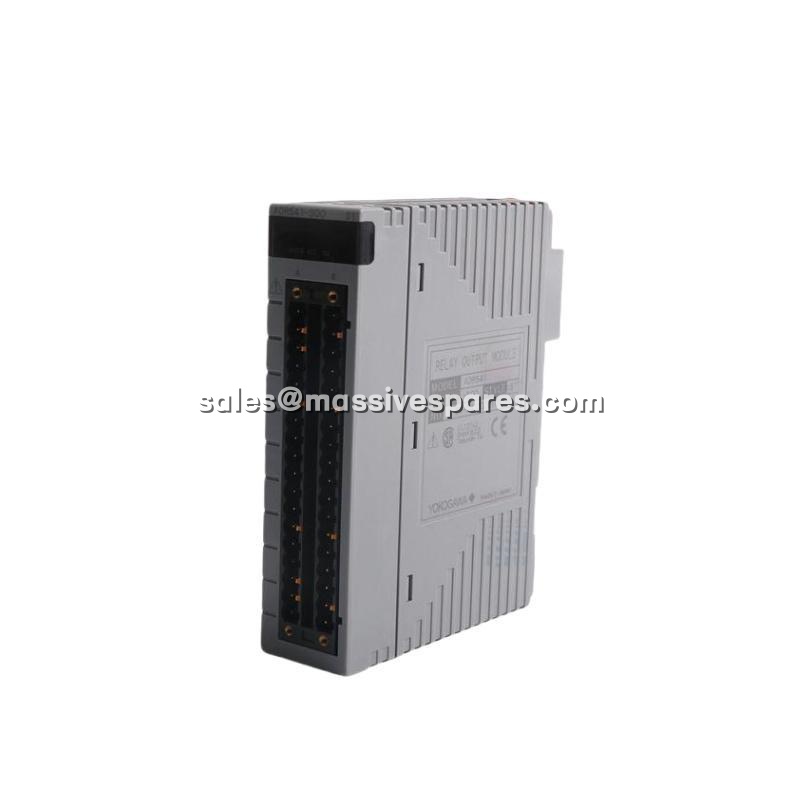
Application Scenarios
Consider a specialty chemical plant operating a series of exothermic batch reactors. Each reactor requires monitoring at eight or more temperature points—jacket inlet and outlet, reactor core, vapor line, and multiple probe depths—using a mix of Type J and Type K thermocouples alongside a few RTD elements for high-accuracy reference. The challenge: long cable runs from reactors located hundreds of meters from the control room expose the low-level millivolt thermocouple signals to electromagnetic interference from large motors, variable-frequency drives, and switchgear. A non-isolated input card would pick up common-mode noise, causing temperature readings to drift and triggering false high-temperature interlocks that abort expensive batches.
By deploying the AAT145-S53 S1, the plant gains 16 fully isolated channels—each galvanically separated from the DCS backplane and from every neighboring channel—effectively eliminating ground loops and blocking field-side electrical noise. The module’s ±40 µV accuracy and ±1 °C reference-junction compensation ensure that even small temperature deviations are captured faithfully. When a thermocouple sheath fails mid-batch, the integrated burnout detection immediately flags the fault to the DCS, allowing the control system to switch to redundant probe logic or initiate a safe shutdown sequence rather than acting on a false reading. The -S53 G3 coating protects the module’s circuitry from corrosive chemical vapors, while the extended temperature range of -20 °C to +70 °C ensures stable operation in both air-conditioned control rooms and solar-loaded field-mounted enclosures.
Parameter
| Main Parameters | Value / Description |
|---|---|
| Product Model | AAT145-S53 S1 |
| Manufacturer | Yokogawa Electric Corporation (Japan) |
| Product Category | Analog Input Module (FIO — Field Input/Output), TC/mV/RTD/POT type |
| Number of Input Channels | 16 channels, galvanically isolated |
| Supported Input Signals | Thermocouple (J, K, E, B, R, S, T, N), mV (-100 to +150 mV, -20 to +80 mV), RTD, Potentiometer |
| Signal Selection | Individually configurable per channel (CH1–CH16) via engineering software |
| Allowable Input Voltage | ±5 V (over-range protection without damage) |
| Input Impedance | 1 MΩ or larger (Power ON and Power OFF) |
| Accuracy | ±40 µV (thermocouple / mV); ±150 mΩ (RTD); ±0.2 % F.S. (POT) |
| Data Update Period | 1 second |
| Reference Junction Compensation (CJC) | Built-in, accuracy ±1 °C |
| Measurement Current | 1 mA (RTD) |
| Burnout Detection | Configurable per module; UP/DOWN direction selectable; 60-second detection time |
| Temperature Drift | ±80 µV / 10 °C (TC/mV); ±0.3 Ω / 10 °C (RTD); ±0.4 % / 10 °C (POT) |
| Withstanding Voltage (Input-System) | 500 V AC for 1 minute (1500 V AC single-card test) |
| Withstanding Voltage (Channel-Channel) | 200 V AC for 1 minute |
| Current Consumption | 350 mA @ 5 V DC (typical) |
| Operating Temperature | -20 °C to +70 °C (-S53 extended range) |
| Coating / Protection | ISA G3 conformal coating (-S53 suffix) for corrosive environments |
| Weight | 0.3 kg (module only) |
| Explosion Protection | None (-5 suffix: No explosion protection) |
Technical Principles and Innovative Values
Innovation Point 1 — Per-Channel Configurable Multi-Signal Inputs.
The AAT145-S53 S1 allows each of its 16 channels to be independently configured for thermocouple, millivolt, RTD, or potentiometer input. This means a single module can simultaneously handle Type K thermocouples on channels 1–8, an RTD on channel 9, a slide-wire feedback potentiometer on channel 10, and mV signals on channels 11–16—without requiring different module types for different sensor families. This flexibility dramatically reduces spare-parts inventory and simplifies system design.
Innovation Point 2 — Full Galvanic Isolation Architecture.
Every channel on the AAT145-S53 S1 is galvanically isolated from the system backplane and from every other channel. With a withstand voltage of 500 V AC (input-to-system, 1500 V AC single-card test) and 200 V AC channel-to-channel, the module prevents ground loops, blocks common-mode noise, and ensures that a fault on one sensor cannot propagate to adjacent channels. In plants with multiple grounding zones or long cable runs, this architecture is essential for signal integrity.
Innovation Point 3 — Integrated Cold-Junction Compensation.
Thermocouple accuracy depends critically on knowing the temperature at the connection point where the thermocouple wire meets the module terminal. The AAT145-S53 S1 incorporates built-in reference-junction (cold-junction) compensation with ±1 °C accuracy, eliminating the need for external reference junctions or manual temperature-offset calculations. This ensures that low-level thermocouple voltages are converted to true process temperatures with minimal error.
Innovation Point 4 — Configurable Burnout Detection for Safety.
Sensor failures in process control can be catastrophic if the DCS interprets an open-circuit thermocouple as a valid low-temperature reading. The AAT145-S53 S1 includes burnout detection that can be set to drive the channel reading UP or DOWN upon sensor failure—allowing engineers to choose the fail-safe direction for each application. Detection occurs within 60 seconds, giving the control system time to respond with alarm logic or safe-state action.