Application Scenarios
At a water utility’s pumping station, an ACS2000 medium-voltage drive had been running a large raw-water pump for more than a decade. Over several months the drive logged repeated “power unit communication fault” alarms, and on two occasions it refused to start after an emergency stop. The site’s first diagnosis was a failing fiber link, but replacing the patch cords made no difference.
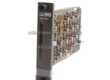
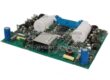
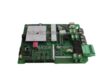
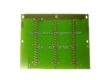
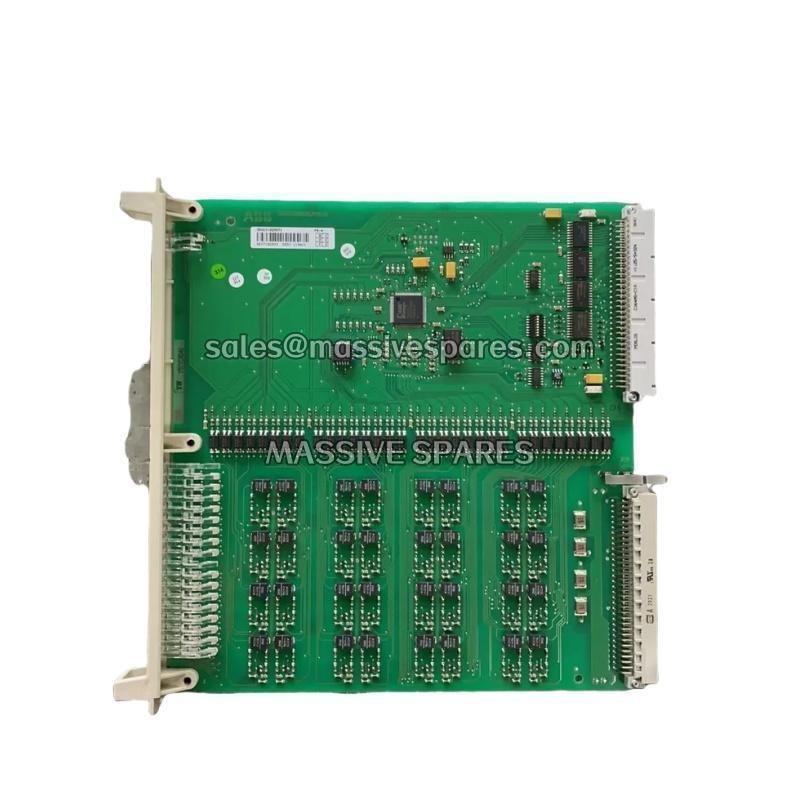
A closer inspection of the drawer identified the 3BHB90211000596 control board: its appearance, mounting points and connector positions matched the earlier 3BHB90211‑000595 board exactly, and the board’s own fault reporting was pointing to the power drawer rather than the main control cabinet. Swapping in a tested replacement 3BHB90211000596 restored clean communication, cleared the recurring alarm and returned the pump to service inside the same shift. Because the replacement is electrically and mechanically identical to the 000595 revision, no program or configuration changes were required—the pump was back online without re-engineering the drive.
Parameter
| Main Parameters | Value/Description |
|---|---|
| Product Model | 3BHB90211000596 (ABB material number 3BHB90211‑000596) |
| Supersedes | 3BHB90211‑000595 (first-generation board, discontinued) |
| Manufacturer | ABB |
| Product Category | Power drawer internal control / communication PCB |
| Compatible Platform | ABB ACS2000 medium-voltage drive |
| Mounting Location | Inside PBA‑E10 power-phase drawer |
| Supply Voltage | 24 V DC (drawer internal supply) |
| Interface | Multi-channel fiber-optic transceiver ports, flat-cable header, analog sampling terminals |
| Core Function 1 | Forward fiber-optic PWM commands from main control to the IGBT driver board |
| Core Function 2 | Summarize and return over-temperature, drive-fault and abnormal-sampling signals |
| Core Function 3 | Condition internal temperature and Hall current-sensor analog signals |
| Isolation | Optical fiber isolation between control and power sides, resistant to medium-voltage EMI |
| Fault Reporting | Board-level fault reporting, triggers “power unit communication fault” alarm |
| Operating Temperature | 0 °C to +60 °C |
| Quantity per Drawer | 1 piece |
| Weight | Approx. 185 g |
| HS Code | 8538.90.91 |
| Status | OEM-discontinued; available as original spare, refurbished or tested take-out |
Technical Principles and Innovative Values
Innovation Point 1 — One board closes the loop between controller and IGBT driver. The 3BHB90211000596 is not a passive backplane: it transmits the main controller’s PWM commands down to the IGBT driver and simultaneously returns a consolidated fault and measurement picture to the controller. That two-way role is what allows the drive to distinguish a real power-unit problem from a wiring or communication issue.
Innovation Point 2 — Fiber isolation inside the drawer. All critical control paths use fiber-optic links, so the board is inherently isolated from the medium-voltage environment. This prevents the high-dv/dt and EMI generated by IGBT switching from corrupting PWM timing or creating false fault trips in the low-voltage control domain.
Innovation Point 3 — Consolidated fault reporting. Instead of separate alarms for every sensor and driver stage, the 3BHB90211000596 summarizes over-temperature, driver-fault and abnormal-sampling conditions and reports them over the fiber return path. This gives maintenance staff a single, actionable alarm rather than a list of ambiguous event codes.
Innovation Point 4 — Integrated analog signal conditioning. The board conditions the drawer’s temperature and Hall current-sensor signals before they reach the controller. Clean, linear signals mean the drive sees accurate current feedback and thermal state, improving protection decisions and reducing nuisance trips.
Innovation Point 5 — True revision-compatible replacement. The 3BHB90211000596 supersedes the 000595 revision with optimized hardware while retaining the same physical appearance, mounting dimensions and connector positions. It drops in directly without program or configuration changes—important when the objective is to restore service rather than redesign the drive.