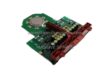
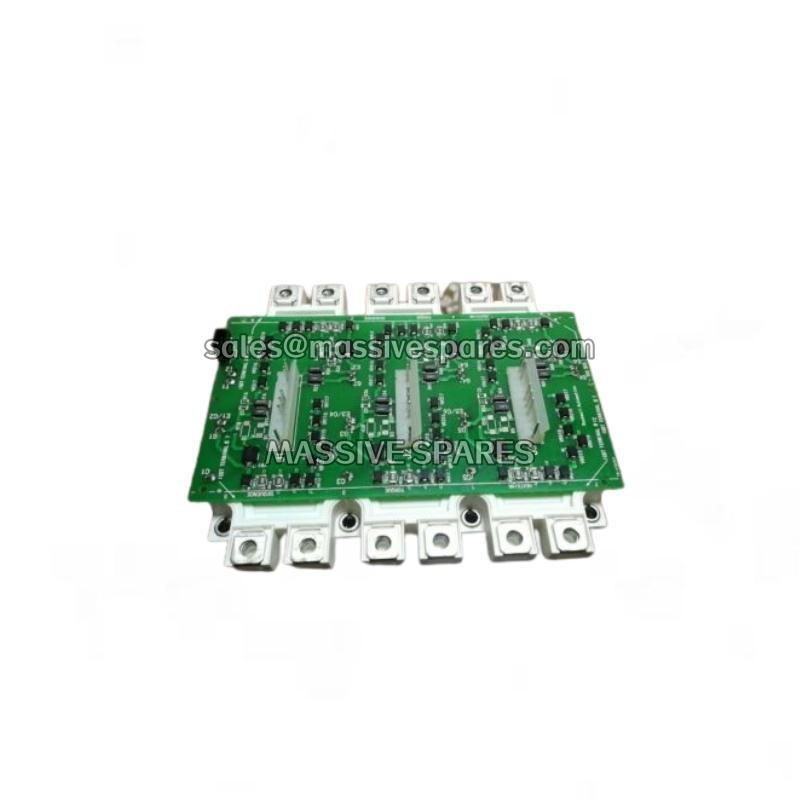
Application Scenarios
At a 2×350 MW combined cycle power plant in Southeast Asia, a DCS modernization project hit a communication bottleneck: the existing interface cards could only handle a single Modbus TCP stream and a single RS485 loop, forcing the integrator to cascade three separate protocol gateways to bring turbine auxiliary data and PLC signals onto the same operator screen. Peak polling latency spiked to 800 milliseconds, and the OPC server threw “tag stale” alarms every shift.
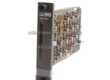
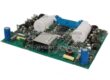
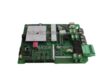
After replacing the legacy nodes with 3BHE015619R0001, each XVD825A01 provided two independent 10/100 Mbps Ethernet ports and a dedicated RS485 terminal, with 3000 Vrms galvanic isolation between the network side and the system side. Polling latency dropped below 120 milliseconds, tag stale events disappeared entirely, and three separate gateway boxes were eliminated per unit. For the lead DCS engineer, the conclusion was clear: “The XVD825A01 didn’t just add ports—it eliminated failure points.”
Parameter
| Parameter | Value/Description |
|---|---|
| Product Model | 3BHE015619R0001 |
| Board Marking | XVD825A01 |
| Manufacturer | ABB |
| Product Category | Communication Interface PCB / DCS Gateway Board |
| Platform | ABB Symphony Plus DCS |
| Ethernet Interface | 2 × RJ45, 10/100 Mbps auto-negotiation |
| Serial Interface | 1 × RS485 (terminal block), up to 115.2 kbps |
| Supported Protocols | Modbus TCP/IP, Profibus DP, ABB proprietary bus |
| Isolation Voltage | 3000 Vrms optical isolation (network side ↔ system side) |
| Supply Voltage | 24 V DC ±10% |
| Power Consumption | ≤ 12 W typical |
| Operating Temperature | –5 °C to +60 °C |
| Mounting | DIN rail or panel mount (Symphony Plus station form factor) |
| Dimensions/Weight | ≈170 × 102 × 22 mm / ≈0.16 kg |
Technical Principles and Innovative Values
- Innovation Point 1: Three Protocols Simultaneously on a Single Board. Most DCS interface cards force users to choose one bus—Ethernet, Profibus, or proprietary. The 3BHE015619R0001 runs all three concurrently: ABB native bus for tight coupling with the controller, Modbus TCP for northbound data to MES/IT systems, and Profibus DP for legacy field instruments. This eliminates gateway racks and the store-and-forward latency introduced between protocol boxes.
- Innovation Point 2: 3000 Vrms Optical Isolation as Standard on the Network Side. In chemical plants and power stations, ground potential rise from VFDs, thyristor stacks, and lightning-coupled surges can destroy unprotected UART interfaces. The XVD825A01 inserts an optical isolation barrier between the noisy field side (RS485/Profibus) and the clean DCS backplane. This means a surge coupled from a 6.6 kV bus does not propagate to the Symphony Plus backplane—directly reducing spurious controller reboots.
- Innovation Point 3: Native Symphony Plus Integration Without Middleware. Because the 3BHE015619R0001 natively supports ABB’s internal bus, it appears as a first-class I/O expansion node within Control Builder M / Symphony Plus Engineering, not as a “third-party node.” Configuration happens within the same engineering environment—the technician tuning a PID loop can also map Modbus TCP registers without learning proprietary gateway software.