Product Overview
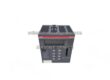
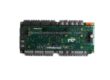
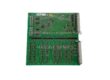
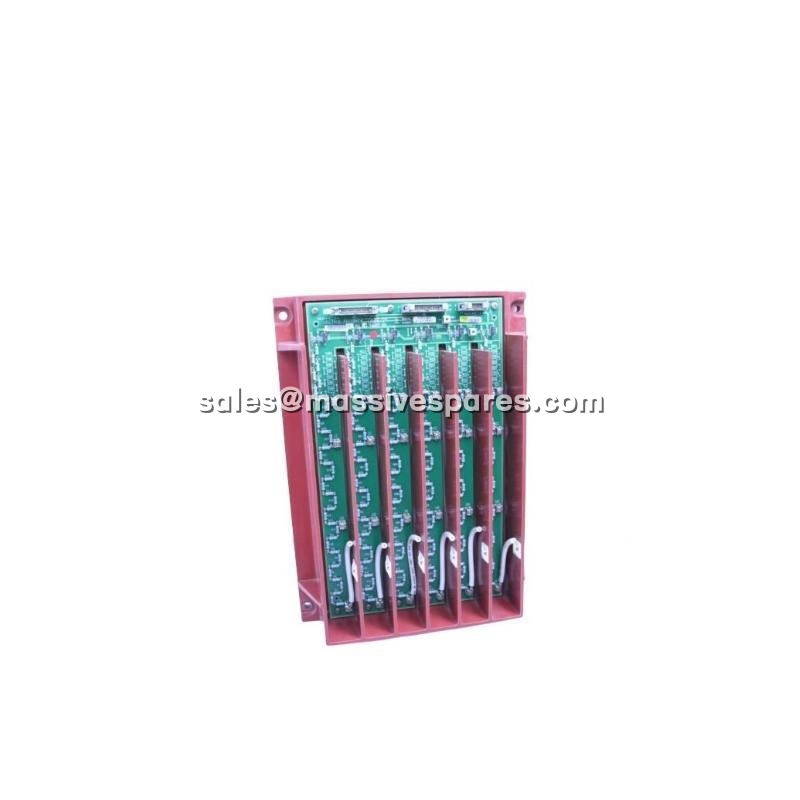
The ABB 8100-199-53-R is an industrial interface board designed to facilitate reliable data transfer and signal processing within distributed control systems (DCS) and programmable logic controller (PLC) architectures. As a communication bridge between field devices and higher-level control platforms, the ABB 8100-199-53-R enables efficient integration of sensors, actuators, and peripheral equipment into complex automation networks. This interface board is engineered for continuous operation in demanding industrial environments, delivering stable performance across manufacturing, energy, and transportation applications.
The ABB 8100-199-53-R operates on a 24V DC power supply and supports multiple industrial communication protocols including RS485, CAN, Modbus, and Profibus. This multi-protocol capability allows the board to interface with a wide range of automation equipment from different manufacturers, reducing integration complexity and eliminating the need for separate gateway devices. The board features eight interface ports, providing ample connectivity for distributed I/O modules, remote terminal units, and intelligent field instruments.
With an IP65 protection rating, the ABB 8100-199-53-R is suitable for installation in environments exposed to dust, moisture, and other contaminants commonly found on factory floors. The board operates reliably across a temperature range of -20°C to +70°C, with storage tolerance extending from -40°C to +85°C. Its compact dimensions of approximately 100mm × 150mm facilitate installation in space-constrained control cabinets while maintaining accessible connection points for field wiring.
Technical Specifications
| Parameter Name | Parameter Value |
|---|---|
| Product Model | ABB 8100-199-53-R |
| Manufacturer | ABB |
| Product Type | Industrial Interface Board / Communication Module |
| Operating Voltage | 24V DC |
| Power Consumption | Low power design (exact value varies by configuration) |
| Operating Temperature | -20°C to +70°C |
| Storage Temperature | -40°C to +85°C |
| Dimensions | Approximately 100mm × 150mm |
| Weight | Approximately 200g |
| Interface Quantity | 8 ports |
| Communication Protocols | RS485, CAN, Modbus, Profibus |
| Interface Type | RS485/RS232 |
| Protection Rating | IP65 |
| Application | DCS, PLC, Industrial Automation Systems |
Main Features and Advantages
Multi-Protocol Communication Flexibility: The ABB 8100-199-53-R supports a comprehensive suite of industrial communication protocols including RS485, CAN, Modbus, and Profibus. This protocol-agnostic design enables the board to function as a universal interface across heterogeneous automation environments, allowing equipment from different vendors to communicate seamlessly. System integrators can deploy a single ABB 8100-199-53-R where multiple protocol converters would otherwise be required, reducing hardware costs and cabinet space requirements.
Robust Environmental Protection: With an IP65 ingress protection rating, the ABB 8100-199-53-R resists dust ingress and water spray from any direction. This protection level is particularly valuable in manufacturing facilities where airborne particulates, lubricants, and cleaning solutions are present. The board‘s wide operating temperature range of -20°C to +70°C accommodates installations in unheated electrical rooms, outdoor cabinets, and process areas where ambient conditions fluctuate significantly.
High-Density Connectivity: The ABB 8100-199-53-R provides eight interface ports within a compact footprint, enabling efficient connection of multiple field devices without requiring multiple communication modules. This channel density reduces the number of components in the control cabinet, simplifying wiring and lowering overall system cost. The board’s slim profile of approximately 100mm × 150mm allows installation in space-constrained enclosures while maintaining clear access to all connection terminals.
Reliable Data Transmission: Engineered for industrial environments, the ABB 8100-199-53-R delivers stable signal processing and accurate data transfer even in the presence of electrical noise from motors, drives, and switching equipment. The board‘s design incorporates filtering and isolation measures to protect communication integrity, ensuring that control data reaches its destination without corruption or loss. This reliability is essential for real-time control applications where communication failures can disrupt production or compromise safety.