Product Overview
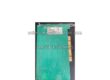
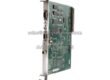
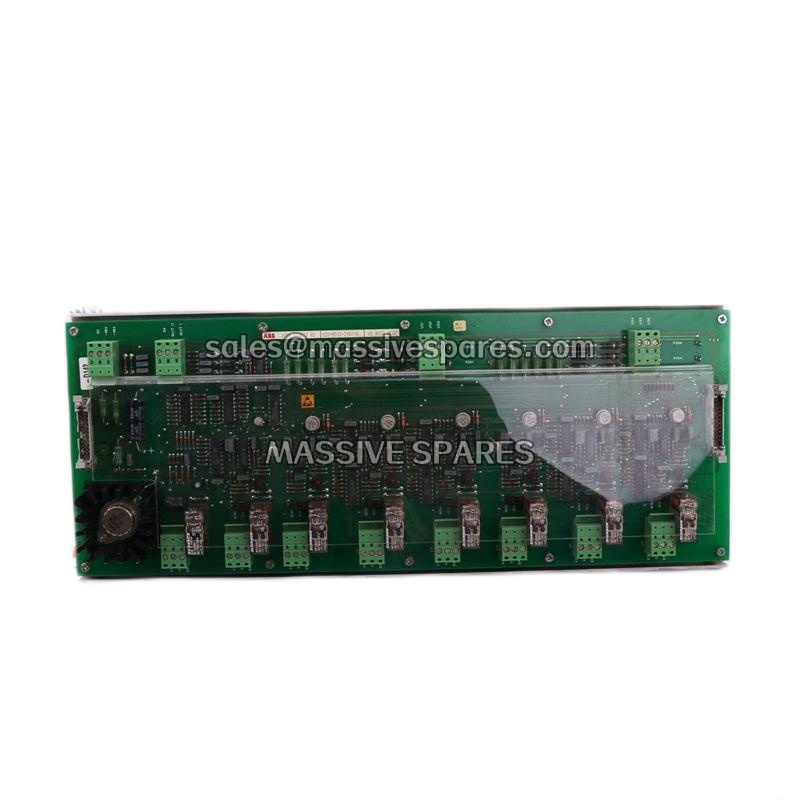
The ABB 3HAC16035-1 is a dedicated brake release board engineered by ABB Robotics for the IRC5 and S4C+ robot controller families. As a critical safety component, the ABB 3HAC16035-1 serves as the interface between the robot‘s motion control system and the electromagnetic holding brakes on each axis, ensuring precise and reliable brake actuation during normal operation, emergency stops, and maintenance procedures . This brake release board, designated as DSQC563, is a plug-in module installed within the IRC5 drive rack and is responsible for managing the release and locking of robot axis brakes across a wide range of ABB robot models.
The ABB 3HAC16035-1 operates on a fail-safe principle: when power is removed from the robot system, the electromagnetic brakes automatically engage to hold the robot arm in position, preventing potentially dangerous drops of heavy payloads. The board receives “release” or “lock” commands from the main controller and distributes the appropriate 24V DC voltage to energize or de-energize the holding brakes on up to six robot axes . This design is fundamental to robot safety, as it ensures that even during power loss or emergency stop conditions, the robot’s position is maintained without requiring continuous controller intervention.
The ABB 3HAC16035-1 is compatible with a broad range of ABB robot models, including the IRB 2400, 2600, 4400, 4600, 6600, 6640, 6650S, and 6660 series . Its installation within the IRC5 controller cabinet and direct integration with the robot‘s internal bus system enable seamless communication with the main controller, making the ABB 3HAC16035-1 an essential spare part for maintaining robot uptime and operational safety in industrial automation environments.
Technical Specifications
| Parameter Name | Parameter Value |
|---|---|
| Product Model | 3HAC16035-1 (DSQC563) |
| Manufacturer | ABB Robotics |
| Product Type | Brake Release Board / Brake Control Module |
| System Compatibility | ABB IRC5, S4C+ Robot Controllers |
| Supported Robots | IRB 2400, 2600, 4400, 4600, 6600, 6640, 6650S, 6660 |
| Supply Voltage | 24V DC (from controller power supply) |
| Output Current (per channel) | Up to 5A (maximum) |
| Output Channels | 6-axis independent control |
| Control Interface | IRC5 Internal Bus / DeviceNet |
| Manual Controls | 6-axis independent push-buttons for maintenance release |
| Operating Temperature | -25°C to +70°C |
| Protection Class | IP20 (for cabinet mounting) |
| Weight | Approximately 0.08–0.15 kg |
| Substitute Part | 3HAC059158-001 (alternative) |
Main Features and Advantages
The ABB 3HAC16035-1 delivers reliable multi-axis brake control through its six independent output channels, each capable of supplying up to 5A to energize the electromagnetic holding brakes on the robot’s joints . This high current capacity ensures that even large, heavy-duty robot arms can be safely released when commanded, while the independent channel design allows for precise control over individual axes during maintenance and recovery operations.
Integrated manual release functionality: Unlike basic brake control modules that require software commands for all operations, the ABB 3HAC16035-1 incorporates six independent manual release buttons directly on the board . This feature proves invaluable during collision recovery or maintenance scenarios, allowing engineers to individually release each axis to manually manipulate the robot arm and clear obstructions without complex software overrides, significantly reducing downtime after unexpected events.
Comprehensive protection and diagnostic capabilities: The ABB 3HAC16035-1 incorporates multiple safety mechanisms including overcurrent protection, short-circuit detection, and fault feedback signals that report brake status to the main controller . When a fault condition is detected in the brake circuit, the board automatically isolates the affected channel and triggers an alarm, preventing damage to the brake coil or the board itself. The fail-safe design ensures that in the event of power loss or controller fault, all brakes immediately engage to hold the robot securely in position .