Product Overview
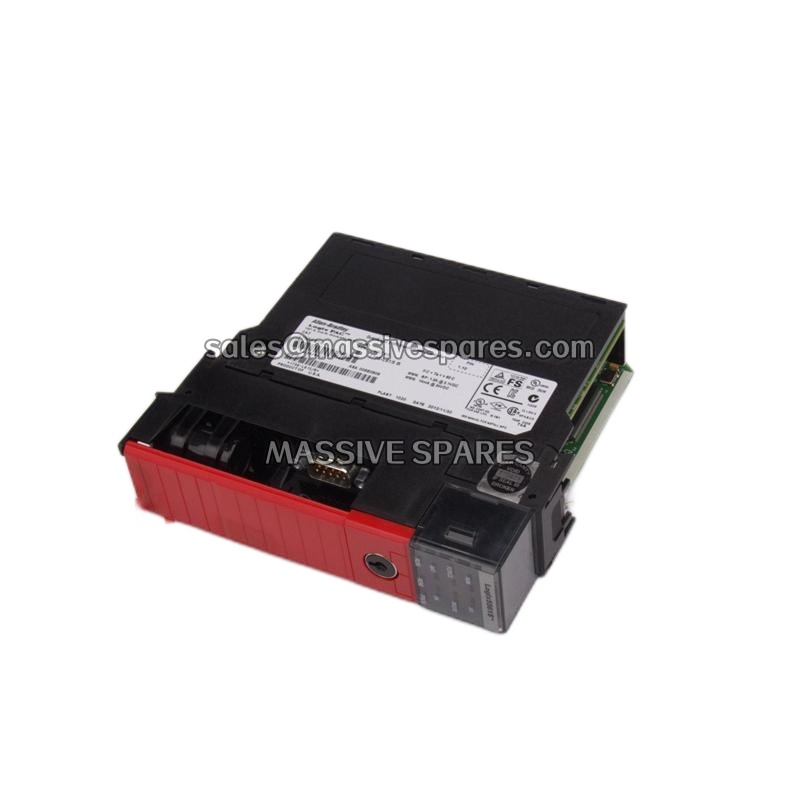
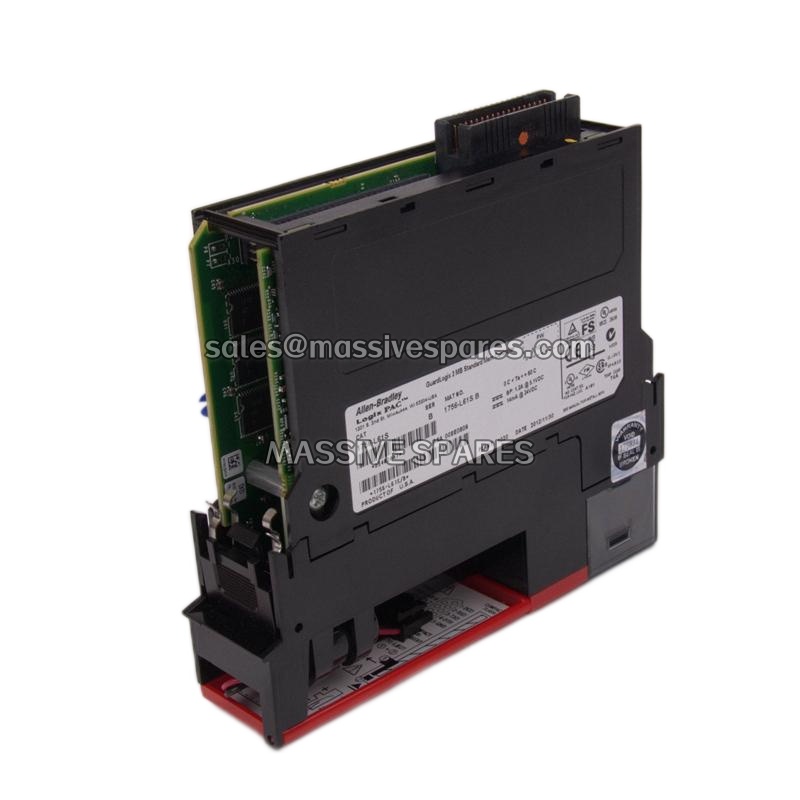
The Allen-Bradley 1756-L63S is a GuardLogix safety processor within the ControlLogix platform, engineered to execute both standard control logic and safety-rated functions from a single controller architecture. As the highest-memory variant in the 1756-L6xS series, the Allen-Bradley 1756-L63S provides 8 MB of standard user memory and 3.75 MB of dedicated safety memory, enabling the execution of complex standard programs alongside certified safety tasks without requiring a separate safety controller . The processor is type-approved for safety applications up to SIL CL 3 according to IEC 61508 and IEC 62061, and up to Performance Level PLe (Category 4) according to ISO 13849-1, making the Allen-Bradley 1756-L63S suitable for the most demanding machine safety and process shutdown applications .
The Allen-Bradley 1756-L63S operates as the primary controller in a GuardLogix system, paired with a 1756-LSP safety partner module that provides an isolated second channel for safety-related processing. This dual-channel architecture forms the foundation of the controller’s safety certification, ensuring that safety functions execute with the diagnostic coverage and fault tolerance required for SIL 3 applications . The Allen-Bradley 1756-L63S supports CIP Safety communication over EtherNet/IP, ControlNet, and DeviceNet networks, allowing safety I/O modules and safety-enabled drives to be integrated into the same network infrastructure used for standard control . With support for up to 128,000 total I/O points and 4,000 analog I/O points, the processor accommodates substantial automation systems while maintaining the deterministic performance necessary for both standard and safety tasks .
Technical Specifications
| Parameter Name | Parameter Value |
|---|---|
| Product Model | 1756-L63S |
| Manufacturer | Allen-Bradley (Rockwell Automation) |
| Product Type | GuardLogix Safety Processor |
| Series | A |
| Standard User Memory | 8 MB |
| Safety Memory | 3.75 MB |
| Maximum Digital I/O | 128,000 points |
| Maximum Analog I/O | 4,000 points |
| Backplane Current (5.1V DC) | 1200 mA |
| Backplane Current (24V DC) | 14 mA |
| Power Dissipation | 3.5 W |
| Thermal Dissipation | 11.9 BTU/hr |
| Communication Ports | Serial (RS-232) via 1756-CP3 cable |
| Memory Card Support | 1784-CF64 / 1784-CF128 CompactFlash |
| Operating Temperature | 0°C to 60°C |
| Safety Certification | SIL CL 3 (IEC 61508/62061), PL e Cat 4 (ISO 13849-1) |
Main Features and Advantages
Integrated Safety and Standard Control in One Controller: The Allen-Bradley 1756-L63S eliminates the traditional separation between safety PLCs and standard control processors by executing both safety and standard tasks within a single ControlLogix chassis. The safety task runs in dedicated safety memory and is isolated from standard program execution, ensuring that standard logic modifications or faults cannot compromise the integrity of safety functions. This architecture reduces hardware footprint, simplifies system design, and allows engineers to program safety and standard logic within a unified RSLogix 5000 environment, using the same tag database and communication infrastructure .
SIL 3 / PL e Certification with Dual-Channel Architecture: The Allen-Bradley 1756-L63S achieves its safety integrity through a dual-channel processing architecture in which the primary controller works in concert with a 1756-LSP safety partner. The safety partner provides an independent, isolated processing channel that cross-checks safety task execution, enabling the detection of silent failures that single-channel architectures cannot identify. This certified architecture allows the Allen-Bradley 1756-L63S to be deployed in applications requiring the highest safety integrity levels, including emergency shutdown systems, machine guarding, and burner management, without requiring external safety relays or redundant safety controllers .
Extensive Memory for Demanding Applications: With 8 MB of standard memory and 3.75 MB of safety memory, the Allen-Bradley 1756-L63S provides substantially more capacity than lower-tier GuardLogix processors, accommodating large standard control programs alongside comprehensive safety logic. The safety memory allocation of 3.75 MB represents a significant increase over the 1 MB available in the 1756-L61S and 1756-L62S, making the Allen-Bradley 1756-L63S the appropriate choice for safety applications with extensive interlocking, zone control, or diagnostic logic requirements .
Multi-Network CIP Safety Communication: The Allen-Bradley 1756-L63S supports CIP Safety protocols across EtherNet/IP, ControlNet, and DeviceNet networks, providing flexibility in safety I/O topology and allowing integration with existing plant communication infrastructure. Safety input and output modules can be distributed across the network while maintaining the deterministic response times required for safety functions. The processor also supports standard EtherNet/IP communication for HMI, historian, and enterprise connectivity, enabling the Allen-Bradley 1756-L63S to serve as a unified data source for both operational and safety-related information .