Description
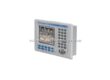
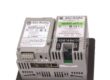
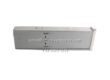
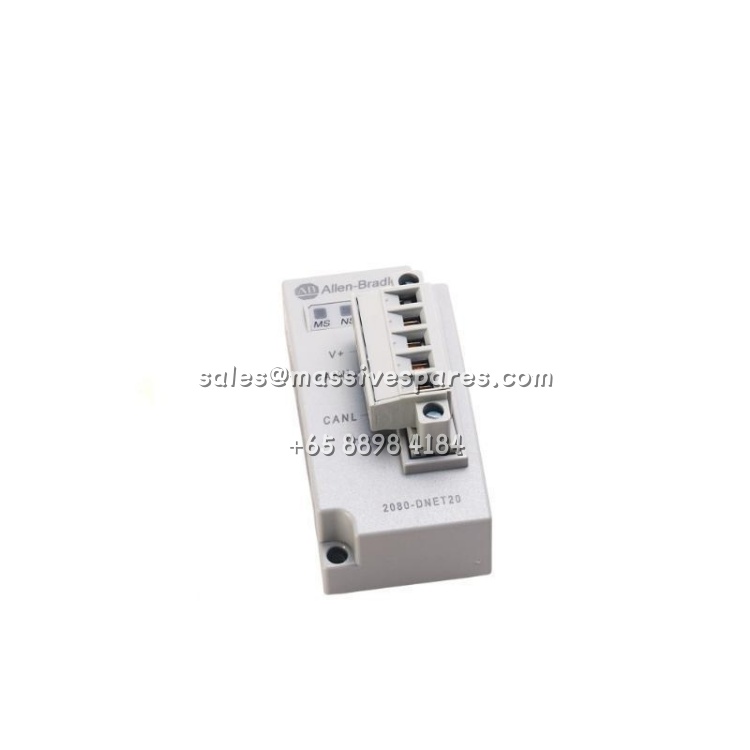
The 2080-DNET20 is a DeviceNet scanner plug-in module from the Allen-Bradley Micro800 family. It snaps directly onto the expansion face of a Micro820, Micro830, Micro850 or Micro870 controller and turns that compact PLC into a DeviceNet master (scanner) without adding a DIN-rail gateway, a second power supply or a separate configuration tool.
With a 5-pin removable terminal, a 24V DC backplane draw of just 50 mA and a native 300 mA Class 2 DeviceNet bus supply, the 2080-DNET20 is built for the machine builder who inherits a DeviceNet cell — PowerFlex drives, CompactBlock LDX I/O, E300 overload relays, ArmorBlock and smart sensors — but wants to keep the logic in a Micro800 project running inside Connected Components Workbench.
Application Scenarios
An OEM was retrofitting a palletizer for a food plant that already had sixteen PowerFlex 4M drives and two CompactBlock LDX stations on a DeviceNet trunk. The original panel used a CompactLogix chassis just to host a 1769-SDN scanner, and the controls budget for the next twenty machines could not carry that chassis. A Micro850 with a 2080-DNET20 in plug-in slot 3 replaced the whole chassis. The scanner polled the drives and the I/O blocks every scan, while an MSG_CIPGENERIC pass-through read trip counts and thermal-state words from the drives between polls — the same data the maintenance team used to chase nuisance faults. The cabinet shrank by a 1769 width, the bill of materials dropped, and the startup tech still saw the familiar green NET LED and the per-node state table in CCW. The plant got a modern Micro800 program; the floor kept its DeviceNet investment.
Parameter
| Main Parameters | Value / Description |
|---|---|
| Product Model | 2080-DNET20 (look for the SER code on the product label; firmware revision is read through RSLinx device properties) |
| Manufacturer | Allen-Bradley / Rockwell Automation, Micro800 plug-in family |
| Product Category | DeviceNet Scanner (Master) Plug-In Module, field-terminated open-style port |
| Compatible Hosts | Micro820, Micro830, Micro850, Micro870; not supported on Micro810. One 2080-DNET20 per controller |
| Network Role | Scanner / Master — owns the poll schedule, MAC ID arbitration and I/O connections; cannot operate as a DeviceNet slave |
| Node Capacity | 20 nodes for I/O operation; addresses drawn from the DN 0–63 range (00 and 63 reserved by the spec) |
| Baud Rates | 125 kbps (420 m trunk), 250 kbps (200 m), 500 kbps (75 m) — set in CCW, must match every node on the segment |
| Physical Port | 5-pin removable screw terminal: V+, V−, CAN_H, CAN_L, Shield — ODVA open-style pinout |
| Wire Size | 0.25–2.5 mm² (24–14 AWG) solid or stranded copper, 75 °C rated, max 1.2 mm insulation |
| Backplane Power | 24V DC, 50 mA from the host controller backplane — no external 24V wiring for the module itself |
| DeviceNet Bus Power | 24V DC @ 300 mA, Class 2, sourced onto the trunk from the module; size the external DN supply to the full bus load, not just this figure |
| Power Dissipation | 1.44 W maximum — roughly 4.9 BTU/hr, so cabinet-density calculations barely notice it |
| Isolation | 50V continuous, type-tested 500V AC for 60 s between network and controller logic |
| Status Indicators | Module Status (MOD, red/green) and Network Status (NET, red/green); blink/color codes resolved in the CCW diagnostics page |
| I/O Messaging | Poll-command (cyclic polled I/O) with Change-of-State style handling available per the slave’s EDS assembly |
| Explicit Messaging | Yes — MSG_CIPGENERIC pass-through to the scanner itself (1, slot) or to a slave (1, slot, 2, node), for acyclic parameter reads/writes |
| Configuration | Inside CCW with the bundled UDFBs (RA_DNET_MASTER, RA_DNET_NODE_STATUS, RA_DNET_GENERIC, RA_DNET_EXPLICIT, plus device-profile blocks); EDS import for third-party slaves |
| Diagnostics | Online page (revision 2 plug-in and later): slot, scanner status, mode, baud, scanner address, auto-scan state and per-node state (Connected / Fault / Not configured / Out of range) |
| Environment | −20 to +65 °C operating, −40 to +85 °C storage, 5–95 % RH non-condensing, IP20 cabinet-only |
| EMC / Immunity | IEC 61000-4-2 6 kV contact / 8 kV air ESD; IEC 61000-4-4 ±2 kV EFT on comms; IEC 61000-4-3 10 V/m radiated; CISPR 11 Class A emissions |
| Compliance | cULus, CE, ODVA DeviceNet conformance, KC / CCC markings per label revision |
| Redundancy / SIL | None — single port, no redundancy, not suitable for safety functions; do not use for SIL-rated or safety-critical control |
| Physical | Plug-on module behind the controller front cover; country of origin Singapore, standard 1-year warranty from the principal |
| Lifecycle | Active per Rockwell’s current listing; firmware, EDS and DTM files available through the PCDC |
Technical Principles and Innovative Values
Innovation Point 1 — A master in a plug, not a gateway in a cabinet. Most small PLCs that “speak DeviceNet” need an external scanner box, its own 24V supply, its own EtherNet or serial tie-back and a mapping exercise. The 2080-DNET20 sits on the controller’s internal backplane, so the scanner’s I/O image lands straight into the Micro800 variable table as if it were local I/O. No MSG gymnastics, no third-party protocol bridge, no extra DIN rail real estate.
Innovation Point 2 — Two traffic classes, one bus, no collision. DeviceNet is a producer/consumer CIP network carried over CAN. The 2080-DNET20 runs the poll schedule for cyclic I/O (the fast, bounded-latency path that actually runs the machine) and separately carries explicit messages for parameter work — drive accel time, overload reset, device identity. Because the explicit traffic is acyclic, a tech can pull a drive’s fault log without pausing the poll scan. On a Micro800, that split is exposed through the RA_DNET_MASTER and RA_DNET_EXPLICIT function blocks rather than hidden in a black-box gateway.
Innovation Point 3 — The 20-node ceiling is a feature, not a limitation. A 1756-DNB will happily address 63 nodes, but a Micro800 program, task budget and cabinet footprint were never sized for a refinery-scale DeviceNet plant. Capping the 2080-DNET20 at 20 I/O nodes forces a clean machine-cell boundary: one scanner per cell, one Micro850 per skid, predictable scan contribution. Scale horizontally by adding a controller and another 2080-DNET20, and you get cell-level isolation for free — a bus fault stays inside one machine.
Innovation Point 4 — Diagnostics that name the node. Revision 2 and later plug-ins expose the diagnostics page live in FactoryTalk Design Workbench / CCW: slot, mode (idle or running), baud, scanner MAC ID, auto-scan state and the state of every node in the scan list. “Flashing red NET” stops being a cable tester problem and becomes node 14 is out of range, which is a five-minute walk instead of a two-hour hunt.
Innovation Point 5 — Firmware you can field-upgrade without a spare controller. ControlFLASH is installed alongside CCW. Put the controller in Program mode, idle the scanner, and the 2080-DNET20 firmware is reflashed over the backplane. Combined with the Micro800 one-touch backup and the 2080-MEMBAK-RTC, a failed or mismatched scanner comes back from a revision mismatch in the same shutdown window that used to require a bench swap.