Application Scenarios
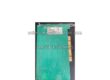
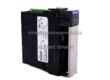
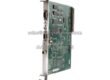
In a plastic injection molding facility, the legacy control system of a Ferromatik MV 275 machine began exhibiting increasing scan time fluctuations, causing inconsistent cycle times and occasional loss of position synchronization during mold closing sequences. The existing processor lacked sufficient buffering to handle the growing program complexity as additional quality monitoring functions were added over the years. Maintenance engineers replaced the aged CPU with a 3CP260.60-1, restoring deterministic program execution and eliminating synchronization faults. The 3CP260.60-1 provided the memory headroom needed for the expanded application while maintaining compatibility with the existing I/O backplane and interface modules, extending the operational life of the injection molding asset without a full control system retrofit.
Parameters
| Main Parameters | Value/Description |
|---|---|
| Product Model | 3CP260.60-1 |
| Manufacturer | B&R Industrial Automation |
| Product Category | CPU Module / Central Processing Unit |
| System Platform | B&R System 2005 |
| DRAM | 4 MB |
| SRAM | 850 kB |
| FlashPROM | 512 kB |
| Interface Slots | 2 slots for plug-in interface modules |
| PCMCIA Slot | 1 (supports SRAM and FlashPROM memory cards up to 16 MB) |
| Programming Interface | 1 × RS232 (9-pin DSUB, non-isolated, max. 64 kBaud) |
| Operating Modes | Run, Run with MC, Diagnostics, Update, Service |
| Backup Battery | Lithium battery for data buffering (remanent variables, user RAM, system RAM, real-time clock) |
| Country of Origin | Austria |
| Certifications | CE, UKCA, cULus E115267 |
Technical Principles and Innovative Values
Modular Interface Expansion for Flexible Network Integration. The 3CP260.60-1 is equipped with two slots that accept plug-in interface modules from B&R’s IF series, allowing the CPU to be adapted to different bus and network systems without replacing the base controller. This modularity enables integration into PROFIBUS-DP, CAN, RS485/RS422, or ETHERNET networks through appropriate IF modules.
PCMCIA Memory Card Support for Program Portability. The CPU supports PCMCIA memory cards up to 16 MB (SRAM or FlashPROM), enabling program transfer, storage expansion, and firmware updates via card-based procedures. This feature simplifies commissioning and spare-part handling, as a programmed memory card can be inserted into a replacement 3CP260.60-1 to restore application functionality quickly.
Integrated Battery Monitoring for Data Integrity. The 3CP260.60-1 performs cyclic battery load tests to provide early warning of weakened backup capacity without significantly shortening battery life. Status information is available through system library functions, allowing preventive replacement scheduling before data loss occurs.
Application Cases and Industry Value
A European automotive components manufacturer operated multiple B&R 2005-controlled assembly stations where the original CPUs were approaching end-of-life. Spare availability for the legacy processors had become constrained, and unplanned downtime risk was increasing. The plant standardized on the 3CP260.60-1 as the replacement CPU across its installed base. Because the module is compatible with all B&R 2005 controls, engineers could maintain a single spare part type for multiple machine variants. The PCMCIA interface allowed program backup and restoration to be performed entirely through memory cards, eliminating the need for laptop-based transfers in the production environment. Changeover time for a failed CPU was reduced to under 30 minutes, including battery verification and program card insertion.
A food processing facility experienced recurring faults on a B&R 2005-controlled packaging line where the CPU’s SRAM retained critical recipe data. The original processor’s battery monitoring function had failed silently, resulting in data loss after a power interruption. After upgrading to the 3CP260.60-1, the integrated battery monitoring provided advance notification of low battery condition through the system library, allowing maintenance to schedule replacement during planned downtime. The facility recorded no recipe data losses over the following two years.