Application Scenarios
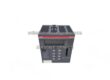
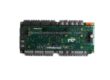
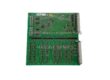
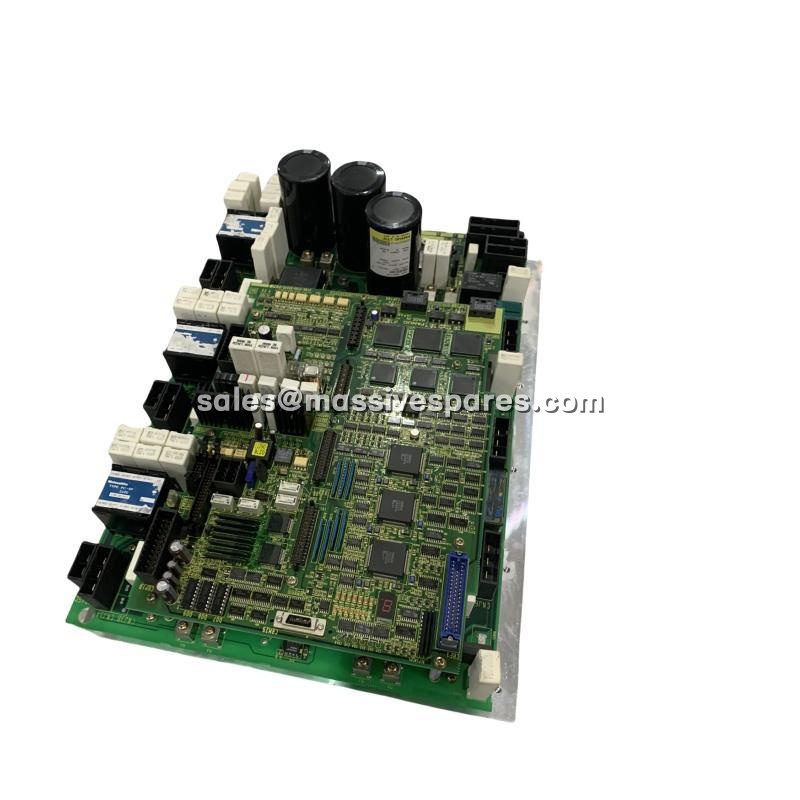
In an automotive body shop, a FANUC RJ3 robot performing spot welding began exhibiting subtle axis-2 position drift during high-duty-cycle operation. The root cause was traced to a failing power transistor stage in the original 6-axis servo amplifier, which caused current ripple and inconsistent torque delivery to the J2 servo motor. Rather than face a costly full-controller replacement, the maintenance team installed a tested FANUC A06B-6100-H002 servo amplifier. Within minutes of commissioning, the robot restored crisp, jitter-free multi-axis coordination, and the welding path accuracy returned to within specification. More importantly, the swap was performed during a single planned maintenance window—avoiding what would have been days of production downtime.
This real-world case illustrates the core value of the A06B-6100-H002: in applications where six axes must move in perfect synchronized harmony—automotive welding, electronics assembly, laser cutting, material handling, and CNC machining—the servo amplifier is the component that determines whether the robot moves with precision or drifts into scrap. For plants running legacy FANUC robots, this amplifier is not a commodity spare; it is the key to restoring and preserving calibrated motion.
Parameter
| Main Parameters | Value/Description |
|---|---|
| Product Model | A06B-6100-H002 (alt. A06B6100H002, A06B-6100-H002-D, A06B-6100-H002#H500) |
| Manufacturer | FANUC / FANUC Robotics (Japan) |
| Product Category | 6-Axis Servo Amplifier / Servo Drive Unit |
| Product Series | FANUC Alpha (α) Series |
| Number of Controlled Axes | 6 (simultaneous, independent) |
| Rated Input Voltage | 200–230 V AC, 3-phase |
| Input Frequency | 50 / 60 Hz |
| Rated Output Current | 6 A (per axis; amplifier-class, see note) |
| Compatible Controllers | FANUC RJ3, R-J3iB, and compatible control cabinets |
| Compatible Robots | FANUC LR Mate, M-series, and other 6-axis robots |
| Communication / Interface | FSSB (FANUC Smart Serial Bus); FANUC dedicated servo link |
| Control Method | High-bandwidth current control with velocity & position loops |
| Compatible Servo Motors | FANUC αi / α series servo motors |
| Protection Features | Overcurrent, overvoltage, regenerative braking support |
| Mounting | Panel-mount inside robot control cabinet |
| Operating Temperature | 0°C to +60°C (ambient, cabinet environment) |
| Storage Temperature | -20°C to +70°C |
| Humidity | Up to 80% RH, non-condensing |
| Maximum Altitude | 1000 m above sea level |
| Weight | Approx. 40 lbs (18.14 kg) |
| Status | Discontinued by manufacturer (legacy / aftermarket sourcing) |
| Certifications | CE compliant (platform-level) |
Technical Principles and Innovative Values
- Innovation Point 1: True 6-Axis Simultaneous Control
The A06B-6100-H002 doesn’t just drive six motors—it orchestrates them as a coordinated kinematic chain. Each axis has its own current-control loop, while a shared high-speed processor synchronizes all six to execute complex, coupled trajectories (like moving a tool in a straight line through 3D space). This is fundamentally different from six independent single-axis drives. - Innovation Point 2: FSSB (FANUC Smart Serial Bus) Architecture
Unlike drives that rely on parallel analog command lines, the communicates with the robot controller over FSSB—a high-speed serial servo link. This reduces cabling, eliminates analog drift, and allows the controller to close the position loop digitally for superior accuracy and repeatability. - Innovation Point 3: High-Bandwidth Current Control
The amplifier’s fast current-loop sampling and FANUC-proprietary PWM stage deliver torque response fast enough to compensate for load changes in microseconds. The result is the signature FANUC “stiffness”—the robot holds path accuracy even under varying payloads and external forces. - Innovation Point 4: Regenerative Braking & Energy Recovery
During robot deceleration, the amplifier feeds kinetic energy back into the DC bus rather than dissipating it as heat. This improves energy efficiency and reduces cabinet cooling load—important in 24/7 production environments with frequent start-stop cycles. - Innovation Point 5: Built-In Diagnostics & Protection
Integrated monitoring for overcurrent, overvoltage, encoder loss, and thermal overload allows the amplifier to safely fault and alert the controller before damage occurs. This self-protection is why a failing amplifier typically announces itself with a clear alarm code rather than taking the robot down silently.