Application Scenarios
In a precision machining facility, a horizontal machining center relied on separate single-axis servo amplifiers for its X and Y feed axes. This configuration consumed valuable cabinet space and required extensive cabling between the drives and the CNC controller. When the machine builder redesigned the electrical cabinet for a new production line, they specified the FANUC A06B-6096-H207 as the drive solution for both axes. The dual-axis design consolidated two drives into one module, reducing cabinet footprint by approximately 40% while maintaining the precise synchronized control required for contouring operations. The FSSB fiber optic interface simplified wiring and eliminated the electromagnetic interference issues that had occasionally caused positioning errors with the previous analog signal cables .
In a robotic welding cell, a six-axis articulated robot required coordinated motion across multiple joints to maintain precise torch angle and travel speed during complex weld paths. The robot’s controller utilized FANUC A06B-6096-H207 amplifiers to drive the major axis motors, with the L-axis output handling a smaller wrist joint and the M-axis output powering a larger shoulder or elbow motor. When one amplifier developed VRDY (servo ready) instability that triggered intermittent CNC alarm 401, the production line faced unscheduled downtime. A replacement FANUC A06B-6096-H207 restored stable operation, and the robot returned to full production within a single shift, avoiding the need to reprogram or re-tune the affected axes .
Parameter
| Parameter | Value/Description |
|---|---|
| Product Model | FANUC A06B-6096-H207 |
| Manufacturer | FANUC |
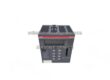
| Product Category | Dual-Axis Servo Amplifier Module |
| Product Series | Alpha Series SVM2-40/80 |
| Input Voltage (DC Link) | 283–325 VDC |
| Total Output Power | 8.5 kW |
| Maximum Output Voltage | 230 VAC |
| L-Axis Output Current | 12.5 A |
| M-Axis Output Current | 18.7 A |
| Communication Interface | FSSB Fiber Optic Bus |
| Cooling Method | Internal 24VDC Forced Air Cooling |
| Operating Temperature | 0°C to 40°C |
| Vibration Resistance | 5G Maximum |
| Weight | 19.00 lbs (8.62 kg) |
| Mounting | Vertical Installation in Control Cabinet (IP20) |
Technical Principles and Innovative Values
- Dual-Axis Consolidation for Space Efficiency: The FANUC A06B-6096-H207 integrates two independent servo drive channels into a single module, each with dedicated power output stages and current regulation circuits . This consolidation reduces the number of discrete components in the control cabinet, simplifies wiring between the CNC and the drives, and lowers overall system cost. For machine builders designing compact equipment, the space savings can enable smaller cabinet enclosures or allow additional functionality within existing panel dimensions.
- Asymmetric Current Output for Flexible Motor Matching: Unlike amplifiers with identical output channels, the FANUC A06B-6096-H207 provides an asymmetric configuration with a 12.5A L-axis and an 18.7A M-axis . This design flexibility allows machine builders to pair a smaller, lower-inertia motor on one axis with a larger, higher-torque motor on the other, optimizing both performance and cost for applications where axis load requirements differ significantly—common in machining centers where the Z-axis may require more power than the X-axis.
- FSSB Fiber Optic Interface for Noise Immunity: The FANUC communicates with the CNC controller via FANUC Serial Servo Bus (FSSB), a high-speed fiber optic protocol . This optical interface provides complete galvanic isolation between the CNC and the servo amplifier, eliminating ground loop issues and making the system immune to electromagnetic interference from motor cables and nearby power equipment. In machine tool environments where VFD-driven spindles and high-current power cables generate significant electrical noise, FSSB ensures reliable position and velocity command transmission without signal degradation .
- HRV3 High-Response Control Support: When equipped with the appropriate control PCB and wiring specification boards, the FANUC supports FANUC’s HRV3 (High Response Vector) control algorithm . HRV3 minimizes current control delay through advanced current loop compensation, enabling higher acceleration rates, reduced positioning times, and smoother surface finishes in high-speed machining applications. This capability makes the amplifier suitable for modern i-series CNC systems that require enhanced servo performance for complex contouring and high-speed feed operations.