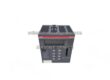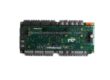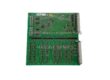
Technical Specifications
| Parameter Name | Parameter Value |
|---|---|
| Product Model | 10311/2/1 |
| Manufacturer | Honeywell |
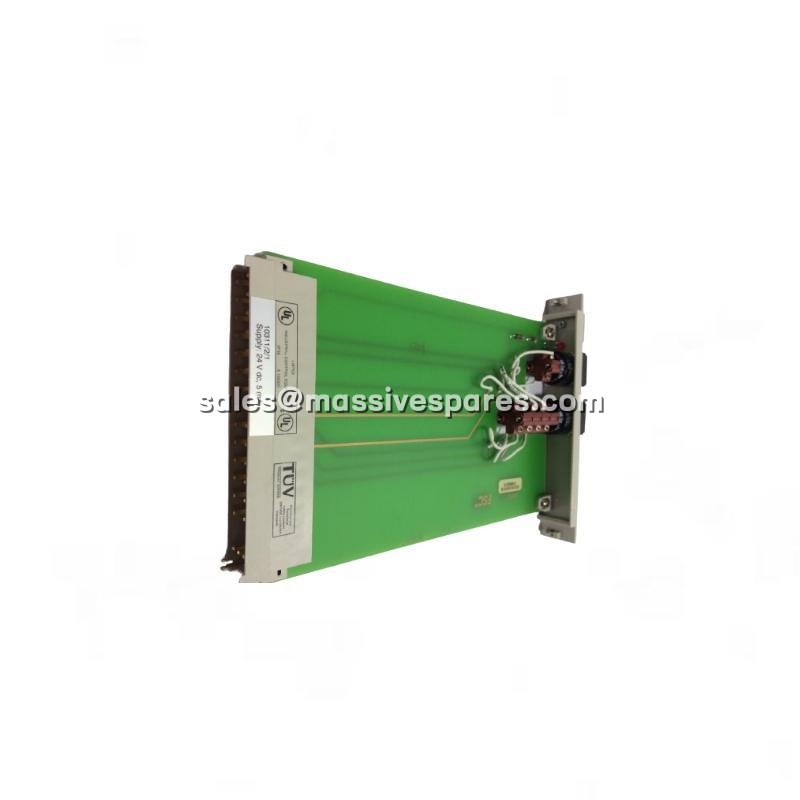
| Product Type | Control/Reset Module / Dual Key Switch Module |
| System Family | Honeywell Fail Safe Controller (FSC), Experion PKS environment |
| Key Switches | 2 independent, individually coded key switches |
| Watchdog Reset Switch | 3 make contacts; key removable in open (horizontal) position only |
| Force Enable Switch | 1 potential-free make contact; key removable in both open and closed positions |
| Force Enable Indication | Red LED on module front, beneath the switch |
| Supply Voltage | 24 Vdc nominal |
| Maximum Voltage | 36 Vdc |
| Typical Current Consumption | 5 mA at 24 Vdc |
| Maximum Current | 2 A |
| Reverse Polarity Protection | Yes |
| Rack Space Requirement | 4 TE (4 HP) horizontal × 3 HE (3U) vertical |
| Module Code | A5, A13 |
| Rack Code | A5, A13 |
| Isolation | Electrical isolation between control inputs and system logic |
| Approvals | CE, UL, TÜV compliant |
| Operating Temperature | −20 °C to +60 °C |
| Storage Temperature | −40 °C to +85 °C |
| Protection Class | IP20, installed inside control cabinet |
| Dimensions (H × W × D) | 120 mm × 100 mm × 50 mm |
| Weight | Approximately 0.118 kg to 0.2 kg depending on assembly |
Main Features and Advantages
Two distinct functions, two distinct keys: The Honeywell 10311/2/1 deliberately separates the two most sensitive operator actions in a safety system. Resetting a latched trip and enabling signal forcing are not the same act, and they should not share a control. By giving each its own switch, the module ensures that authorising a maintenance override never accidentally clears a shutdown condition, and that an operator performing a routine fault reset never inadvertently places the system into forcing mode.
Key coding that resists unauthorised and accidental operation: Both switches on the Honeywell 10311/2/1 use specific key coding, and the watchdog reset and force enable keys are different from one another. In practice this means the ability to manipulate safety logic is a physical possession, controlled by the site’s key management procedure, not a screen any passer-by can touch. It also eliminates the accidental bump or mis-press that a keypad or touchscreen interface can never fully exclude.
Mechanical interlocking built into the switch design: The Watchdog Reset switch on the Honeywell 10311/2/1 can only have its key withdrawn in the open horizontal position. An operator therefore cannot walk away leaving the system in a reset state, and the physical position of the key tells anyone approaching the rack exactly what condition the switch is in. The Force Enable switch, by contrast, permits key removal in either position because a maintained enable state is sometimes legitimately required during extended maintenance work.
Unmistakable visual confirmation: Forcing is the single most dangerous routine state a safety system can be placed in, because forced inputs and outputs no longer reflect reality. The Honeywell 10311/2/1 marks that state with a red LED directly on the front panel beneath the switch, so a supervisor walking past the cabinet can see at a glance that the system is not running in its normal, unforced configuration — without opening a diagnostic screen or interrogating the controller.
Minimal electrical and mechanical burden: Consuming only about 5 mA at 24 Vdc and occupying just 4 TE × 3 HE of rack space, the Honeywell 10311/2/1 adds a safety-critical human interface without meaningful cost in power, heat, or panel area. Integrated reverse polarity protection means a wiring error during installation or maintenance does not destroy the module, and the industrial-grade key mechanism is built for the high-cycle use that shift operations impose over decades.