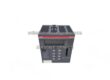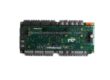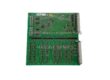
Product Overview
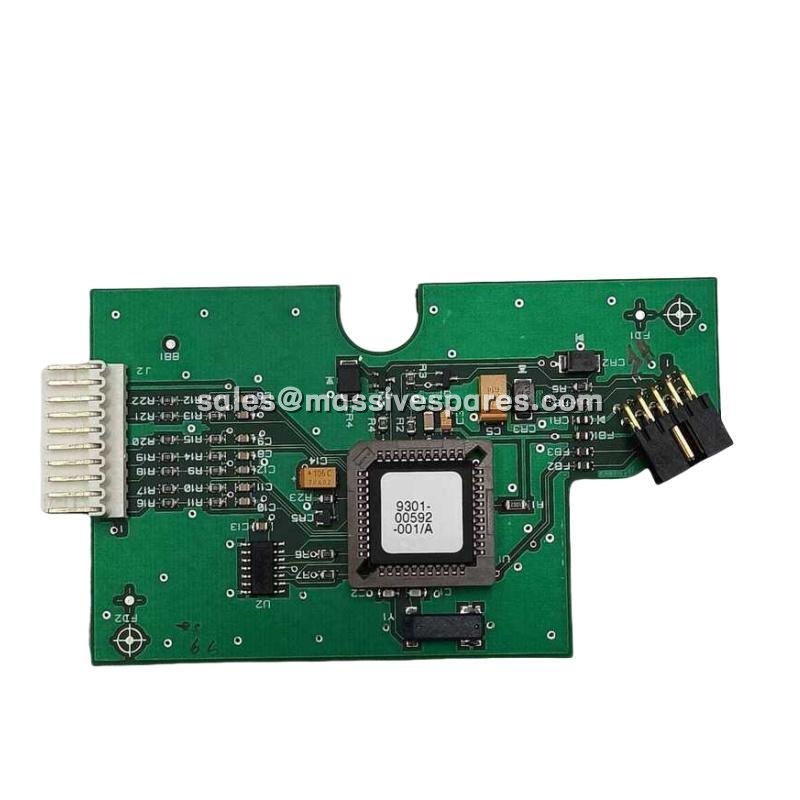
The Honeywell 51196694-928 is a Trackball PS/2 Interface Upgrade Board — a small, drop-in firmware-and-protocol printed circuit board that lives inside Honeywell operator-console trackball assemblies and upgrades a legacy cursor-control interface to the PS/2 Security Protection protocol. The current revision, Honeywell 51196694-928/U1, is cataloged as a 51196694-928/U1 upgrade board: the suffix denotes the U1 hardware/firmware level, while the alternate agency suffixes -EA1 (ATEX Zone 2) and -BA1 (CSA Division 2) identify hazardous-area approved variants. It is not a standalone trackball and not a general-purpose I/O card — it is the upgrade board only, installed inside an existing Honeywell PS/2 trackball assembly such as the 51196694-350 IKB with trackball for the Z-style console.
The Honeywell 51196694-928 accepts the low-level trackball movement and push-button selection signals generated by the mechanical optical or contact sensor assembly, then performs the firmware upgrade and PS/2 protocol handshake that newer Honeywell console architectures require. In practice this means a legacy PS/2 trackball — originally designed for Classic consoles — continues to work correctly with later operator stations (Z-style, TPS, and Experion-family nodes) without replacing the entire keyboard/trackball unit. The board is a small PCB form-factor that fits inside the standard Honeywell 3-inch trackball housing, draws 5 V DC from the host console, and presents a standard 6-pin mini-DIN PS/2 interface to the system. For plant maintenance teams, this turns a “console cursor no longer recognized” failure into a board-level repair that preserves the operator’s familiar IKB hardware, the panel cutout, and the existing cabling — a meaningful saving in both downtime and refit cost.
Technical Specifications
| Parameter | Value |
|---|---|
| Product Model | 51196694-928 |
| Revision | U1 (51196694-928/U1) |
| Alternate Suffixes | -EA1 (ATEX Zone 2); -BA1 (CSA Div. 2) |
| Manufacturer | Honeywell |
| Product Type | Trackball PS/2 Interface Upgrade Board (firmware + protocol) |
| Function | Upgrades PS/2 trackball to PS/2 Security Protection |
| Parent Assembly | 51196694-350 IKB with PS/2 trackball (Z console) |
| Compatible Assembly (USB) | 51196694-351 IKB with USB trackball (does not use 928) |
| Interface | PS/2 (6-pin mini-DIN) |
| Protocol | PS/2 Security Protection (upgraded firmware + protocol handshake) |
| Input Signals | Trackball X/Y movement + push-button selection |
| Input Voltage | 5 V DC (supplied by host console) |
| Power Consumption | Low-voltage DC, console-supplied (approx. 3.0 W class) |
| Operating Temperature | 0 … +60 °C |
| Storage Temperature | −55 … +85 °C |
| Humidity | 5 … 95 % RH, non-condensing |
| Form Factor | Small PCB; fits inside standard Honeywell 3″ trackball housing |
| Dimensions (PCB) | 10.8 × 6.2 × 1.3 cm (approx.) |
| Weight | 15 g (PCB only) / 40 g (board assembly) |
| Mounting | Internal to trackball/IKB housing; aligns with existing mounting standoffs |
| Origin | USA |
| Compliance | CE; UL; CSA; ATEX Zone 2 (EA1 suffix) |
Note: Console supply rail, firmware revision, and hazardous-area certification vary with suffix. The USB-trackball IKB (51196694-351) is electrically different and does not accept the 928 upgrade — confirm the host IKB and revision before ordering.
Main Features and Advantages
PS/2 Security Protection protocol upgrade
The defining function of the Honeywell 51196694-928 is the firmware and protocol handshake that enables PS/2 Security Protection. Newer Honeywell console architectures will not accept the unsecured legacy PS/2 handshake that older trackballs present, so a working trackball can suddenly stop being recognized after a console or firmware change. Installing the U1 revision Honeywell 51196694-928 restores compatibility at the protocol level — no new trackball, no new IKB, no panel modification.
Drop-in board-level repair, not a full peripheral replacement
The Honeywell 51196694-928 is a direct PCB replacement that installs inside the existing trackball housing. Because the mechanical trackball, the IKB enclosure, the panel cutout, and all cabling are retained, what would otherwise be a console-refit project becomes a board swap. In a live control room this keeps the operator’s hands-on environment unchanged — an important consideration when operators are trained on a specific keyboard and cursor device.