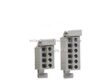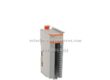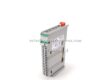
Product Overview
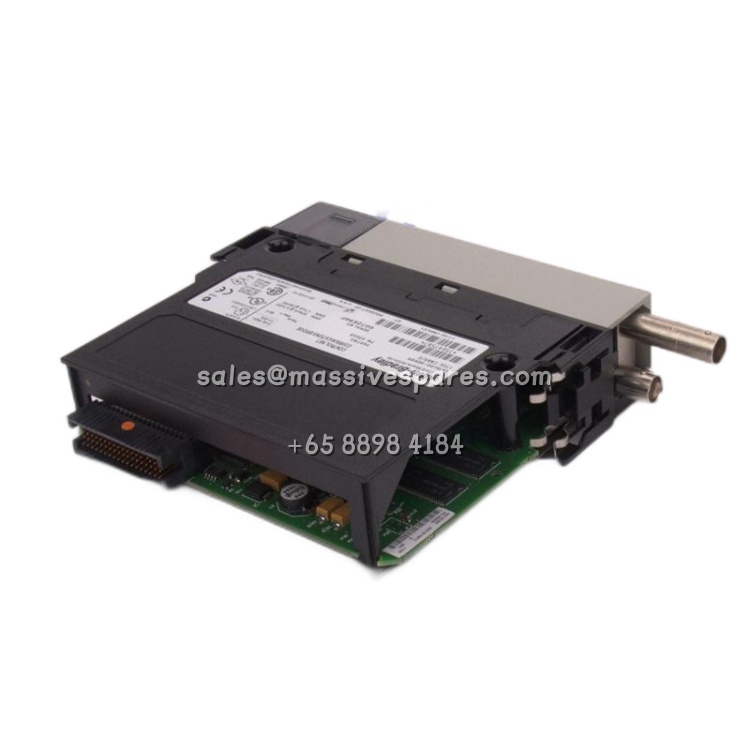
The 1756-OX8I is a rugged, high-performance isolated relay output module manufactured by Allen-Bradley, a brand of Rockwell Automation, and designed for the ControlLogix 1756 programmable automation controller (PAC) platform. As a member of the 1756 digital output family, the 1756-OX8I provides eight independently isolated normally open (N.O.) relay contact outputs, each capable of switching a wide range of AC and DC loads at voltages up to 250V AC and currents up to 2 A per point. Unlike solid-state output modules, the relay-based design of the 1756-OX8I offers complete electrical isolation between the ControlLogix backplane and the field devices, making it uniquely suited to applications where galvanic isolation, mixed AC/DC switching, and compatibility with a broad spectrum of load types are essential requirements.
The core function of the 1756-OX8I is to provide a robust switching interface between the ControlLogix controller and field-mounted electrical loads such as motor starters, solenoid valves, contactors, indicator lights, small heaters, and alarm horns. Each of the eight relay outputs is electrically isolated from the others and from the module’s logic circuitry, meaning that loads operating at different voltages or from separate power supplies can be controlled safely from a single module without the risk of ground loops, common-mode voltage issues, or cross-circuit interference. This level of isolation is particularly valuable in industrial environments where equipment from different manufacturers, voltage classes, or grounding systems must be integrated into a unified control architecture.
Positioned as a versatile and dependable output solution, the 1756-OX8I is widely used in applications where the switching flexibility of electromechanical relays is preferred over the speed and longevity of solid-state devices. The module’s relay contacts are inherently polarity-independent and can switch both AC and DC loads, including resistive, inductive, and incandescent lamp loads, without requiring different module types for each. With its robust construction, wide operating temperature range, and compatibility with the full range of ControlLogix communication and I/O modules, the 1756-OX8I delivers reliable performance and engineering flexibility in even the most demanding industrial environments.
Technical Specifications
| Parameter Name | Parameter Value |
|---|---|
| Product Model | 1756-OX8I |
| Manufacturer | Allen-Bradley (Rockwell Automation) |
| Product Type | Isolated Relay Output Module |
| Platform | ControlLogix 1756 PAC |
| Number of Outputs | 8 (independently isolated) |
| Contact Type | Normally Open (N.O.) electromechanical relay |
| Contact Rating (AC) | 2 A @ 250V AC (60 Hz), 0.5 A @ 250V AC (50 Hz) |
| Contact Rating (DC) | 2 A @ 30V DC, 0.5 A @ 125V DC |
| Maximum Switching Voltage | 250V AC / 125V DC |
| Maximum Switching Current | 2 A per point |
| Maximum Switching Power | 250 VA / 60 W |
| Minimum Switching Load | 10 mA @ 5V DC |
| Isolation (field to backplane) | 250V continuous, 1500V for 1 minute |
| Backplane Current Draw | 0.35 A @ 5.1V DC |
| Power Dissipation, Max | 4.8 W (all outputs energized) |
| Inrush Current Handling | 10 A for 10 ms (resistive), 5 A for 100 ms (inductive) |
| Expected Relay Life | 100,000 operations (rated load), 10 million (no load) |
| Operating Temperature | 0°C to 60°C (32°F to 140°F) |
| Storage Temperature | -40°C to 85°C (-40°F to 185°F) |
| Certifications | CE, UL, cULus, CSA, ATEX, IECEx, RoHS |
| Dimensions (W x H x D) | 5.7 x 6.65 x 5.8 in (145 x 169 x 145 mm) |
Main Features and Advantages
The 1756-OX8I stands out as one of the most flexible output modules in the ControlLogix 1756 portfolio, offering the unique combination of complete channel-to-channel isolation, universal AC/DC switching capability, and the inherent ruggedness of electromechanical relay contacts. Unlike solid-state output modules that are typically limited to a specific voltage class and load type, the 1756-OX8I can switch both alternating and direct current loads across a wide voltage range, all within the same module. This makes it an ideal choice for applications where a mix of 120V AC motor starters, 24V DC solenoid valves, and 230V AC alarm horns must be controlled from a single chassis, eliminating the need for multiple specialized output modules and simplifying inventory management.
One of the most significant advantages of the 1756-OX8I is its eight independently isolated relay outputs. Each contact is electrically separated from the others by a dielectric barrier, preventing ground loops and common-mode voltage problems that can plague solid-state modules in mixed-voltage systems. This isolation extends between the field side and the ControlLogix backplane as well, with a continuous rating of 250V and a dielectric withstand of 1500V for one minute. The result is a module that can safely interface with equipment from different power systems, grounding schemes, or manufacturers without the need for external isolation relays or signal conditioners.
The relay contacts of the 1756-OX8I are polarity-independent and inherently immune to the voltage spike and leakage current issues that can affect solid-state switches. They provide a clean, physical break in the circuit when open, with contact resistance below 100 milliohms when closed, ensuring minimal voltage drop and heat generation even at the full 2 A rated current. This makes the module particularly well-suited to switching inductive loads such as contactor coils and solenoid valves, where the physical contact closure is more forgiving of inrush current than a semiconductor switch.
Configuration and diagnostics are fully integrated with Rockwell Automation’s Studio 5000 Logix Designer software. Each output channel can be configured for immediate or delayed output, and the module provides comprehensive diagnostic feedback including blown fuse detection, undervoltage detection, and individual channel fault status. This allows control programs to monitor the health of the output circuitry and take appropriate action in the event of a field-side fault. The module also supports electronic keying and automatic device replacement, simplifying maintenance and reducing the risk of configuration errors during module swaps.