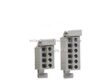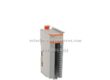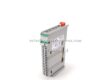
Application Scenarios
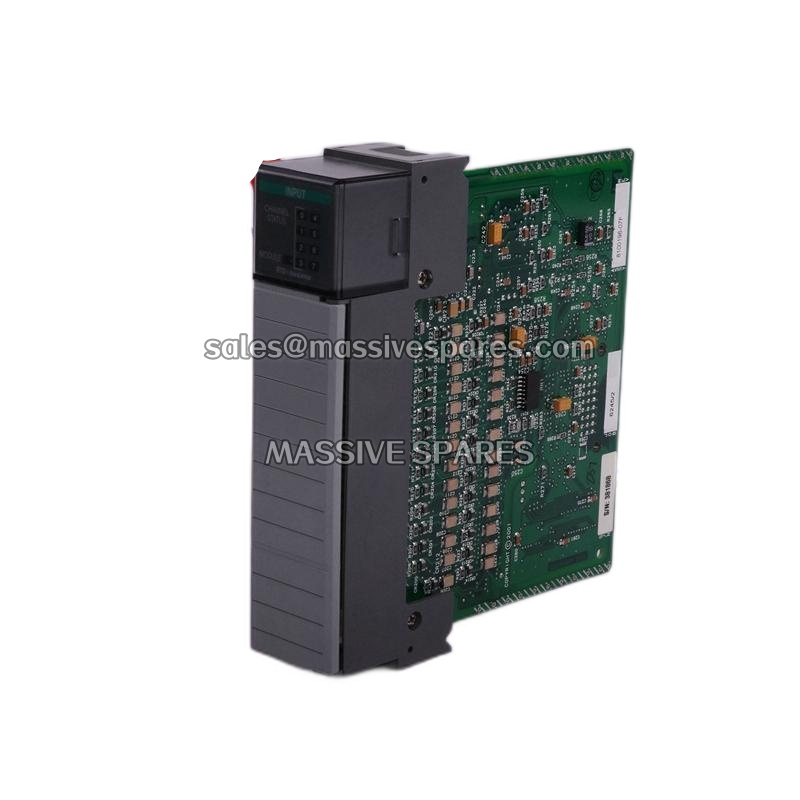
A food processing plant retrofits an SLC 5/05 panel that must monitor field devices from two different control circuits: 120 VAC pushbuttons on the original line, and 125 VDC limit switches added during a safety upgrade. A standard input module cannot accept both without external interposing relays, because all channels share a common return and the two supplies cannot be referenced together. The 1746sc-IA8I solves this directly: each input is point-to-point isolated at 1500 VAC, so the AC buttons and DC limit switches coexist on the same module with no shared common and no risk of cross-circuit faults . The panel gains eight channels of mixed-signal monitoring in a single slot, and the wiring stays clean.
Parameter
| Parameter | Value/Description |
|---|---|
| Product Model | 1746sc-IA8I |
| Manufacturer | Spectrum Controls (SLC 500 compatible) |
| Product Category | Isolated AC/DC Discrete Input Module |
| Inputs | 8, each with an independent common |
| Operating Voltage | 80–150 VAC @ 47–63 Hz; 85–170 VDC |
| Nominal Input Current | 16 mA @ 120 VAC; 2.5 mA @ 120 VDC |
| Isolation | 1500 VAC point-to-point; 1500 VAC field-to-backplane |
| Input Signal Delay (Off→On) | 17 ms @ 120 VAC; 7 ms @ 120 VDC |
| Input Signal Delay (On→Off) | 45 ms @ 120 VAC; 40 ms @ 120 VDC |
| Off-State Current (max) | 4 mA @ 20 VAC; 0.5 mA @ 20 VDC |
| Backplane Current | 0.110 A @ 5 VDC |
| Operating Temperature | 0°C to 60°C |
| Terminal Block | Removable 18-position, red (A-B 1746-RT25R) |
Technical Principles and Innovative Values
Innovation Point 1: Point-to-Point Isolation That Eliminates Interposing Relays. The 1746sc-IA8I provides 1500 VAC isolation between every input, not merely between the field and the backplane. This means a short, overload, or noise event on one channel cannot propagate to another, and up to eight different voltage sources can feed the same module without damaging components due to potential differences . For panel builders, this replaces eight interposing relays and their associated wiring, DIN rail space, and failure points.
Innovation Point 2: Bipolar Inputs with Sink/Source Flexibility. The 1746sc-IA8I accepts AC or DC signals without regard to polarity, and each channel can be wired as either sink or source . Commissioning a mixed batch of proximity sensors and limit switches becomes a wiring exercise rather than a configuration puzzle.
Innovation Point 3: High Off-State Leakage Tolerance. Proximity sensors and solid-state switches often leak enough current in the “off” state to cause false input activation on standard modules. The 1746sc-IA8I tolerates up to 4 mA of off-state current at 20 VAC, preventing the phantom signals that plague 120 VAC input cards in real panels .
Application Cases and Industry Value
A North American brewery’s bottling line used a mixture of 120 VAC pilot devices and 24 VDC photoeyes on the same SLC 500 rack. The original design separated these onto two standard input modules, consuming two slots and requiring separate common wiring runs. During a panel consolidation, the integrator replaced both modules with a single 1746sc-IA8I. Because each input has its own common, the AC and DC devices wired directly to adjacent terminals with no interaction. The integrator reported that the module’s high off-state leakage tolerance eliminated the false photoeye triggers that had occurred intermittently on the old DC card when the sensor’s leakage current floated above the input threshold.
In a European water treatment facility, an SLC 5/04 controlled valves and pumps across a 120 VAC control circuit and a 125 VDC emergency shutdown circuit. The 1746sc-IA8I monitored status feedback from both circuits without a voltage transducer. When a ground fault occurred on the DC side, the isolation barrier confined the fault to that channel; the AC inputs continued reporting normally, and the plant avoided a full control panel shutdown. The maintenance team later noted that the fault was traced in under twenty minutes because the isolated channel’s behavior pointed directly to the affected circuit.