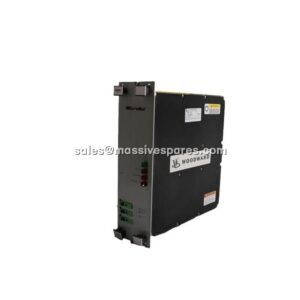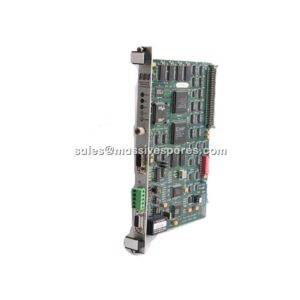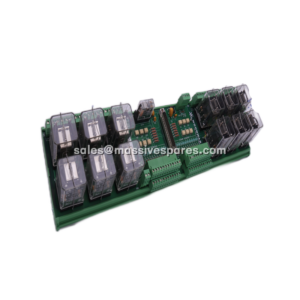

Description
Application Scenarios
In a gas turbine power plant operating on an unstable regional grid, the generator control system must manage load sharing between multiple generating units while protecting against electrical transients that could damage sensitive control electronics. The MicroNet TMR platform provides triple-redundant processor channels for fault tolerance, but the final output stage requires a driver module that can both amplify control signals to actuator-level currents and provide diagnostic feedback to confirm proper operation.
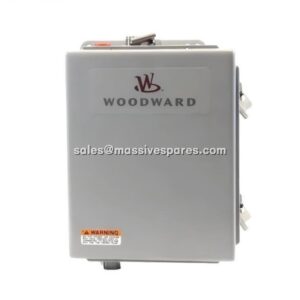
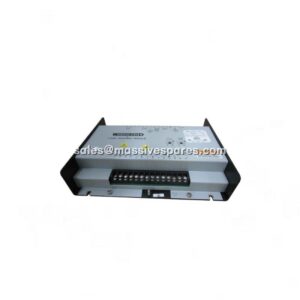
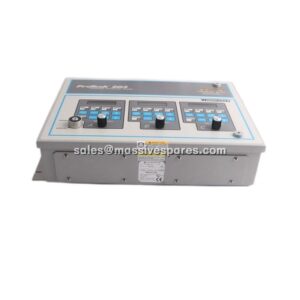
The 5461-655 addresses this by integrating load-sharing logic with high-current output drivers in a single module. When the generator circuit breaker closes, the module automatically initiates a controlled load ramp-up, communicating with other units over a CAN load-share bus to balance reactive and real power . If the CAN bus communication is interrupted, the module switches to droop mode, maintaining stable operation until the network recovers. This combination of output drive capability and intelligent load management makes the 5461-655 essential for facilities where generator synchronization and load balance directly affect grid stability and revenue.
Parameter
| Main Parameters | Value / Description |
|---|---|
| Product Model | 5461-655 |
| Manufacturer | Woodward |
| Product Category | Final Driver Module / Load Share Module |
| System Compatibility | MicroNet TMR Control Platform |
| Power Supply | 24 VDC nominal (18–30 VDC range) |
| Current Consumption | 50 mA typical |
| Output Capacity | 10 A per channel maximum |
| Communication | CAN Bus (load share network) |
| Discrete Inputs | DI 08 (terminal 74), DI 11 (terminal 77) for GCB status |
| Relay Outputs | R01–R08 for diagnostics and alarms |
| Operating Temperature | -40°C to +85°C |
| Dimensions | 19.1 cm × 2.5 cm × 23.5 cm |
| Weight | 0.3 kg |
Parameter notes
- 10 A per channel: High current capacity eliminates need for external amplifiers in most valve and actuator applications.
- CAN Bus load sharing: Enables coordinated load distribution across multiple generators without dedicated hardwired synchronization cabling.
- Dual discrete inputs for GCB: Provides redundant confirmation of circuit breaker status before initiating load ramp sequences.
Technical Principles and Innovative Values
- Innovation Point 1: Integrated load share logic with final driver output. Unlike conventional driver modules that simply amplify signals, the 5461-655 embeds load-sharing algorithms within the same hardware. When multiple modules operate on a common CAN bus, each unit monitors bus communication and adjusts its output to maintain balanced load distribution. If the 5461-655 detects a missing bus member (Relay R02 alarm), it automatically switches that unit to droop mode, preventing a single generator from absorbing disproportionate load .
- Innovation Point 2: Comprehensive diagnostic relay matrix. The module provides eight relay outputs (R01–R08) reporting specific conditions: self-test status, CAN bus membership, load share monitoring, GCB feedback, and tie-breaker feedback . This diagnostic granularity allows operators to distinguish between network faults, breaker failures, and module internal errors without external test equipment.
- Innovation Point 3: Automatic load ramp on GCB closure. The 5461-655 monitors the generator circuit breaker through discrete inputs DI 08 and DI 11. Once the GCB closes and the unloading signal is deactivated, the module ramps the generator output to match load demand based on communication with other units . This automation reduces operator intervention during synchronization and minimizes the risk of load imbalance during critical startup sequences.
Application Cases and Industry Value
A Middle Eastern combined-cycle plant operating four gas turbine generators faced recurring issues with load imbalance during grid disturbances. When one unit tripped offline, the remaining generators experienced rapid load swings that occasionally exceeded their capability, causing cascading trips. The plant’s original driver modules lacked integrated load-sharing communication, relying instead on an external PLC to coordinate load distribution.
The plant upgraded its MicroNet TMR racks with 5461-655 modules. The integrated CAN bus load-sharing function enabled direct module-to-module communication without external coordination hardware. When a unit trips, the remaining 5461-655 modules detect the missing bus member within milliseconds and redistribute load according to each generator’s capacity. The plant reported elimination of cascading trips during grid faults and reduced synchronization time by approximately 40% due to the automatic load ramp feature. Maintenance costs also declined because the diagnostic relay outputs provided clear fault indication, eliminating the need for oscilloscope-based troubleshooting during load imbalance investigations.