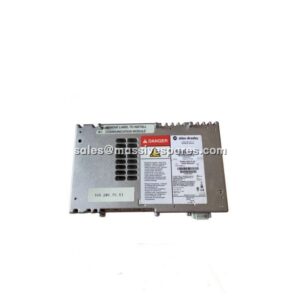
Description
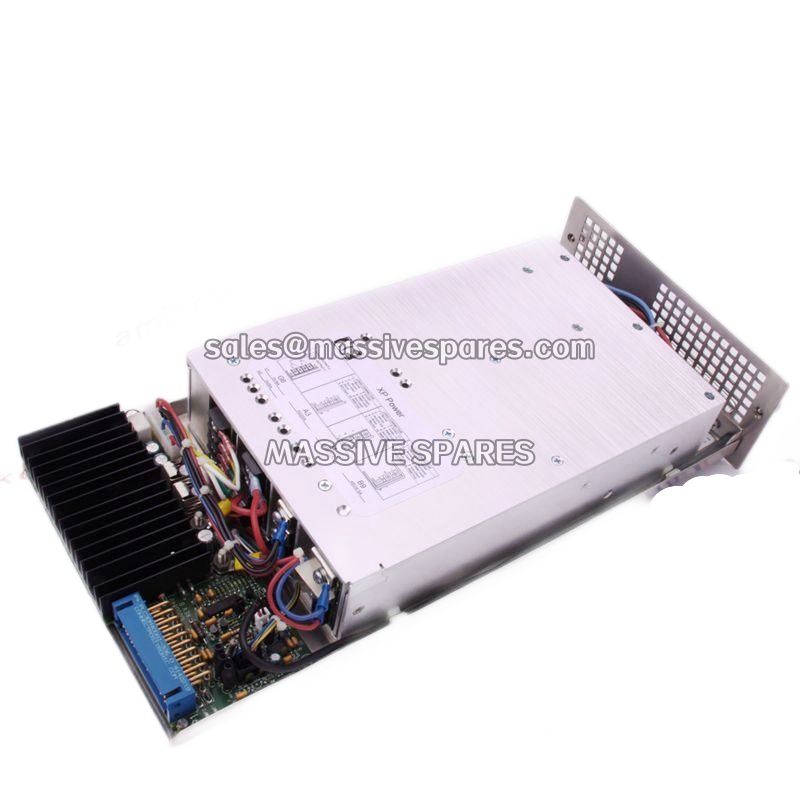
Application Scenarios
A regional hydropower operator was preparing a planned outage for a 60–120 MW unit still running on a first-generation excitation controller. Voltage response following load rejection was inconsistent, spare processor cards were obsolete, and fault records were difficult to correlate with field events. Rather than replace the entire excitation cubicle and thyristor bridge, the engineering team evaluated a PCD235A101-based control-path modernization that preserved the validated power stage while updating the processor, I/O termination, diagnostics, and plant interface.
The value was not a generic “efficiency gain.” It was regained control integrity: clearly identified control modes, repeatable step-response behavior, documented limiter coordination, traceable event records, and a qualified spare matched to firmware and configuration. Because excitation directly governs generator terminal voltage, reactive power, and rotor field conditions, even a short uncontrolled interval can force a generator off-line. The PCD235A101 is therefore most valuable when treated as a configuration-specific, service-critical component—not as a universal plug-in replacement.
Parameter
| Main Parameter | Value / Description |
|---|---|
| Product Model | PCD235A101 |
| Order / Material Reference | 3BHE032025R0101 |
| Manufacturer | ABB (ABB-associated; confirm country of origin from the supplied unit) |
| Product Category | Exciter / excitation control module; control processor with integrated I/O |
| System Environment | UNITROL 6000 / AC 800PEC excitation architecture (project-specific) |
| Supply Voltage | Redundant 24 V DC, commonly reported as 18–32 V DC or 20–28 V DC depending on listing; verify the label |
| Analog Inputs | 3 channels; commonly ±10 V or ±20 mA in reseller records—confirm scaling, burden, and isolation |
| Analog Outputs | 3 channels; commonly ±10 V—confirm load and fail-state |
| Digital Inputs | 12 channels; 24/48 V DC frequently cited—confirm wetting supply and sink/source type |
| Digital / Relay Outputs | 16 Form C relay outputs; confirm contact rating against the actual load |
| Temperature Inputs | 3 inputs for PT100 or PTC sensors; confirm sensor and cable configuration |
| High-Speed Interfaces | 3 optical links for gate/pulse or controller communication; clean and verify transmit/receive pairing |
| Serial Communication | RS-485 interface, frequently associated with Modbus; protocol and node settings are project-specific |
| Mounting Method | Rack / card-cage insertion with guided edge connectors and locking/ejector hardware |
| Dimensions (approx.) | 373 × 142 × 73.5 mm per one commercial listing; orientation and tolerance must be confirmed |
| Weight (approx.) | 1.53 kg in one listing; use only for shipping planning |
| Operating Temperature | −25 to +70 °C in cross-source technical listings; not treated as an OEM-certified rating |
| Environmental Rating | IP20 is a common claim for cabinet-installed control hardware; confirm from project documents |
| Key Notes | The I/O and environmental profile is a reseller consensus, useful for identification and spare screening but not a substitute for an ABB type-test record. |
Technical Principles and Innovative Values
Innovation Point 1 — Deterministic excitation control rather than generic process logic.
The PCD235A101 sits in a fast closed loop. It measures quantities such as generator terminal voltage, stator current, frequency, active/reactive power, and field current; compares them with setpoints; and computes the firing-angle demand for a fully controlled thyristor bridge. The bridge converts AC to adjustable DC field power. Advancing the firing angle increases average DC output; delaying it reduces output. This direct coupling between measurement, regulation, and gate timing is why excitation control must remain deterministic and thoroughly tested.
Innovation Point 2 — Integrated control, measurement, and actuation path.
Instead of separating the regulator, I/O, and pulse logic across unrelated devices, the module consolidates real-time control with analog/digital I/O, temperature monitoring, relay signaling, RS-485 communication, and optical links. Optical isolation is particularly valuable in excitation cabinets: it separates low-level control electronics from high-dV/dt transients near the thyristor bridge and reduces ground-loop susceptibility.
Innovation Point 3 — Configurable capability envelope through limiters.
A basic regulator can demand more field current than the rotor, stator, or power bridge can safely provide. The PCD235A101 supports the broader UNITROL excitation function set, which includes field-current and stator-current limiters, a V/Hz limiter for falling-frequency overexcitation, and an under-excitation limiter that helps keep operation within the generator stability boundary. Authority transfers to the active limiter rather than allowing an unbounded control action.
Innovation Point 4 — Stability-oriented control path.
Where enabled by the project firmware and power-system study, power system stabilizer (PSS) functionality adds a filtered, phase-compensated signal to the excitation control path. This helps damp low-frequency electromechanical oscillations after disturbances. ABB’s UNITROL PSS documentation describes digital PSS implementations consistent with IEEE 421.5 transfer functions; it should not be assumed that every PCD235A101 firmware revision has PSS licensed or enabled.
Innovation Point 5 — Architecture designed for availability.
UNITROL 6000 supports single, double, and optional backup control channels, together with configurable thyristor-converter arrangements. In a properly engineered redundant configuration, the can contribute to faster diagnostics and controlled channel transfer. Redundancy is not automatic: the backplane, firmware, parameter set, I/O assignment, gate distribution, and test procedure must all be validated.
Innovation Point 6 — Modernization without unnecessary power-stage replacement.
For plants with a sound thyristor bridge, cubicle, transformers, and field wiring, replacing an obsolete control processor can be more economical than a full excitation-system replacement. The offers a credible modernization path only when ABB or a qualified integrator confirms hardware revision, firmware, I/O mapping, gate/pulse compatibility, and protection coordination.