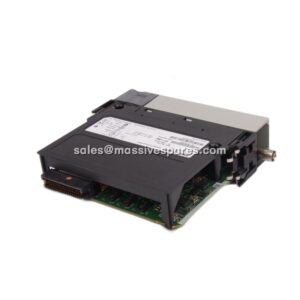
Description
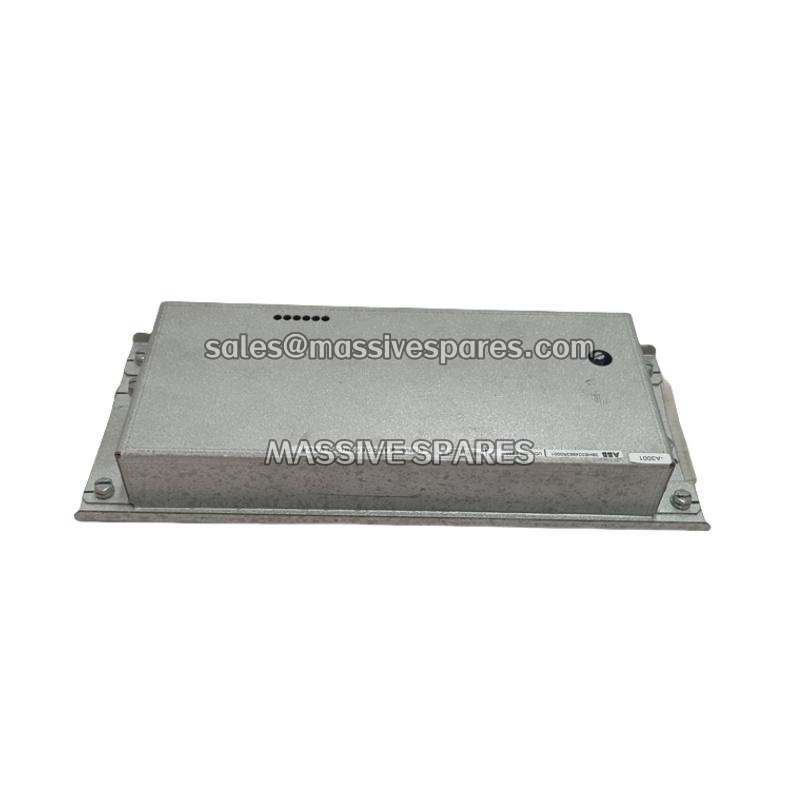
| Main Parameters | Value/Description |
|---|---|
| Product Model | ABB UDC920BE01 (3BHE034863R0001) |
| Manufacturer | ABB |
| Product Category | Analog Input Module / Universal Digital Process Controller |
| Analog Inputs | 16 isolated channels, 4-20mA / 0-10V software-configurable |
| AI Resolution | 18-bit |
| AI Accuracy | ±0.02% Full Scale |
| Analog Outputs | 4 channels (optional), 4-20mA / 0-10V |
| Digital I/O | 16 DI + 16 DO, 24V DC @ 0.5A per channel |
| Control Algorithms | PID, cascade, feedforward, fuzzy logic (onboard execution) |
| Communication | PROFIBUS DP (12 Mbit/s) + RS-485 Modbus RTU |
| Isolation | ≥3 kV AC channel-to-channel; opto-isolation on AI front-end |
| Supply Voltage | 24V DC ±20%, dual redundant input |
| Operating Temperature | -25°C to +70°C |
| Mounting | DIN-rail or cabinet panel |
Innovation Point 1: 18-Bit AD on Every Channel. The ABB UDC920BE01 delivers 18-bit resolution across all 16 analog input channels—not just one premium channel—with ±0.02%FS accuracy. A 4-20mA loop reading a reactor temperature transmitter at 12mA returns error under 0.0032mA at the controller. This uniformity matters in cascade control architectures where primary and secondary loop accuracy compound through the control chain.
Innovation Point 2: Local PID/Cascade/Fuzzy Execution. Unlike pure analog input modules that simply convert signals for remote processing, the ABB UDC920BE01 runs control loops onboard. PID with auto-tune, cascade (primary-to-secondary), feedforward, and fuzzy override logic execute locally, freeing the main DCS scan for other tasks. The plant DCS sees the ABB UDC920BE01 as a PROFIBUS DP slave with PV/SP/MV/status telegrams, not as a raw analog drop.
Innovation Point 3: 3kV Channel-to-Channel Isolation. Process cabinets routinely mix signals from VFD-coupled flow meters and steam-traced RTD lines. The ABB UDC920BE01 isolates each AI channel ≥3kV AC from neighbors and from logic side, preventing shield-drain faults on one channel from disturbing adjacent measurements. The opto-isolation plus 8th-order low-pass filtering eliminates VFD carrier aliasing that causes cheaper controllers to fail in electrically noisy cabinets.
Innovation Point 4: Dual PSU Redundancy and Hot-Swap Capability. The ABB UDC920BE01 accepts two 24V DC feeds phased from separate power supplies and rides through a single PSU failure without dropping PID output. On supported firmware versions, the board is hot-swap capable: extract, reseat, and the PROFIBUS master re-enumerates while the PID resumes from retained state. For critical loops where a controller swap means manual station deviation, this transforms a 20-minute process disturbance into a controlled non-event.
Case 1: Power Plant Feedwater Pump Lube Oil Control. A 300MW unit’s feedwater pump turbine lube oil temperature was controlled through the central DCS with 500ms scan time. Oil temperature wandered ±3°C around setpoint, causing bearing wear and winter alarm trips. The plant installed the locally, connecting the RTD transmitter to an AI channel and the heater SSR to an AO channel. Board-level PID executed at 50ms intervals, and steady-state temperature held within ±0.4°C. Operator intervention dropped to zero, and bearing inspection intervals extended by 40%.
Case 2: Stainless Steel Annealing Furnace Zone Control. A stainless steel annealing workshop operated six-zone furnaces where each zone required independent temperature control. The existing setup relied on the plant DCS for PID, consuming scan time and creating configuration complexity. Each zone was equipped with an , with AI channels reading thermocouple transmitters and zone pressure feedback, and AO channels driving thyristor power controllers. PROFIBUS DP connected all six controllers to the 800xA system, allowing operators to adjust setpoints from the central HMI. Furnace temperature uniformity improved, and DCS configuration effort was reduced by 60%.