
Description
Application Scenarios:
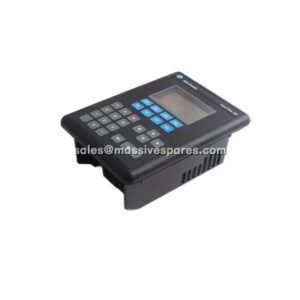
It is 06:10 on a Monday at a food and beverage plant. The operator arrives at the pasteurizer HMI — a PanelView Plus 1000 mounted on the skid — and the screen is dark. Not black-with-a-glow, which would mean backlight; genuinely dead. Production starts in twenty minutes and the alternative is running the line on local pushbuttons and paper log sheets. The maintenance technician pulls the terminal, takes it to the bench, separates the display module from the logic module, and seats a 2711P-RP1 — six screws and a PCI connector. He restores the .MER application from the CompactFlash backup, and the terminal is back on the network and talking to the CompactLogix before the shift starts.
That is the scenario this part exists for. The pain it addresses is not “I need a new HMI” — it is “my HMI is mechanically fine, the glass is fine, the panel cut-out is fine, the field wiring is fine, and one board has died.” Without the 2711P-RP1, that failure means a new terminal, a new cut-out, new firmware, new configuration, a re-download and possibly a panel modification. With it, the repair is a bench job measured in minutes. Typical installations span packaging and bottling lines, food and dairy skids, pharmaceutical process skids, automotive assembly cells, material handling and conveyor control, water and wastewater pump stations, HVAC plant rooms, and legacy machine tools and OEM equipment still running SLC 500 or PLC-5 controllers over DH+. In every one, the 2711P-RP1 is the difference between a component-level repair and a capital replacement.
Parameter:
| Main Parameters | Value/Description |
|---|---|
| Product Model | 2711P-RP1 (2711P = PanelView Plus modular HMI; RP = Replacement Processor / logic module; 1 = 64 MB Flash + 64 MB RAM configuration) |
| Manufacturer | Allen-Bradley / Rockwell Automation, USA origin |
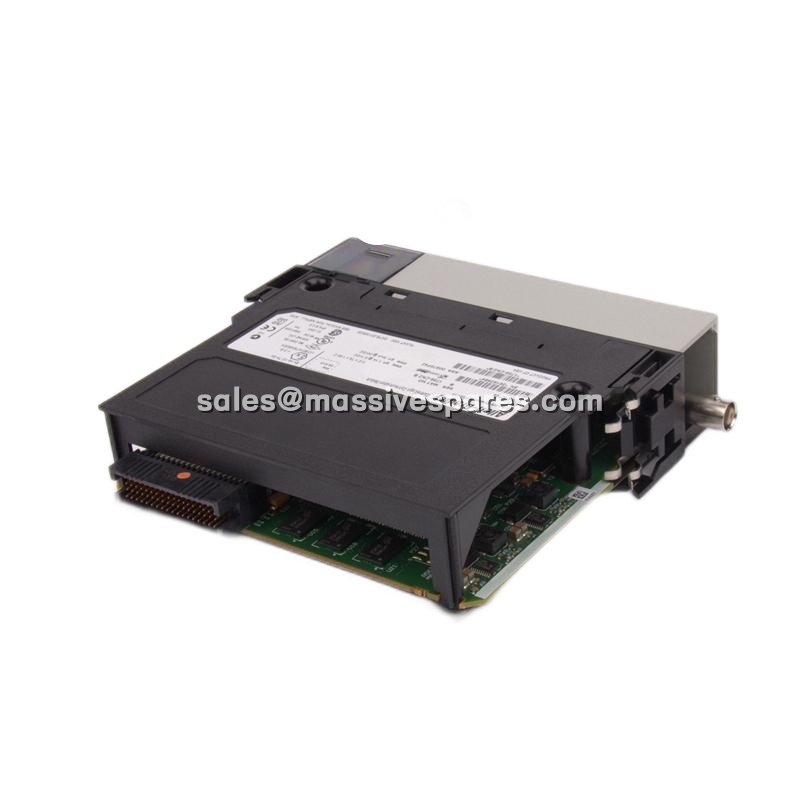
| Product Category | Logic module (HMI processor / main board) — the computing and communications half of a modular PanelView Plus terminal |
| Compatible Terminals | PanelView Plus 700, 1000, 1250 and 1500 — not compatible with PanelView Plus 6 or later generations |
| Flash Memory | 64 MB non-volatile — holds the FactoryTalk View ME runtime, the application, recipes, logs, reports, manuals and backups |
| RAM Memory | 64 MB SODIMM — runtime workspace for screen execution, tag processing, alarming and trending; field-replaceable and upgradable |
| Operating System | Windows CE — supports ActiveX controls, PDF viewing, FTP server, remote desktop and FactoryTalk ViewPoint |
| Application Support | Single FactoryTalk View ME application; FactoryTalk View ME version 5.1 or earlier for the PanelView Plus (non-CE) family |
| Ethernet Port | One 10/100Base-T with Auto MDI/MDI-X — EtherNet/IP connectivity to ControlLogix, CompactLogix and other controllers up to 100 m |
| Serial Port | One 9-pin mini-DIN RS-232 — peer-to-peer links, DF1 to SLC 500 / MicroLogix, and panel-local serial devices |
| USB Ports | Two USB 2.0 — keyboard, mouse, memory stick and peripheral connection for application transfer and maintenance |
| CompactFlash Slot | Field-replaceable internal CF plus external CF support (512 MB maximum external) — application storage, firmware and data logging |
| Internal CompactFlash Options | 2711P-RW1 (64 MB), 2711P-RW2 (128 MB), 2711P-RW3 (256 MB) — any of these fit the 2711P-RP1 |
| RAM Module Options | 2711P-RR64 (64 MB), 2711P-RR128 (128 MB), 2711P-RR256 (256 MB) SODIMM — installed before the logic module is attached to the display |
| Power Input | 24 VDC nominal (18–30 VDC), 70 W maximum dissipation — externally supplied; DC input variant |
| Installation Method | Attaches to the rear of the display module via PCI slot, secured with six screws; communication modules stack on top after removing the grey label |
| Status Indication | Red and green LED — power, fault and communication state readable at the terminal |
| Operating Temperature | 0 °C to 55 °C (32–131 °F); storage −25 °C to 70 °C; 5–95 % RH non-condensing |
| Mechanical Ratings | Shock 15 G operating / 30 G non-operating (11 ms); vibration 10–57 Hz at 0.012 in p-p and 57–500 Hz at 2 G; altitude up to 2000 m |
| Dimensions / Weight | Approx. 120 × 25 × 100 mm module footprint; approx. 0.9–1.0 kg (2.01 lb) — combined terminal weight varies with display size |
| Configuration Software | FactoryTalk View Machine Edition (RSLinx Enterprise for communications); firmware revision must match the application’s development revision |
| Lifecycle Status | Discontinued / obsolete — maintained as new-surplus, tested or repaired spare for installed-base support |
| Safety Note | ESD-sensitive; power must be removed from the terminal before the logic module is attached or removed |
Technical Principles and Innovative Values:
- Innovation Point 1 — A modular terminal architecture that separates intelligence from glass: the 2711P-RP1 exists because PanelView Plus was designed as two field-separable halves. The display module carries the LCD, backlight and touch membrane; the logic module carries the processor, memory and ports. When either half fails, only that half is replaced. In an era of monolithic HMIs where a dead processor means a dead terminal, this architecture is the single largest reason a twenty-year-old PanelView Plus is still serviceable today.
- Innovation Point 2 — Field-upgradable and field-replaceable memory: the 2711P-RP1 is not locked to its shipped configuration. The RAM is a standard SODIMM behind a retaining clip (2711P-RR64/128/256), and the internal CompactFlash is a removable card behind a retaining screw (2711P-RW1/2/3). A terminal that needs more headroom for recipes, logs or a larger application can be upgraded at the bench rather than replaced — and a corrupted CF card is a field-replaceable fault rather than a board-level failure.
- Innovation Point 3 — Three network generations on one board: Ethernet 10/100 with Auto MDI/MDI-X for EtherNet/IP, a 9-pin mini-DIN RS-232 for DF1 and peer-to-peer work, and two USB ports for peripherals and application transfer. The 2711P-RP1 therefore sits comfortably between worlds — talking EtherNet/IP to a modern CompactLogix while still serving a serial link to an SLC 500 that has not been migrated. That dual-generation capability is precisely why these terminals survive in mixed-vintage plants.
- Innovation Point 4 — A stackable expansion path: remove the grey label on the back of the 2711P-RP1 and a communication module — 2711P-RN6 for DH+, DH-485 and Remote I/O, or 2711P-RN15S for ControlNet — mounts on top and is powered by the logic module. One terminal part number can therefore serve an EtherNet/IP cell or a DH+ PLC-5 network, which is how a plant standardises on one HMI while its control networks are at different stages of migration.
- Innovation Point 5 — Windows CE as an application platform, not just a boot loader: the 2711P-RP1 runs a real embedded operating system, which is what enables ActiveX controls, PDF viewing, an FTP server for log retrieval, remote desktop, and FactoryTalk ViewPoint for browser-based monitoring. Those capabilities turn the HMI from a display into a node that can serve data outward — the reason many of these terminals are still doing useful work long after their nominal replacement date.
- Innovation Point 6 — Firmware-matched application portability: the 2711P-RP1 runs .MER applications at the same or previous FactoryTalk View ME revision, and the runtime application lives in Flash and on CompactFlash. Practically, that means a backup taken years ago can be restored onto a replacement module, and a plant with a tested spare on the shelf can recover a terminal without re-engineering the application — provided the firmware revision is matched, which is the one discipline this architecture demands.
Application Cases and Industry Value:
Case 1 — Packaging line recovery without a new terminal
A food packaging plant running several PanelView Plus 1000 terminals on its case-packing and palletising lines had a terminal fail on a Friday evening: dark screen, no boot, while the backlight circuit was clearly intact. The options were a rush-order replacement terminal — different cut-out, different firmware generation, an application rebuild and untested cutover — or a component swap. The plant kept a tested 2711P-RP1 in its critical spares cabinet. The swap took under an hour on the bench: separate the display, seat the replacement logic module, restore the .MER application from the CompactFlash backup held on the maintenance server, and reconnect. The terminal returned to service on the same shift, with no panel modification, no wiring change, and no application re-engineering. The measurable value was the avoided cost of a new terminal plus the avoided production loss of a line running without its HMI; the durable value was the realisation that one spare 2711P-RP1 covers every 700-to-1500 terminal on site.