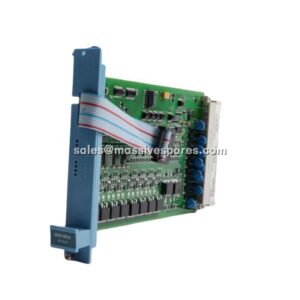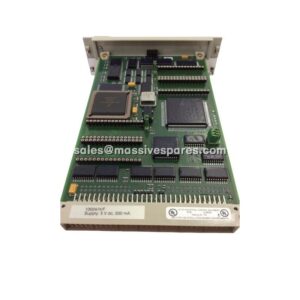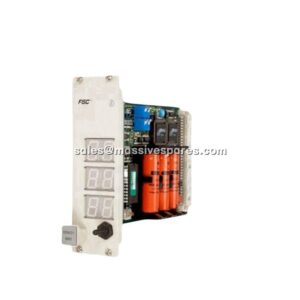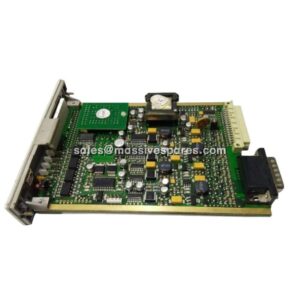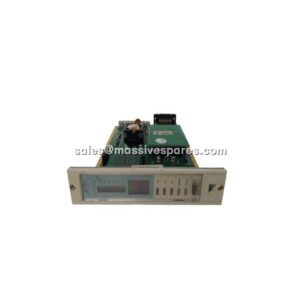

Description
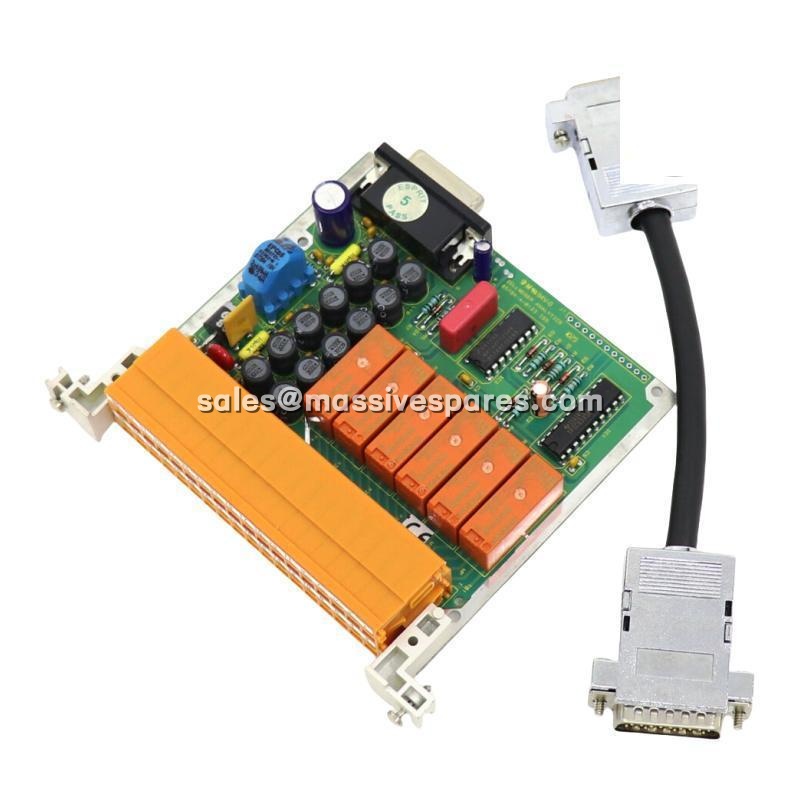
Application Scenarios
An offshore production platform ran a mature Honeywell System 57 fire and gas cabinet that had grown organically over fifteen years. The control cards were still healthy and the detector loops were maintained, but the cabinet had run out of relay capacity. Each time the operator wanted a new output, whether for a deluge valve in a new module, a ventilation interlock in a compressor enclosure, or a hardwired signal to the platform ESD system, the answer came back the same: there were no spare relay contacts left. The alternatives were unattractive. Adding an external relay marshalling panel meant new cabling, new drawings, a hazardous-area review and an outage. Replacing the whole cabinet meant revalidating a safety system that had decades of operational history behind it.
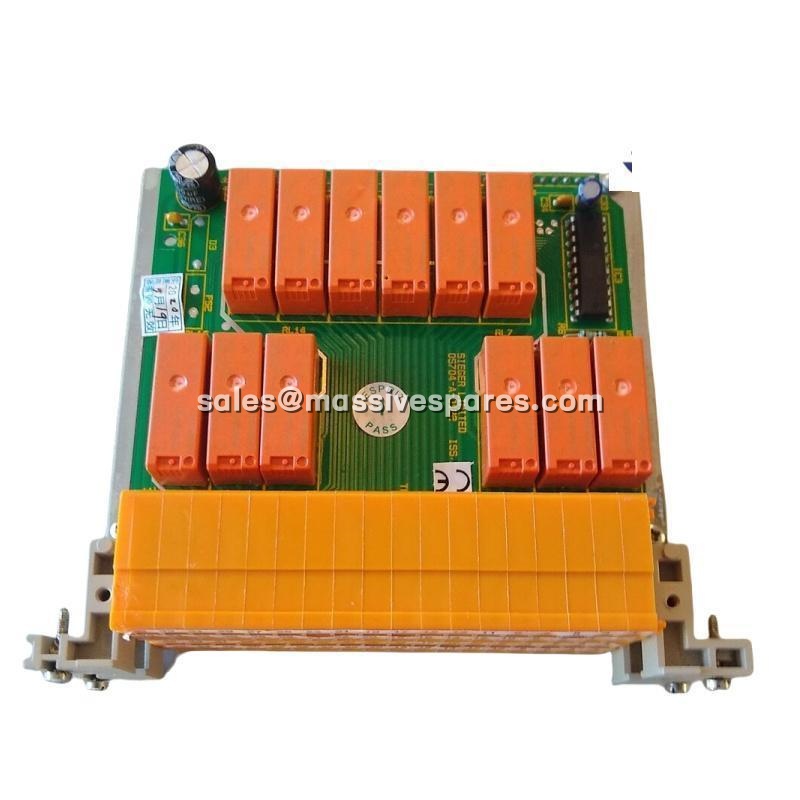
The 05704-A-0123 answered the problem inside the existing architecture. Installed as the relay interface for the 5704F four-channel fire control card, the Honeywell 05704-A-0123 added six hard relay outputs in a single card slot, each individually assignable to fire alarm, fault, inhibit or master alarm functions. Because the card uses normal and changeover contacts on every channel, the platform’s engineers could wire either normally-open trip circuits or normally-closed supervisory circuits to the same terminal block, which removed the need for interposing relays in the marshalling rack.
The real value is that the 05704-A-0123 converts a capacity problem into a slot problem, and a slot problem is cheap. Instead of a project with engineering, procurement and outage costs, the platform received a card, a configuration change and a functional test. Equally important, the Honeywell 05704-A-0123 is not a generic relay board: it is part of the system the operators already know, configured through the same engineering card and documented in the same cabinet drawings, so no new competency is required to maintain it.
Parameter
| Main Parameters | Value / Description |
|---|---|
| Product Model | 05704-A-0123 |
| Manufacturer | Honeywell (System 57 / Honeywell Analytics, formerly Sieger and Zellweger Analytics) |
| Product Category | Hex relay interface card, six-channel alarm output interface |
| System Platform | Honeywell System 57, 5704 and 5704F four-channel control card family |
| Relay Configuration | 6 independent SPCO (single-pole changeover, Form C) relays with NO, NC and common contacts |
| Contact Rating | 5 A at 110/250 V AC non-inductive; 5 A at 32 V DC non-inductive |
| Relay Operation Modes | Selectable latching or non-latching; selectable normally energised or normally de-energised |
| Relay Functions | Configurable for fire alarm, fault, inhibit, master alarm or individual channel alarm outputs |
| Contact Type | Voltage-free dry contacts providing galvanic isolation between rack logic and field circuits |
| Power Consumption | 2.4 W maximum, 1.7 W typical, drawn from the System 57 rack backplane |
| Field Terminals | Screw terminals accepting up to 2.5 mm² (14 AWG) conductors |
| Card Format | 3U plug-in Eurocard for the System 57 19-inch sub-rack |
| Dimensions | Approximately 2.3 cm x 11.8 cm x 13.0 cm (width x height x depth) |
| Weight | Approximately 0.22 kg |
| Installation | Plug-in rack module supporting front or rear field wiring access; hot-swappable card replacement |
| Compliance | EMC compliant for industrial control cabinet installation, indoor non-hazardous area racks |
Technical Principles and Innovative Values
Innovation Point 1: Six changeover relays in a single one-inch slot. The Honeywell 05704-A-0123 packs six complete SPCO relays into the standard System 57 card footprint, giving each channel a normally-open, normally-closed and common terminal rather than a single make contact. That tripling of available contacts means the same alarm can simultaneously close a trip circuit and open a supervisory circuit without an interposing relay, and it is the reason the 05704-A-0123 can often absorb an output expansion that would otherwise require an external relay panel.
Innovation Point 2: Selectable energised and de-energised behaviour built into the hardware. Safety systems disagree about what a healthy state looks like. Some circuits must lose power to trip; others must be energised to trip. The 05704-A-0123 supports both by allowing each relay to be configured as normally energised or normally de-energised, so the card adapts to the site’s existing safety philosophy rather than forcing the site to re-engineer its trip logic around the card.
Innovation Point 3: Latching outputs that preserve the alarm event. When configured for latching operation, a relay on the Honeywell 05704-A-0123 holds its alarm state after the initiating condition clears, until it is deliberately reset through the system. For fire and gas applications this distinction matters: a transient gas spike that clears before anyone reaches the panel would otherwise leave no physical evidence and no standing output to drive a deluge or shutdown sequence. Latching turns a momentary detection into a managed event.
Innovation Point 4: Dry-contact isolation between the safety rack and the plant. Every output of the 05704-A-0123 is a voltage-free contact, so the card imposes no potential on the external circuit and provides galvanic separation between the sensitive control electronics and the field loads they drive. A fault, surge or earth leak on a long field cable run to a beacon or solenoid therefore stays in the field instead of propagating back into the rack.
Innovation Point 5: Low thermal footprint in densely populated racks. At 1.7 W typical and 2.4 W maximum, the Honeywell 05704-A-0123 adds very little heat to a cabinet that may already hold a dozen control cards, power supply cards and interface modules. In sealed control room cabinets where convection is limited and ambient temperature directly affects detector electronics, that low dissipation contributes to the long-term stability of the whole rack rather than just the card itself.